-
by sayum
04 August 2026 10:20 AM







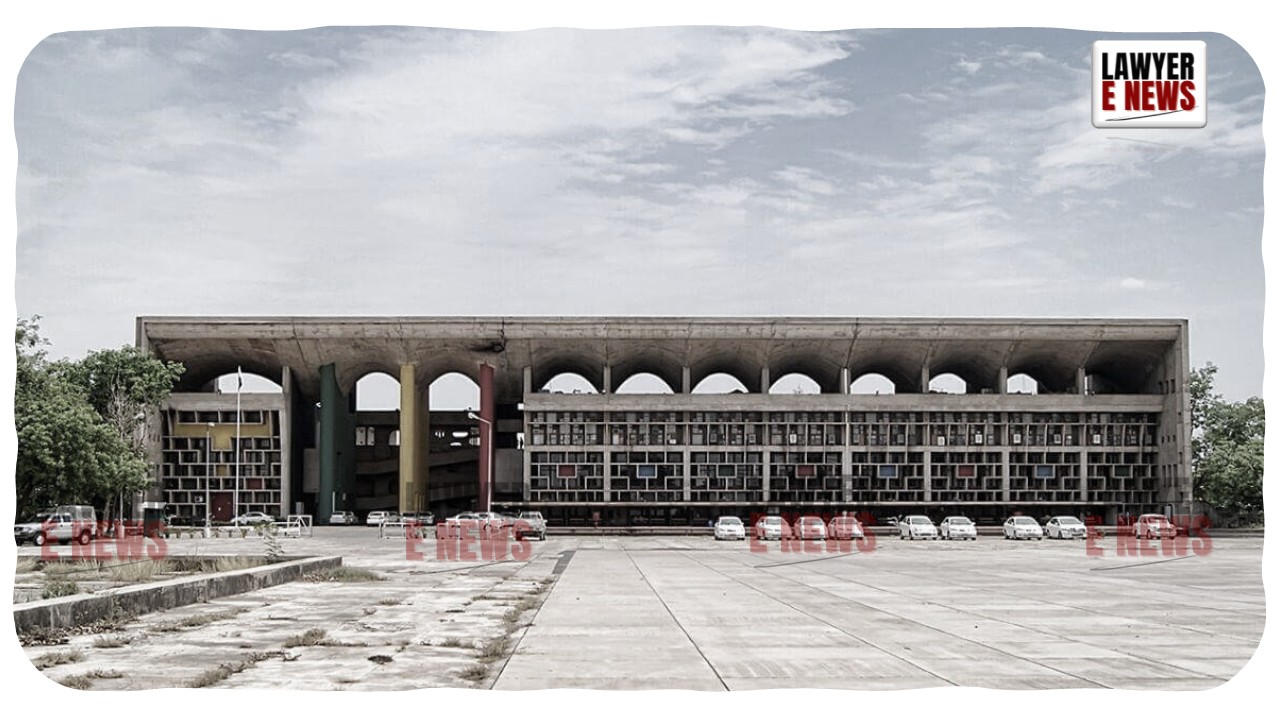
“Court’s Conscience Must Be Satisfied—Proponent of Later Will Must Remove All Doubts”:- Punjab and Haryana High Court delivered a pivotal ruling reinforcing the legal sanctity of registered Wills over suspicious and unregistered subsequent Wills. Justice Deepak Gupta set aside the appellate court's reversal and reinstated the Trial Court’s decree favouring the plaintiffs, holding: “The Will dated 07.08.2004 is enveloped in grave suspicious circumstances that remain unexplained… The Will dated 09.06.2000, duly registered… stands proved on record and there exists no cogent reason to disregard its authenticity.”
The litigation stemmed from a family dispute over the estate of Sh. Parmanand, who died on 12 March 2005. He had four sons and three daughters. Two sons, Ramesh Kumar and Naresh Kumar (plaintiffs), filed a suit claiming ownership based on a registered Will dated 09.06.2000, which was attested and registered on 22.06.2000. They alleged that a later Will dated 07.08.2004, presented by their brother Ravi Kant (defendant no. 1), was forged and executed under suspicious circumstances.
While the Trial Court decreed the suit in favour of the plaintiffs, the First Appellate Court reversed it, holding that the later Will revoked the earlier one and had been proven in mutation proceedings. Aggrieved, the plaintiffs filed this second appeal before the High Court.
Justice Deepak Gupta began by clarifying the applicable legal test: “In case none of the Wills are proved, the parties will get the property as per natural succession. But if one is proved and not the other, it is that Will which will govern the succession.”
The Court reaffirmed that a Will must be proved in accordance with Section 63 of the Indian Succession Act and Section 68 of the Indian Evidence Act. The registered Will dated 09.06.2000 satisfied both statutory mandates. One attesting witness (PW3) testified to having witnessed the testator's signature and the registration, while the scribe’s son (PW2) produced the original register entries and identified the signatures, establishing execution beyond doubt.
“Both PW2 and PW3 were subjected to lengthy and detailed cross-examination, but nothing material could be elicited to discredit their testimonies.”
In contrast, the unregistered Will dated 07.08.2004 was riddled with inconsistencies. The attesting witnesses (DW2 and DW4) admitted to not knowing the scribe, not understanding the language of the Will, and being close to the beneficiary Ravi Kant. Crucially, even the beneficiary (DW3) admitted ignorance about who drafted the Will.
“None of them is able to disclose the identity of the scribe… The Will bears no name, signature, or seal of the scribe… these facts give rise to serious doubts about the authenticity.”
The Court stressed that mere proof of signature is insufficient—the entire attestation must be established in accordance with law:
“It must be proved that attestations were also made properly as required by clause (c) of Section 63 of the Succession Act, 1925.”
Suspicious Circumstances Undermine Later Will
The High Court found compelling suspicious circumstances in the relations between testator Sh. Parmanand and defendant Ravi Kant: “They were involved in protracted and hostile litigation spanning two decades… It is highly improbable and unnatural that Parmanand would, in 2004, execute a Will in Ravi Kant’s favour.”
Further, the alleged Will contained only a vague clause about revoking earlier Wills, without even referencing the registered Will of 2000. The Court noted: “The absence of any express revocation or mention of the prior Will is another material suspicious circumstance.”
Moreover, reliance by the Appellate Court on mutation proceedings was declared legally flawed: “Mutation proceedings are summary in nature and do not adjudicate upon title or the legality of testamentary documents.”
The Court also rejected the argument that suspicious circumstances must be expressly pleaded: “Even if not specifically pleaded, the Court must evaluate the totality of facts… Particularly where circumstances raise reasonable doubts, the conscience of the Court must be satisfied.”
Allowing the second appeal, Justice Deepak Gupta held that the plaintiffs had successfully proved the execution and validity of the registered Will dated 09.06.2000. Conversely, the unregistered Will of 07.08.2004 was not only inadequately proved but was tainted by unexplained suspicious circumstances, including a lack of credible attesting witnesses, omission of the earlier Will, and a long history of litigation between the testator and the beneficiary.
“The judgment and decree passed by the First Appellate Court are hereby set aside… The judgment of the Trial Court is restored, and the suit is decreed in favour of the appellants.”
Date of Decision: 28 April 2025