-
by sayum
01 October 2026 8:21 AM







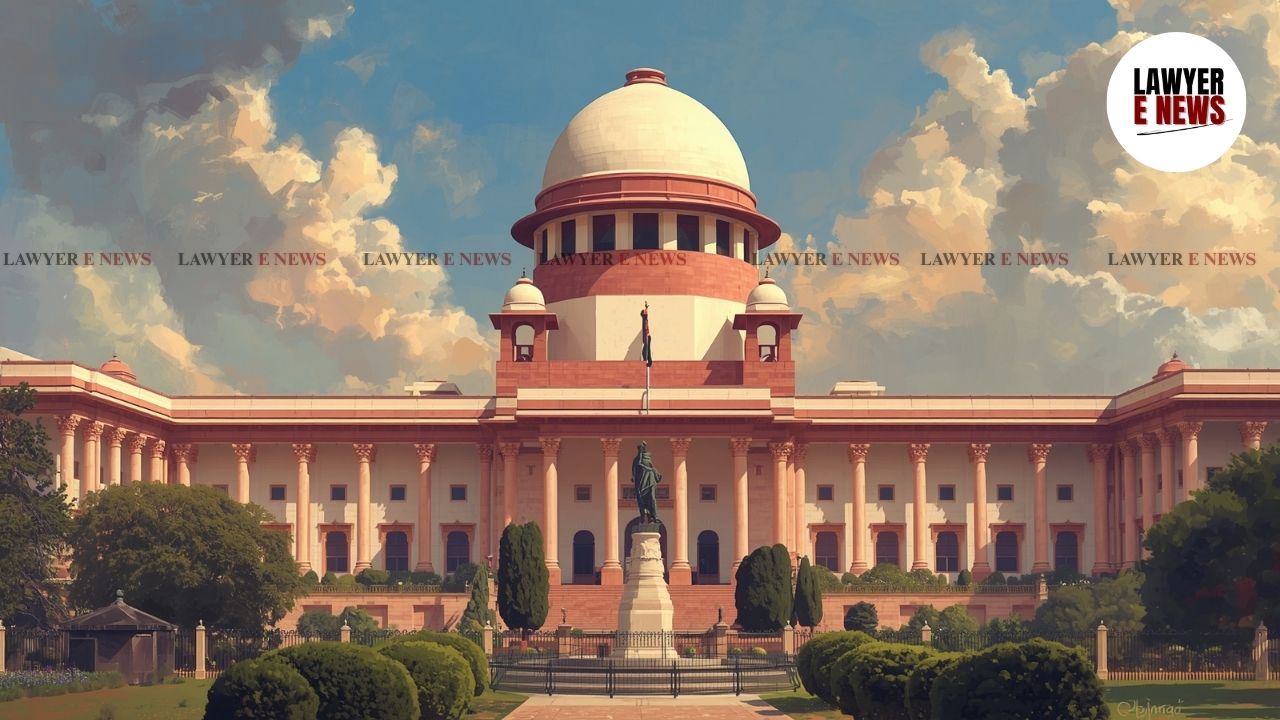
"To permit a rule of policy conceived for illegal appointments to subvert the accrued equitable rights of an employee recruited upon substantial compliance with the relevant service rules would be to mistake form for substance." Supreme Court, in a significant judgment dated July 28, 2026, held that daily wage employees who have completed ten years of continuous service are entitled to regularisation as per Government policy, rejecting the State’s attempt to deny them retrospective benefits through arbitrary cut-off dates.
A bench of Justice Dipankar Datta and Justice Sheel Nagu observed that the State cannot discriminate between similarly placed employees by selectively applying prospective regularisation while ignoring established precedents of retrospective relief.
The appellant, A. Velayutham, was appointed as a daily wage watchman in 1992 through a formal employment exchange selection process. Despite the Tamil Nadu Government’s 2006 order (G.O. No. 22) promising regularisation for all daily wagers who had completed ten years of service as of January 1, 2006, the appellant’s service was only regularised in 2010. While a Single Judge of the Madras High Court directed the State to grant regularisation from the date of completion of ten years, a Division Bench later overturned this, citing policy discretion.
The primary legal issue before the Supreme Court was whether the State could arbitrarily restrict the benefits of the 2006 regularisation policy to a prospective date, effectively denying employees the fruits of their decade-long service. The Court also had to determine if subsequent Government Orders (G.O. No. 74) or previous judicial precedents concerning "backdoor entries" could be invoked to deprive a regularly recruited employee of their legitimate claim to service benefits under Article 14 of the Constitution of India.
State Cannot Adopt Selective Policies
The Court firmly rejected the Division Bench’s reasoning that regularisation was a matter of pure policy wisdom, noting that the State’s conduct amounted to a violation of the principle of equality. The Bench emphasized that when a government policy is designed to benefit long-serving employees, it must be applied uniformly.
Court Rejects Attempt to Distort Policy
The judges noted that G.O. No. 22 was unambiguous in its intent to regularise employees who had completed ten years of service. The Court observed, "The intention expressed in G.O. No. 22 admits of no ambiguity. Those employees working on daily wages for more than 10 years and having requisite qualification for the post on which they were working were assured of regularisation."
Distinguishing Lawful Recruitment from Illegal Entries
The Bench underscored that the appellant’s induction was not a "backdoor entry," as he had participated in a selection process through the employment exchange. The Court held that precedents dealing with irregular appointments cannot be used as a shield to deny rights to those who complied with recruitment rules.
"The State cannot pick and choose – give one employee only prospective absorption and give his peers retrospective regularisation after 10 years of service – and then hide behind the decision in S. Dhanasekaran to avoid Article 14."
Irrelevance of Subsequent Clarifications
The Court further clarified that G.O. No. 74, which was issued after the litigation had already commenced, could not retrospectively impair the appellant's accrued rights. The Bench reiterated that a party’s legal position is determined by the facts existing at the time of the institution of the legal action.
Restoring the Single Judge's Order
Concluding the matter, the Supreme Court set aside the Division Bench’s judgment and restored the order passed by the Single Judge. The State was directed to regularise the appellant’s services from the date he completed ten years of service, including the payment of all applicable arrears, to be completed within three months.
Date of Decision: 28 July 2026