-
by sayum
26 October 2026 4:04 PM







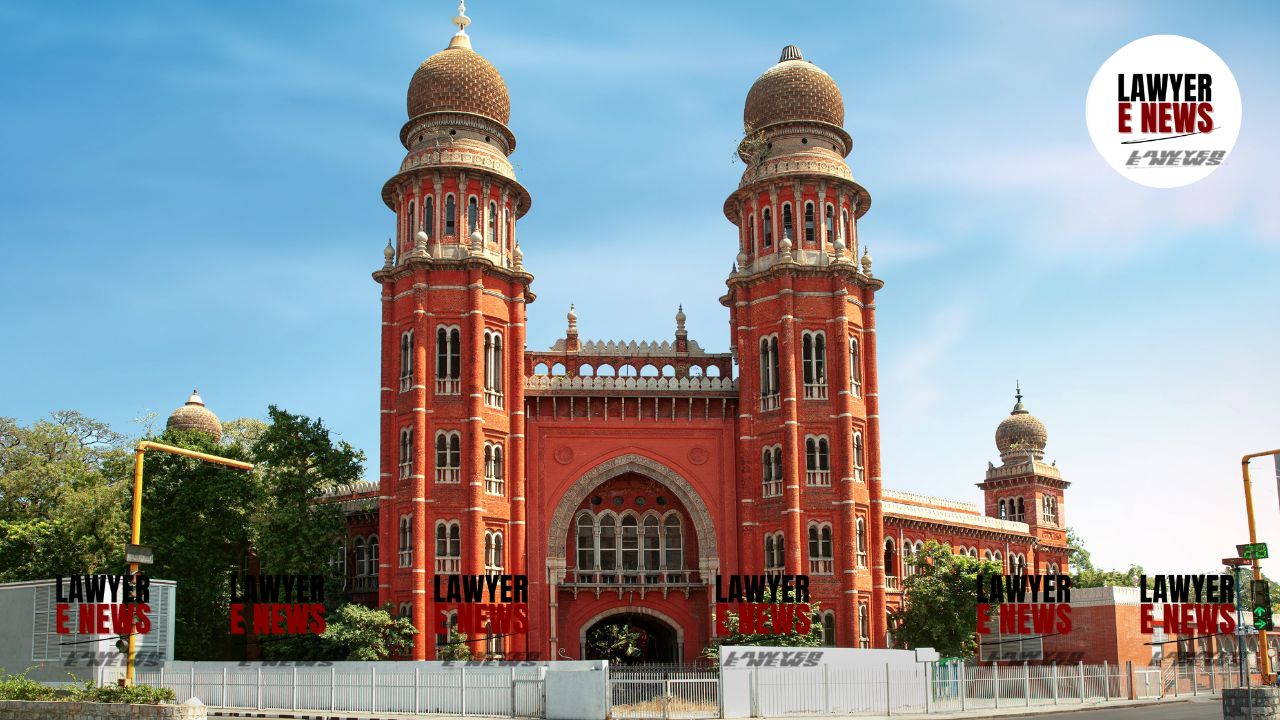
"The test for finding as to [whether] omission to frame the issues have caused prejudice to the parties or not can be laid down on the touchstone as to whether parties that go to trial had knowledge that (i) a particular question is in issue and (ii) had opportunity to lead evidence on that issue." Madras High Court, in a ruling dated September 23, 2026, held that the failure of a trial court to frame issues prior to the recording of evidence does not automatically vitiate the proceedings.
A bench of Justice N. Anand Venkatesh observed that such an irregularity is curable under Section 99 of the Code of Civil Procedure (CPC) provided that the parties were aware of the core disputes and had sufficient opportunity to lead evidence.
The petitioners filed a suit for recovery of money against the respondents, seeking a final decree for the sale of mortgaged property. The trial court proceeded to record evidence and reserved the matter for judgment without framing issues, a lapse that went unnoticed by both the court and the contesting parties. Upon subsequently realizing this omission, the trial court reopened the suit, framed issues, and permitted the defendants to recall witnesses for further cross-examination, which triggered the present revision petition.
The primary question before the court was whether the failure to frame issues under Order XIV CPC before recording evidence renders the trial void ab initio. The court was further tasked with determining whether a court may exercise its supervisory jurisdiction under Article 227 of the Constitution of India to rectify such procedural lapses without mandating a de novo trial.
Irregularity Versus Vitiation
The Court emphasized that while Order XIV of the CPC casts a mandatory obligation upon the court to frame issues to narrow down the area of conflict, a breach of this rule does not ipso facto render the trial a nullity. The court noted that Section 99 of the CPC acts as a safeguard, stipulating that no decree shall be reversed or varied on account of an error or irregularity that does not affect the merits of the case or the jurisdiction of the court.
Court Must Act As A Concave Mirror
Citing the Supreme Court’s decision in Makhan Lal Bangal vs. Manas Bhunia, the High Court reiterated that issues are intended to act as a "concave mirror" reflecting the pleadings to pinpoint the actual disputes. The bench noted that while the duty to frame issues rests primarily with the Presiding Judge, the silence of legal counsel in such matters does not absolve the court of its duty to maintain the focus of the litigation.
Test of Prejudice
Applying the principle laid down in the recent Supreme Court judgment of Pramod Shroff vs. Mohan Singh Chopra, the Court held that the determinative factor is whether the omission caused prejudice. If the parties entered the trial with clear knowledge of the questions in issue and had adequate opportunity to address them through evidence, the technical failure to formally record issues will not necessitate a retrial.
Corrective Directions
The Court set aside the order allowing a blanket recall of all witnesses, terming it an unnecessary delay. Instead, it directed the trial court to compare the evidence already on record with the issues framed on April 9, 2026. The trial court was instructed to identify specific areas of deficiency and permit further evidence or cross-examination restricted solely to those points, thereby balancing the rights of both parties while ensuring judicial economy.
The High Court allowed the civil revision petition, setting aside the trial court's order for a broad recall of witnesses. The matter was remanded with a mandate to the trial court to finalize the suit within three months, focusing exclusively on filling evidentiary gaps relevant to the newly framed issues.
Date of Decision: 23 September 2026