-
by sayum
26 October 2026 4:04 PM







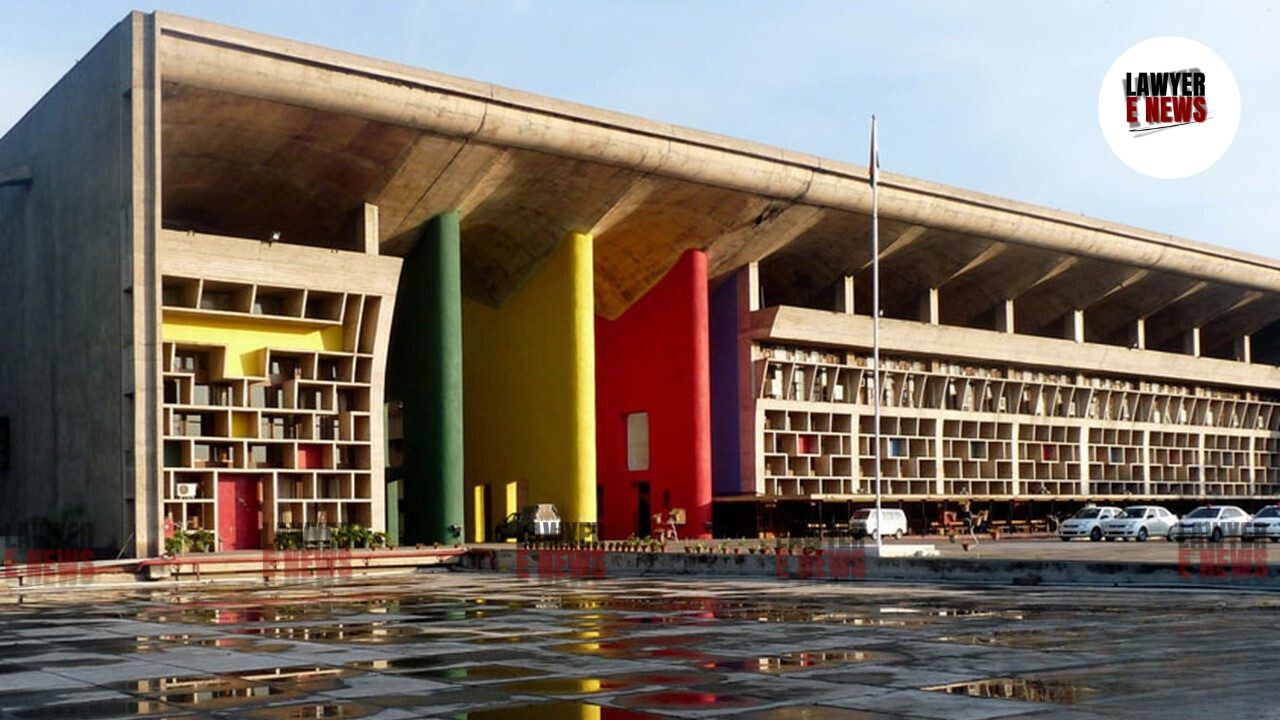
"The power conferred on Courts under Rule 3 of Order 17 of the CPC to decide the suit on the merits for the default of a party is a drastic power which seriously restricts the remedy of the unsuccessful party for redress. It has to be used only sparingly in exceptional cases." Punjab and Haryana High Court, in a significant ruling dated 16 September 2026, held that trial courts must exercise the power under Order XVII Rule 3 of the CPC with extreme caution, noting that dismissing a suit for non-production of evidence is a "drastic power."
A bench of Justice Amarinder Singh Grewal observed that such discretion should not be invoked mechanically, especially when previous adjournments were necessitated by circumstances beyond the litigant's control, such as lawyers' strikes or judicial unavailability.
The appellant, a legal heir of the original plaintiff, challenged the concurrent findings of the lower courts that had dismissed the suit for permanent injunction under Order XVII Rule 3 of the CPC. The original plaintiff had sought to restrain the defendants from interfering with her possession of a residential chowk, but the trial court closed her evidence and dismissed the suit after she failed to produce witnesses on the date fixed. The First Appellate Court upheld this dismissal, prompting the current Regular Second Appeal.
The primary question before the court was whether the trial court was justified in invoking the "drastic" provisions of Order XVII Rule 3 of the CPC to dismiss the suit when the plaintiff failed to lead evidence. The court was also called upon to determine if the trial court had failed to exercise judicial discretion by not granting further opportunities despite the presence of genuine impediments.
The High Court conducted a meticulous review of the trial court's order sheets, finding that the litigation had been frequently interrupted by factors extraneous to the plaintiff's conduct. The record indicated that multiple dates were lost due to lawyers' strikes and the presiding officer being on leave.
Court Scrutinizes Procedural Fairness
The bench observed that the trial court’s decision to close evidence on 22 August 2000 was particularly harsh given the history of the proceedings. Crucially, the order dated 12 June 2000, which adjourned the case to the date of dismissal, did not stipulate that it was the "final opportunity" for the plaintiff to lead evidence.
Provisions of Order XVII Rule 3 CPC
The High Court emphasized that the power to decide a suit on merits due to a party's default is a last resort. Referring to the Supreme Court's decision in Prem Kishore and others Vs. Brahm Prakash and others, the Court reiterated that mere existence of the conditions under Rule 3 does not automatically mandate a dismissal on merits; there must be material on record to justify such a decision.
Mechanical Invocation Prohibited
The court held that provisions of Order XVII Rule 3 CPC cannot be invoked mechanically merely because a party failed to produce evidence on a specific date. The bench noted that the trial court must first ensure that the party had been granted a clear and effective opportunity, and the failure to perform the act must be attributable solely to the party's own negligence.
"This Court is of the view that provisions of Order XVII Rule 3 CPC cannot be invoked mechanically merely because a party has failed to produce evidence on a particular date. The Court must first satisfy itself that the parties were present and despite having been granted an opportunity failed to perform the act for which the time has been granted."
Evidence of Genuine Hardship
Regarding the plaintiff's absence on the day of dismissal, the court acknowledged the plea that she was confined to bed due to illness. The court remarked that this claim appeared genuine, particularly in light of her subsequent demise during the pendency of the appeal. The absence of a formal application for a Local Commissioner at the trial stage did not, in the eyes of the High Court, justify the extreme penalty of dismissing the suit.
Final Directions and Remand
Concluding that the plaintiff was denied an effective opportunity to establish her case, the High Court set aside the impugned judgments. The matter was remanded back to the trial court for adjudication on merits. As a condition for the indulgence, the appellant was directed to pay costs of Rs. 25,000 to the respondents. The trial court was instructed to decide the suit within six months, granting reasonable opportunities to both parties to lead evidence.
Date of Decision: 16 September 2026