-
by sayum
23 October 2026 12:21 PM







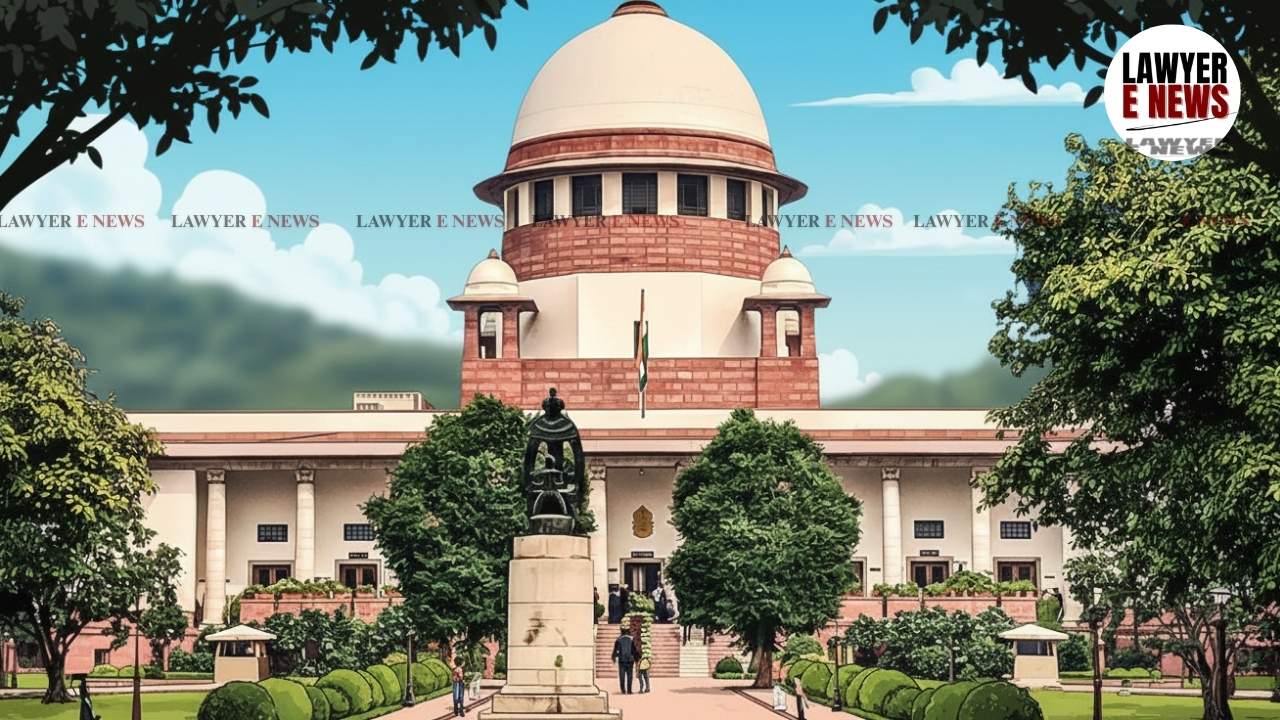
"Until the alleged overpayment is established in accordance with law, it remains, a disputed and unadjudicated claim for damages and not a debt presently due" Supreme Court, in a ruling dated September 30, 2026, held that a government authority cannot unilaterally appropriate funds from a contractor’s ongoing, unrelated projects to satisfy an alleged overpayment in a previous contract without prior notice, hearing, and legal determination of the debt.
A bench comprising Justice Pamidighantam Sri Narasimha and Justice Alok Aradhe observed that such an action constitutes a "flagrant violation of principles of natural justice" and is not permissible under the contractual clauses cited by the State.
The controversy arose after the Chhattisgarh Rural Road Development Agency (CGRRDA) sought to recover approximately Rs 2.01 crore from M/s Awadhesh Singh Gautam, a partnership firm, alleging excess payments made in previous contracts. While criminal proceedings and an investigation were initiated, the CGRRDA issued a recovery order to block Rs 84.17 lakh from the firm's ongoing bills across three different project packages. The firm challenged this before the High Court, which dismissed the petitions on the ground that the dispute involved complex questions of fact.
Court Examines Scope of Contractual Recovery Clauses
The primary question before the Supreme Court was whether the recovery order was traceable to the contractual clauses relied upon by the respondents and whether such a process complied with the principles of natural justice. The court was also called upon to determine if a state entity could unilaterally treat a disputed claim as a "presently due" debt to be set off against money payable under entirely distinct contracts.
Recovery Order Fails To Meet Contractual Thresholds
The court meticulously examined the General and Special Conditions of Contract, noting that the respondents attempted to invoke clauses pertaining to liquidated damages and breach of contract. However, the bench observed that Clause 44.1 of the General Conditions relates strictly to delays in completion and is capped at ten percent of the contract price. Since the recovery was based on an allegation of overpayment discovered via a technical audit, the court held that this specific mechanism is governed exclusively by Clause 4.1 of the Special Conditions of Contract.
Court Emphasizes Mandatory Procedural Safeguards
Regarding Clause 4.1, the bench highlighted that it explicitly requires the contractor to be given an opportunity to explain their case before any recovery is finalized. Furthermore, the court noted that no recovery should be made without the explicit orders of the CEO, CGRRDA, a condition that was not satisfied in the present matter. The bench remarked that the authorities had ignored that a significant sum remained payable to the appellant under the very contract where the alleged overpayment occurred, yet they chose to target unconnected and ongoing packages instead.
"A party to a contract cannot, merely because it also holds amounts otherwise payable under it, treat such a claim as though it were an ascertained debt and appropriate those amounts in satisfaction of it"
Nature of Disputed Claims and Legal Set-Off
The court underscored that until an overpayment is established in accordance with the law, it remains a contested claim for damages rather than an admitted debt. By unilaterally deducting these amounts from subsistence payments under separate contracts, the State acted in contravention of both the agreement and the principles of natural justice. The bench rejected the High Court’s reasoning, clarifying that the issue was not one of disputed facts requiring a full trial, but of the legality of the State’s unilateral appropriation process.
Final Directions and Scope of the Ruling
The Supreme Court quashed the recovery order dated September 27, 2025, and directed the respondents to release the sum of Rs 84,17,003 to the appellant, along with interest at the rate of 6 percent per annum from the date of the order. The court clarified that this judgment does not preclude the State from pursuing recovery through appropriate legal proceedings for the alleged overpayments in the earlier works. Furthermore, the bench emphasized that its observations are strictly confined to the legality of the recovery process and have no bearing on the merits of the pending criminal chargesheet or the final determination of the alleged overpayment.
Date of Decision: 30 September 2026