-
by sayum
26 October 2026 4:04 PM








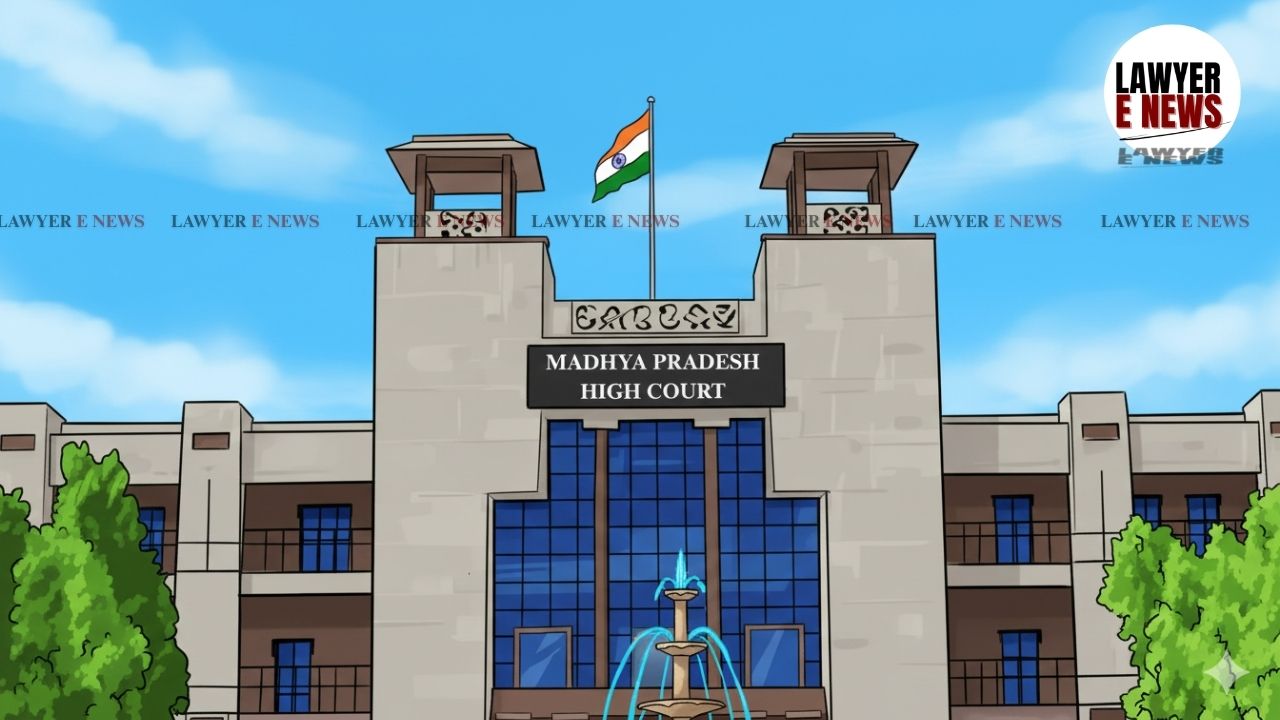
"This court or the learned Trial Court cannot come to conclusion in discharge petition by conducting the Mini-Trial." Andhra Pradesh High Court, in a ruling dated September 23, 2026, held that a court cannot conduct a "mini-trial" while deciding a discharge application, emphasizing that issues pertaining to the existence of documentary evidence or the veracity of witness statements must be determined during a full-fledged trial.
A bench of Dr. Justice Y. Lakshmana Rao observed that the scope of a discharge petition is limited to determining whether there is prima facie material to proceed, rather than weighing evidence to ascertain guilt.
The petitioner, an accused in a case registered for offences under Sections 420 and 506 of the IPC, sought to challenge an order of the trial court which had dismissed his discharge application. The petitioner contended that there was no documentary evidence to support the allegation that the de-facto complainant had parted with an amount of Rs. 39,02,600, asserting that the case was intentionally and falsely foisted upon him.
Scope Of Discharge Proceedings
The primary issue before the court was whether the trial court erred in law by refusing to discharge the petitioner despite his claims regarding the lack of documentary evidence. The court was further tasked with determining whether the absence of specific proof during the investigation stage warrants the termination of criminal proceedings at the threshold.
Prohibition Against Mini-Trials
The court underscored that during the consideration of a discharge application, the judiciary is restricted from conducting a trial of the facts. The bench clarified that the statements of the de-facto complainant and other prosecution witnesses, recorded under Section 161 CrPC, corroborated one another sufficiently to establish a prima facie case.
"The petitioner/accused is always at liberty to pose necessary questions to the witnesses of the prosecution and elicit truth from the witnesses of the prosecution," the Court remarked, noting that the merits of the evidence must be tested through cross-examination during the trial process.
No Material Irregularity In Trial Court Order
The High Court observed that the trial court had provided cogent and convincing reasons for refusing to discharge the accused. Because the prosecution’s material indicated sufficient grounds to proceed, the High Court found no miscarriage of justice or material irregularity in the lower court’s refusal to interfere with the proceedings.
"All the contentions raised by the learned counsel for the petitioner are subject matter of a full-fledged Trial," the Court held, affirming that the evidentiary concerns regarding bills and monetary transactions cannot be adjudicated at the discharge stage.
Discretion On Personal Appearance
Acknowledging the petitioner’s medical condition—specifically that he had recently undergone thigh surgery—the High Court exercised its discretion to grant a personal exemption. The court directed that the petitioner’s presence before the trial court be dispensed with, provided he appears whenever his presence is specifically required.
Encouraging Amicable Settlement
Given that the alleged offences are compoundable in nature, the court directed the trial court to make an active endeavour to facilitate an amicable settlement between the parties. The bench clarified that its observations were limited to the discharge petition and would not influence the trial court’s final adjudication on the merits of the case.
Date of Decision: 23 September 2026