-
by sayum
28 July 2026 1:44 PM








"Non-payment of stamp duty is accurately characterised as a curable defect. The Stamp Act itself provides for the manner in which the defect may be cured and sets out a detailed procedure for it... Any objections in relation to the stamping of the agreement fall within the ambit of the Arbitral Tribunal," Supreme Court, in a significant judgment dated May 27, 2026, has held that an Arbitral Tribunal is fully empowered to adjudicate upon objections regarding the insufficient stamping of an agreement under Section 16 of the Arbitration and Conciliation Act, 1996.
A bench of Justice J. K. Maheshwari and Justice Atul S. Chandurkar observed that since stamping is a curable defect and does not render an agreement void, any challenge to an Arbitrator’s order rejecting such an objection must await the final award stage under Section 34 of the A and C Act. The Court emphasized that High Courts should refrain from interfering with such interlocutory arbitral orders through writ jurisdiction under Articles 226 or 227 of the Constitution of India.
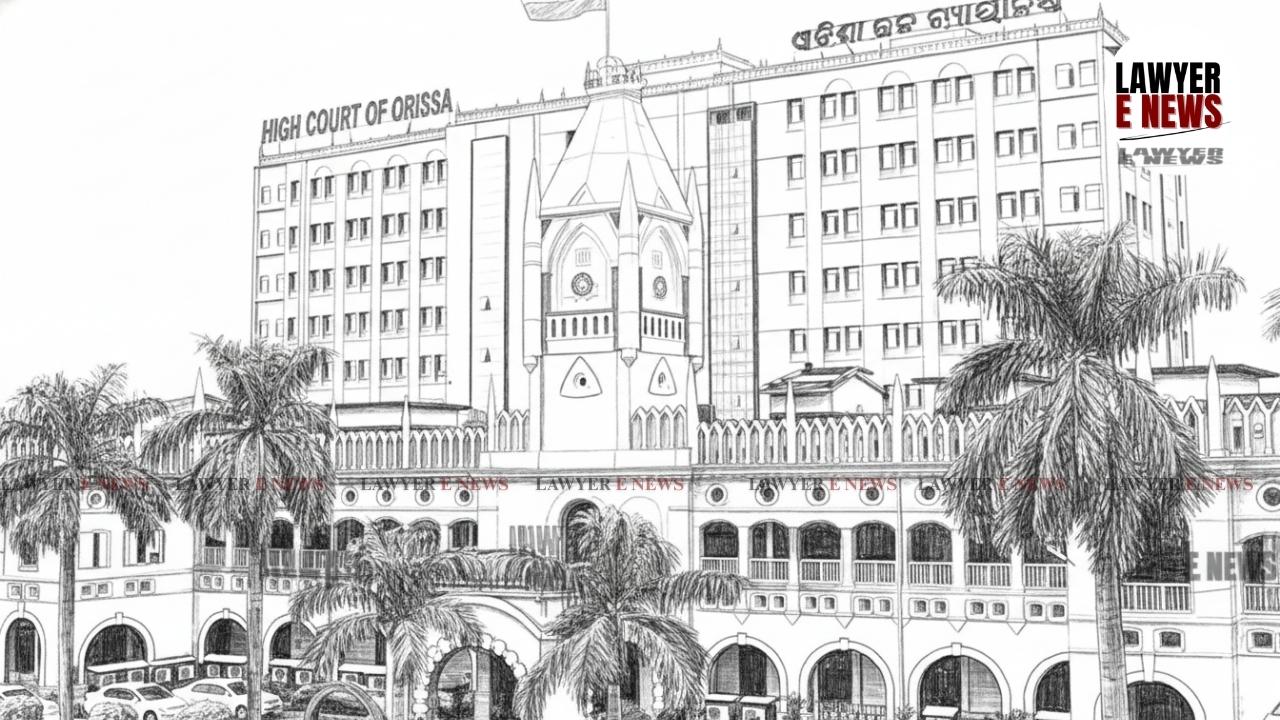
The dispute arose from an iron ore sale agreement executed in 2004 between the appellant mine owner and the respondent, M/S Sunflag Iron and Steel Company Limited (SISCO). During arbitration, the mine owner filed an application under Section 16 of the A and C Act, contending that the agreements were "conveyances" and were insufficiently stamped. After the Arbitrator rejected this objection, a Single Judge of the High Court of Orissa entertained a writ petition and ordered the impounding of the documents, a decision that was later set aside by a Division Bench, leading to the present appeal.
The primary question before the court was whether a challenge to an order passed under Section 16 of the A and C Act, rejecting a stamping objection, could be entertained by a High Court in the exercise of its writ jurisdiction. The Court was also called upon to determine whether insufficient stamping constitutes a jurisdictional error that justifies immediate judicial intervention during the pendency of arbitration proceedings.
Arbitrators Possess Primary Jurisdiction To Decide Stamping Issues
The Supreme Court began by reiterating the principle of "competence-competence," which recognizes the power of an Arbitral Tribunal to hear and decide challenges to its own jurisdiction. The Bench noted that Section 16 of the A and C Act specifically empowers the Tribunal to rule on objections regarding the existence or validity of an arbitration agreement. The Court held that an objection regarding the stamping of an instrument is a matter that squarely falls within this statutory ambit.
Stamping Defects Are Curable And Not Fatal To Jurisdiction
The Court relied heavily on the Constitution Bench decision in Re: Interplay Between Arbitration Agreements Under The Arbitration And Conciliation Act, 1996 and The Indian Stamp Act, 1899. It observed that the Indian Stamp Act, 1899, is a fiscal measure intended to secure revenue and does not render an unstamped agreement void or void ab initio. The Bench noted that the distinction between the admissibility of an instrument and its validity is fundamental to Indian law.
"The agreement survives non-stamping or insufficient stamping, and the defect can be cured by getting the agreement sufficiently stamped at any stage, whereupon it becomes admissible in the eyes of law."
Writ Interference In Section 16 Orders Should Be Exceptionally Rare
The Bench cautioned against the excessive use of writ jurisdiction under Articles 226 and 227 of the Constitution to interdict arbitral processes. It observed that the scheme of the A and C Act, particularly Section 5, mandates minimal judicial intervention. The Court held that if an Arbitrator dismisses a Section 16 application, the aggrieved party has no immediate right of appeal and must wait until the passing of the final award to raise the challenge under Section 34.
"The drill of Section 16 of the Act is that where a Section 16 application is dismissed, no appeal is provided and the challenge to the Section 16 application being dismissed must await the passing of a final award."
High Courts Cannot Re-Appreciate Merits In Writ Jurisdiction
The Court found that the Single Judge of the High Court had erred by entering into the merits of the dispute and interpreting the nature of the contract to determine the applicable stamp duty. The Bench observed that such an exercise requires evidence and detailed contractual interpretation, which is the sole province of the Arbitrator. The Court held that merely because an Arbitrator’s conclusion might be erroneous on merits, it does not constitute a "patent lack of inherent jurisdiction" required for writ interference.
"An exercise requiring interpretation of the various agreements ought not to have been undertaken in exercise of extraordinary jurisdiction."
Stamping Objections Do Not Vitiate The Agreement At Its Inception
The appellant's argument that a stamping defect goes to the root of the Arbitrator's jurisdiction was categorically rejected. The Court clarified that since the defect is curable, it cannot be treated as a fatal jurisdictional infirmity. The Bench noted that the legislative intent of the A and C Act is to ensure that the arbitration proceeds without being stalled by "in-between" orders unless a right of appeal is specifically provided under Section 37.
"Non-stamping or inadequate stamping of an arbitration agreement is merely a curable defect... This Court is unable to accept the submission that it results in a jurisdictional error."
The Supreme Court concluded that the Division Bench of the High Court was justified in setting aside the Single Judge's order. The Court dismissed the appeal and clarified that the issue regarding the correct nature of the agreement and the adequacy of the stamp duty remains open for the parties to raise at the stage of Section 34 of the A and C Act, should the need arise after the final award.
Date of Decision: May 27, 2026