-
by sayum
28 August 2026 12:24 PM







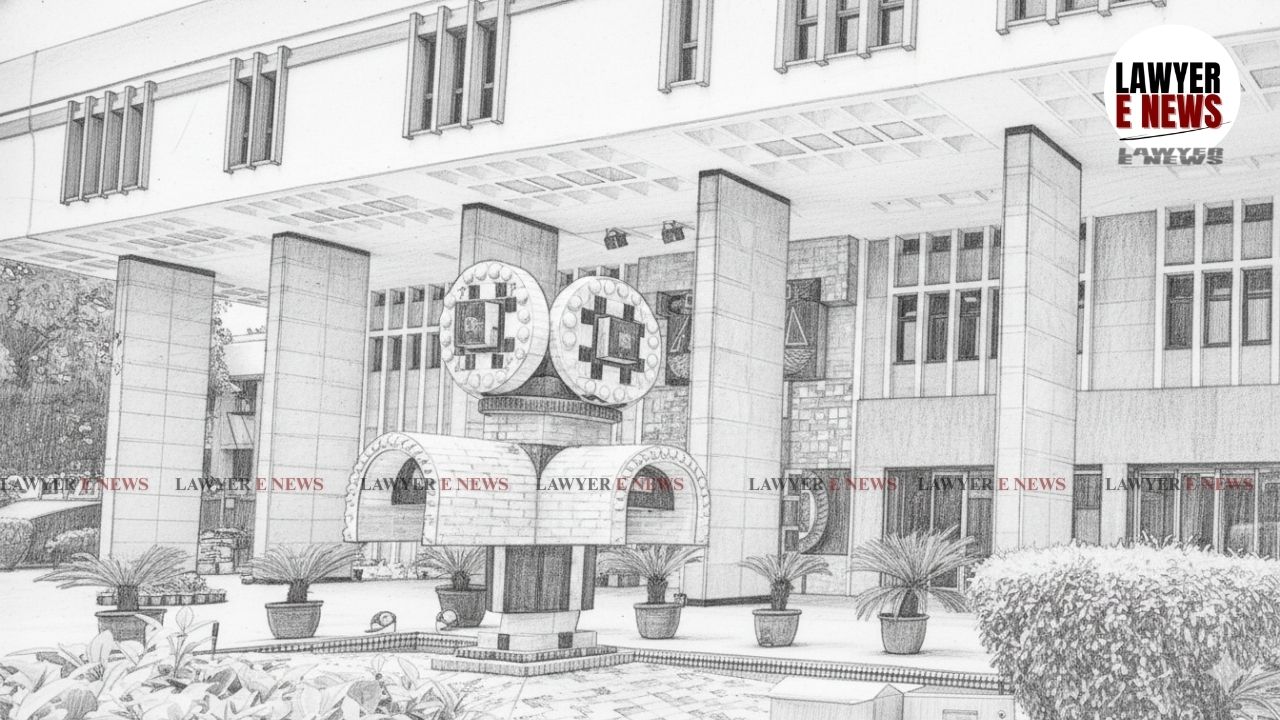
"When a person is permitted to reside in the property of another, out of love and affection without payment or any consideration and without any agreement creating a tenancy, such a person is a licensee/permissive user, whose right to continue in the property can be revoked at any time," Delhi High Court, in a significant ruling, held that a son who is permitted to occupy a portion of his father's property out of "love and affection" does not acquire any individual right or title and remains a mere licensee.
A bench of Justice Neena Bansal Krishna observed that such a permissive user's right to occupy the premises comes to an end the moment the license is revoked by the owner. The Court emphasized that a son cannot challenge his father’s title while deriving his own possession from him.
The matter arose from a Regular First Appeal filed by a son (Appellant) challenging a Trial Court decree that directed him to vacate the first floor of a property in Sarita Vihar and pay mesne profits to his father (Respondent). The father claimed he purchased the property in 1994 through a GPA and Agreement to Sell and allowed his son to stay there on a permissive basis. The son, however, contested the suit, alleging the property was purchased using ancestral funds and that an oral family settlement in 2004 had granted him exclusive ownership of the first floor.
The primary question before the court was whether the son’s occupation of the suit property was in the capacity of an owner through a family settlement or merely as a licensee. The court was also called upon to determine if the father, having purchased the property via GPA/Agreement to Sell, had the locus standi to seek a mandatory injunction for possession without seeking a formal declaration of title.
Son Cannot Question Father's Title While Deriving Possession From Him
The Court addressed the son’s contention that the father did not have a valid title because the property was held through an unregistered GPA and Agreement to Sell, citing the Supreme Court’s decision in Suraj Lamps vs. State of Haryana. The bench noted that while these might not be "conventional documents of sale," the son was deriving his possession and rights from the father himself.
The Court held that there is no basis for a son to question the title of the father in such circumstances. It described the son's challenge as a "specious argument" and a "desperate attempt" to create a right in his favour. The bench clarified that for the purpose of a suit between a father and a son, the documents executed in 1994 were sufficient to establish the father's superior possessory title.
"It is a specious argument raised by the Defendant, as a desperate attempt to somehow create a right in his favour, which is outrightly liable to be rejected."
Property Devolution Under Section 8 Of The Hindu Succession Act
Regarding the son’s claim that the property was "ancestral" because it was bought from the sale proceeds of the grandfather's property, the Court found no evidence to support this. It noted that the grandfather was the exclusive owner of the previous property and had gifted it to the father during his lifetime.
The Court further clarified the legal position under the Hindu Succession Act. It observed that even if it were assumed that the funds came from the grandfather, under Section 8 of the Act, the property would devolve upon the father in his individual capacity and not as coparcenary property. Consequently, the son could not claim any inherent interest in the suit property by birth.
"By no interpretation of law can the property at Madangir, be termed as ancestral property... in terms of Section 8 Hindu Succession Act, the property devolved upon the Plaintiff by way of succession."
Failure To Prove Oral Family Settlement
The bench scrutinized the son’s claim of an "Oral Family Settlement" allegedly entered into in 2004. It noted that the witnesses produced by the son, including his siblings, were unable to provide specific details regarding the date, time, or specific participants of the said settlement.
The Court held that while a family arrangement might permit a relative to occupy a portion of a house, it does not automatically create ownership rights. The evidence established that the son was merely allowed to stay there because of the father-son relationship, which constitutes a license in legal terms.
"There may have been a Family Arrangement where the Defendant may have been permitted to occupy... but that in itself does not in any manner, create any ownership rights in his favour."
Filing Of A Suit Acts As Notice Of Revocation Of License
On the issue of whether the father had formally terminated the license before filing the suit, the Court relied on the Supreme Court precedent in M/s Nopany Investments (P) Ltd. vs. Santokh Singh (HUF). It held that the very act of filing a suit for possession or injunction serves as a notice to the occupant to vacate the premises.
The Court observed that the father had requested the son to vacate in August 2019, which indicated the withdrawal of permission. The bench reiterated that a license created out of love and affection can be revoked at any time, after which the occupant's right to remain in the property ceases immediately.
"Filing of the Suit on 18.09.2019 itself is a Notice to the Defendant to vacate the premises."
Grant Of Mesne Profits Based On Admissions
Finally, the Court upheld the award of mesne profits at ₹5,000 per month. The son had argued that no formal inquiry under Order XX Rule 12 CPC was conducted to determine the market rent. However, the Court pointed out that the son himself admitted during cross-examination that the property could fetch a rent of ₹5,000 to ₹6,000 per month. The Court held that the Trial Court was right to take cognizance of this admission to fix the occupation charges.
The High Court concluded that there was no merit in the son’s appeal. It affirmed the Trial Court's findings that the father was the exclusive owner and the son was merely a permissive user whose license had been validly revoked. The Court dismissed the appeal, upholding the decree for mandatory injunction and mesne profits.
Date of Decision: June 03, 2026