-
by sayum
25 August 2026 11:12 PM







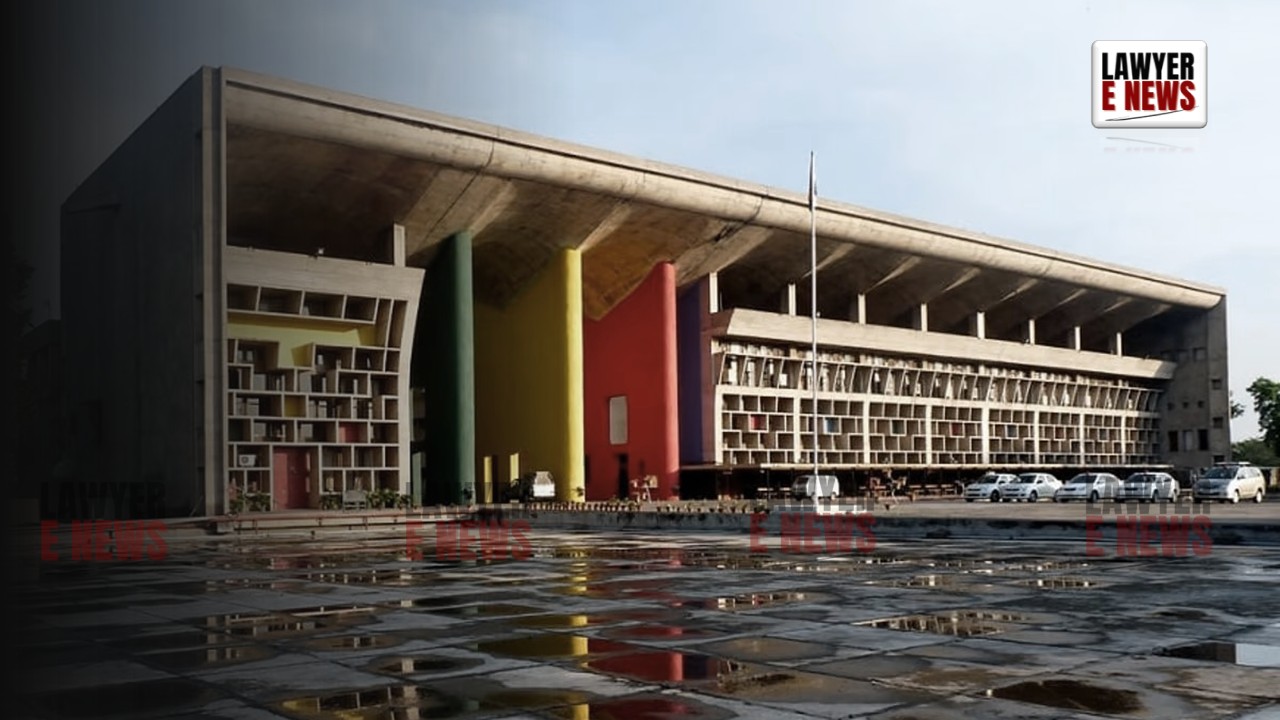
“No son has a right to claim partition against his father–Karta without his consent during his lifetime, under the Hindu Law as applicable in Punjab and Haryana” – In a judgment Punjab and Haryana High Court overturned the trial court’s refusal to reject a suit for partition filed by a son during the lifetime of his father, the Karta of the Hindu Undivided Family (HUF). Justice Deepak Gupta held that a suit for partition is not maintainable without the father-Karta’s consent and dismissed the plaint for lacking any valid cause of action or proper pleadings.
The High Court emphasized that mere claims of a joint Hindu family or ancestral property do not suffice, and the law requires “specific, factual foundations to establish joint family funds or nucleus.”
A Son Demands Partition of Alleged Joint Properties Without Proof or Possession
The plaintiff, Radhey Shyam Garg, filed a civil suit seeking 1/3rd partition share in 12 properties allegedly held by his father, Prabhu Dayal (petitioner), and his brother Brij Mohan Garg. The plaintiff claimed the properties were acquired from joint family funds, partly generated through sale of ancestral land and family gold. He alleged that he contributed all his earnings to the family since 1977 and was later excluded from his share.
The father (defendant No. 2) moved an application under Order VII Rule 11 CPC, seeking rejection of the plaint, stating that the suit disclosed no cause of action, was barred under Hindu law, and was liable for ad valorem court fee as the plaintiff admitted he was not in possession of the properties.
The trial court rejected the application, prompting the revision before the High Court.
“Son Cannot Demand Partition During Father’s Lifetime Unless Father Consents”: Court Applies Settled Hindu Law
The High Court categorically held that the law in Punjab and Haryana does not permit a son to seek partition during the lifetime of the father–Karta, unless the father consents.
Justice Deepak Gupta relied on the settled law in Sitara Lal v. Shiv Kumar (AIR 1986 P&H 112), which had reiterated two authoritative Full Bench decisions:
“Under the principles of Hindu Law applicable in Punjab, a son cannot seek partition of coparcenary property during the lifetime of the father–Karta without his consent.”
The Court emphasized that Haryana, having been carved out of Punjab, continues to follow this binding legal tradition. The plaintiff’s suit, therefore, was premature and legally barred at the threshold.
“Vague Assertions Do Not Make a HUF — Plaintiff Must Plead Specifics of Nucleus or Ancestral Origin”
Another crucial aspect of the judgment was the Court’s sharp criticism of the vague and unsupported claims in the plaint.
The plaintiff alleged that the properties were purchased from the proceeds of ancestral land and gold but failed to specify dates, nature, location, or sale transactions.
The Court noted: “There is only a bald assertion that the suit properties were acquired from the proceeds of ancestral agricultural land and ancestral gold, without disclosing when and which properties were sold, or how such proceeds were applied.”
Justice Deepak Gupta held that the plaint “grossly lacks the necessary averments” and cited the Delhi High Court decision in Surender Kumar v. Dhani Ram (2016 AIR Delhi 120):
“A mere averment of existence of HUF or joint family funds, without pleading factual details to show how the nucleus came into being, is insufficient to sustain a claim for partition.”
“Ad Valorem Court Fee Is Mandatory When Plaintiff Admits No Possession”
The Court further held that since the plaintiff admitted he was not in possession of the suit properties and had not even pleaded joint possession, he was legally required to pay ad valorem court fee.
Justice Deepak Gupta relied on the Supreme Court ruling in Kinny Kapur v. Gunveer Kapur (Law Finder Doc ID #902650), stating:
“When partition of joint family property is sought without possession, court fee is leviable ad valorem on the market value of the share claimed.”
The plaintiff, claiming a 1/3rd share in properties worth approximately ₹10 crores, was bound to pay court fee on that value, but failed to do so. The Court criticized the trial court for deferring this foundational issue:
“Sufficiency of pleadings and proper valuation of court fee are foundational issues that must be examined at the threshold — not postponed.”
High Court Allows Revision, Rejects the Suit, and Sends Back Matter for Fresh Adjudication
Setting aside the trial court’s order dated 10.02.2023, the High Court allowed the revision petition and held:
“The plaint discloses no cause of action in law. The suit is barred as premature under settled Hindu law. The plaintiff has failed to plead the existence of a HUF nucleus or any material particulars of ancestral properties.”
Justice Deepak Gupta ordered the matter to be remitted to the trial court for fresh consideration in accordance with the law, but with clear direction that the present plaint cannot survive in its current form.
Date of Decision: 18.09.2025