-
by sayum
04 August 2026 10:20 AM







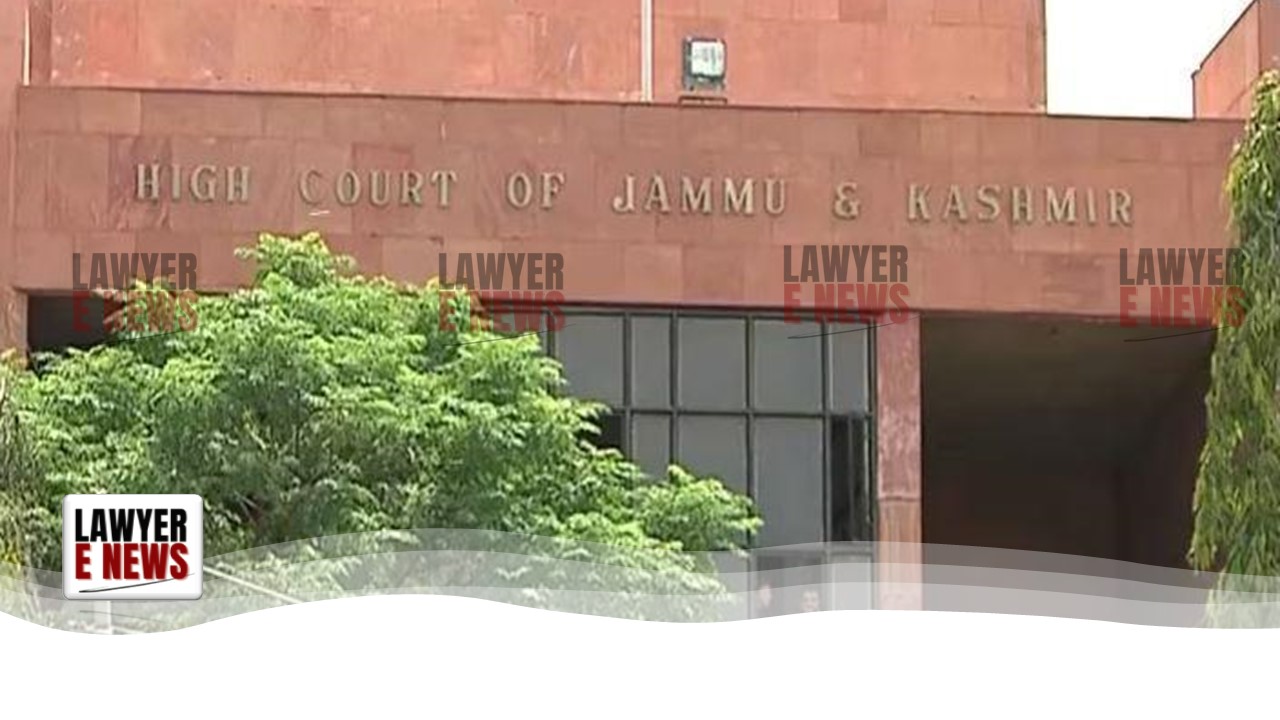
Allegations Are Not So Absurd or Improbable as to Warrant Quashing — High Court of Jammu and Kashmir and Ladakh at Srinagar rejected a plea under Section 482 CrPC to quash FIR No. 108/2021 and the subsequent chargesheet filed for offences including attempt to commit rape, outraging modesty, sexual harassment, criminal trespass, and intimidation, observing that the allegations, as recorded in the prosecutrix’s statement and supported by investigation, did not appear patently false or frivolous.
Justice Vinod Chatterji Koul held: “Power under Section 482 Cr.P.C is not to be used to stifle legitimate prosecution or prematurely cut short a criminal trial merely on the asking.”
The petitioner, a politically active individual, stood accused in a serious complaint lodged by a woman who claimed that he had entered her home without consent, attempted to rape her, offered her money to suppress the incident, and physically assaulted her when she resisted. She further alleged that he threatened her with consequences including withdrawal of her ration card and kidnapping, exploiting his political influence.
The FIR registered at Police Station Achabal invoked Sections 354, 354-A, 451, 506, 376, and 511 IPC. Following investigation, the police filed a chargesheet, prompting the petitioner to approach the High Court seeking quashing of the entire proceedings, arguing that the case was politically motivated, fabricated, and an abuse of process.
Rejecting the argument that the FIR was inherently improbable, the Court reaffirmed that judicial interference at the pre-trial stage under Section 482 CrPC is extremely limited. Referring to the standard laid down in State of Haryana v. Bhajan Lal, the Court emphasized: “Quashing is only appropriate where the allegations are so absurd and inherently improbable that no prudent man can reach a just conclusion that there is sufficient ground for proceeding.”
The Court added: “Inherent power cannot be invoked to stifle legitimate prosecution. Investigation has been carried out and the investigating agency has found that a prima facie case is made out.”
On the contents of the prosecutrix’s statement, the Court noted that her Section 164 CrPC deposition detailed a coherent sequence of events, including forced entry, attempted rape, a physical struggle, offer of hush money, and threats—each aligning with the offences charged.
Justice Koul observed: “Merely branding the prosecution as malicious or alleging political vendetta cannot by itself justify quashing, especially where the complainant has given a detailed statement under Section 164 Cr.P.C and the police has filed a chargesheet upon investigation.”
The Court also declined to assess the truthfulness or falsity of the victim’s statement at the quashing stage, holding: “It is not the function of this Court at this stage to analyze evidence or evaluate credibility of the complainant. That is the exclusive domain of the trial court.”
The High Court dismissed the plea under Section 482 CrPC and upheld the continuation of prosecution, noting that the allegations could not be said to be so fanciful, vague, or implausible as to warrant judicial interference before trial.
Concluding that the petition was devoid of merit, the Court stated: “Allegations cannot be said to be vague or absurd. No ground is made out for exercising inherent powers under Section 482 CrPC to quash FIR or chargesheet.”
The petitioner will now have to face trial, and the evidence will be tested before the competent criminal court in accordance with law.
Date of Decision: April 30, 2025