-
by sayum
26 August 2026 8:37 AM







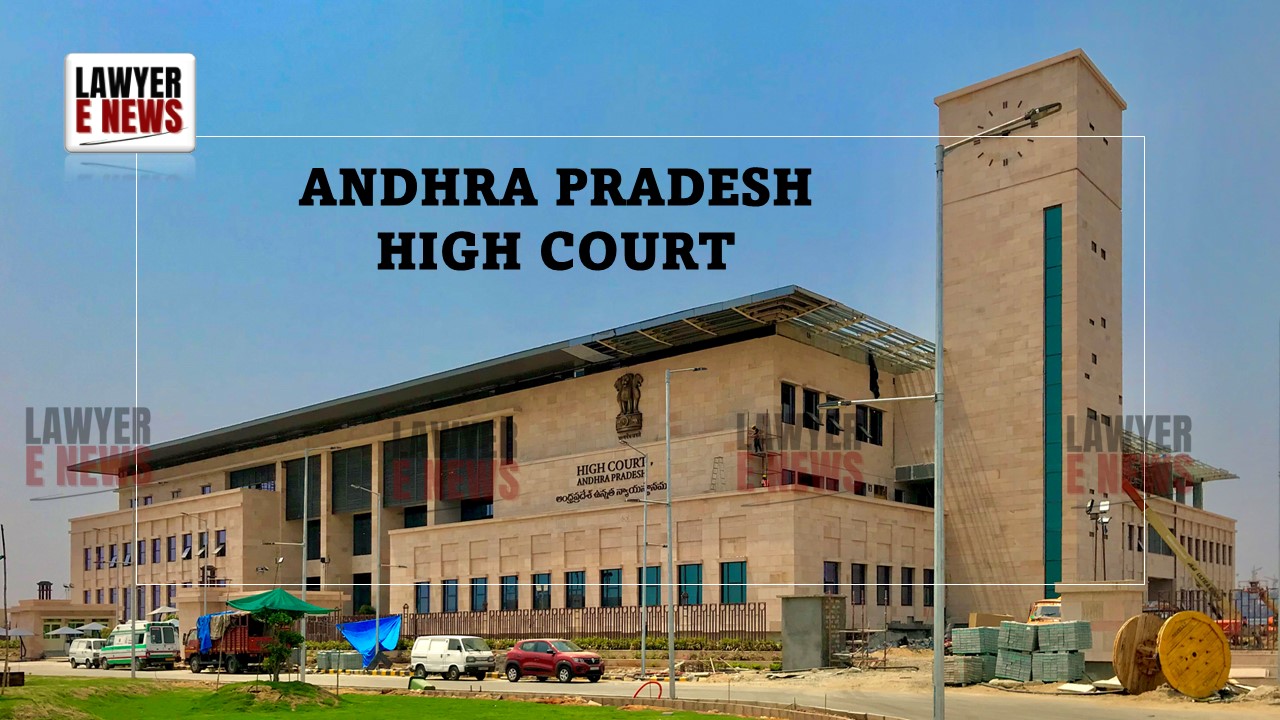
“Financial Incapacity Cannot Override Fundamental Rights”: AP High Court Directs Cooperative Bank to Release Gratuity and Leave Encashment With 10% Interest After 14-Year Delay. In a strongly worded verdict defending the dignity and rights of senior citizens, the Andhra Pradesh High Court held that withholding gratuity and terminal dues for over a decade on the ground of financial incapacity or inter-departmental dispute is both illegal and unconstitutional.
Justice Maheswara Rao Kuncheam, invoking both statutory provisions under the Payment of Gratuity Act, 1972 and fundamental rights under Articles 21 and 300-A of the Constitution, ruled that the Krishna District Cooperative Central Bank (DCCB) and the Primary Agricultural Cooperative Society (PACS) are jointly and severally liable to pay full terminal benefits to the retired Special Category Assistants—most of whom are now septuagenarians, octogenarians, or nonagenarians.
The Court imposed 10% interest on the delayed payment and symbolic costs of ₹10,000 per respondent for their apathetic conduct.
“Gratuity Is a Statutory Right, Not a Benevolence of the Employer” — Delay of 14 Years Deemed Unconscionable
The petitioners, retired Special Category Assistants (formerly Paid Secretaries), had rendered unblemished service from the 1970s to 2013 under the administrative control of DCCB and PACS. However, after superannuation, their gratuity, leave encashment and other terminal benefits remained unpaid for over a decade, on the ground that PACS had not deposited its share of the dues.
The Court held such justification legally untenable, noting: “The right to receive gratuity is a statutory right; the respondent authorities cannot take it away except through the procedure enunciated under the law… Section 4(1) of the Payment of Gratuity Act entitles employees to gratuity on superannuation without any misconduct. None exists in the present case.”
Quoting Section 7 of the Act, the Court emphasized that gratuity must be paid within 30 days of becoming due, failing which interest is mandatorily payable.
“The petitioners’ right to interest on delayed payment is statutory in nature and not subject to the discretion of the respondent authorities.”
“No Excuse Can Justify Withholding What Is Lawfully Earned”: Court Applies Constitutional Bench Rulings on Right to Pension
The High Court drew strength from landmark Supreme Court precedents, including Deokinandan Prasad v. State of Bihar, D.S. Nakara v. Union of India, and Gagan Bihari Prusty v. Paradip Port Trust, to hold that pension and gratuity are not merely statutory entitlements, but protected property rights under Article 300-A, forming an essential part of the right to livelihood under Article 21.
Citing D.S. Nakara, the Court reiterated: “Pension is not a bounty or charity. It is a deferred portion of the compensation for service rendered… it is the most practical manifestation of economic security in the fall of life.”
It held that any deprivation of such earned rights without due process is unconstitutional, stating: “The act of the respondents shirking their statutory obligation to release terminal benefits amounts to violation of petitioners’ constitutional rights under the vistas of Article 21.”
“Senior Citizens Are Not to Be Forgotten Shadows of the System”: Court Condemns Erosion of Dignity in Old Age
In a poignant remark, Justice Kuncheam observed that the deterioration of societal values towards the elderly is a worrying trend, especially when retired employees are forced to approach constitutional courts to claim what is rightfully theirs. He noted:
“It is indeed unfortunate that traditional, moral, and cultural values of showing respect and dignity to senior citizens are gradually declining in our modern society… greater importance is being given to financial affairs rather than human values and emotional connections.”
Expressing anguish over the 14-year delay, the Court declared: “Despite the lapse of more than 14 years and in the absence of any legal impediments, the respondents have not paid the terminal benefits. This conduct is unjust, arbitrary, and legally indefensible.”
“Financial Weakness Is No Defence Against Constitutional Obligation” — DCCB and PACS Declared Jointly Liable
Rejecting the PACS’s plea of financial incapacity, the Court invoked the Supreme Court’s ruling in Kapila Hingorani v. State of Bihar, which held that financial hardship cannot override a public body’s statutory and constitutional obligations.
“A mere financial incapacity or paucity of funds cannot be a valid defence for non-fulfilment of such statutory obligations, more particularly when the employees rendered their services.”
The Court further held that both DCCB and PACS fall within the definition of “State” under Article 12 of the Constitution, and therefore, cannot evade liability under the pretext of inter-institutional logistics.
“No Room for Excuses After Exploiting Service”: Court Directs Full Payment With Interest and Costs
Holding that the petitioners are entitled to full payment of gratuity, leave encashment and other dues, the Court issued the following mandatory directions:
“The respondent Nos. 1 & 4 (DCCB) shall release all terminal benefits such as gratuity amount, leave encashment and other entitlements due to the petitioners or their family members, with an interest @ 10% per annum from the date it became payable, within 8 weeks.”
The DCCB was given liberty to recover PACS’s share separately, but such internal arrangement could not delay justice to the petitioners.
Additionally, the Court imposed costs of ₹10,000 on each respondent, in favour of the petitioners, recognising the hardship caused.
“Gratuity Is a Right Earned Through Sweat and Service, Not a Favour to Be Withheld at Whim”
This landmark ruling by the Andhra Pradesh High Court reasserts the inviolability of retirement benefits—declaring that no public institution, however financially constrained, can deprive its retired employees of their dignity, property, or statutory entitlements.
“Employees who served without blemish for decades cannot be denied their rightful dues at the twilight of their lives. The law and the Constitution stand with them.”
The decision not only ensures relief for the petitioners but also sets a binding precedent for state-controlled cooperative institutions across India to honour their obligations towards retired staff in a time-bound and dignified manner.
Date of Decision: 31 October 2025