-
by sayum
25 August 2026 12:32 PM







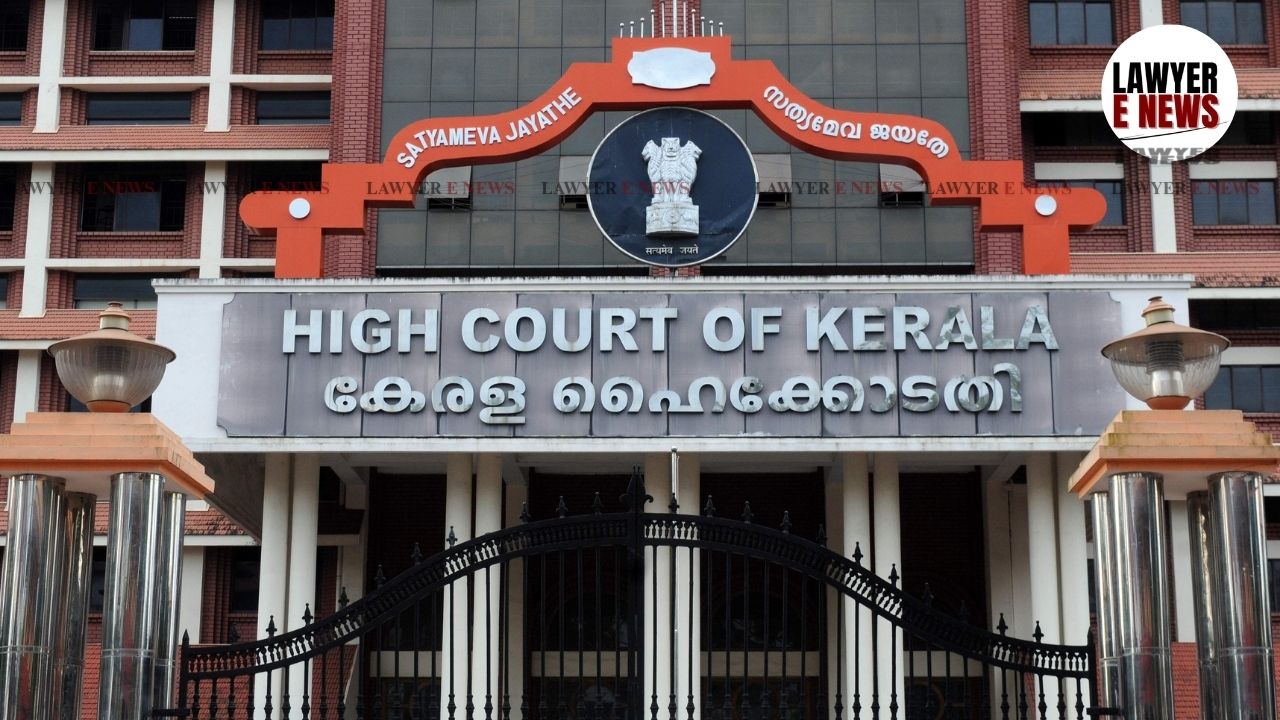
"Son’s Legal Duty to Maintain Mother Not Dependent on Husband’s Support", In a latest judgement Kerala High Court addressing a son's legal obligation under Section 144 of the Bharatiya Nagarik Suraksha Sanhita, 2023 (corresponding to Section 125 CrPC) to provide maintenance to his aged mother. The Court, while dismissing a revision petition filed by the son, upheld the Family Court’s order granting ₹5,000 per month as maintenance to the 60-year-old mother, ruling that the son’s duty is independent and not extinguished by the presence of a living or earning husband.
The Court emphasized the social justice mandate of maintenance laws, stating that such provisions must be interpreted liberally to protect vulnerable dependents like aged parents and to uphold the constitutional values under Articles 15(3) and 39.
“Even if Husband Is Supporting, Son Cannot Escape Legal Duty to Maintain Aged Mother”
The case arose out of an order dated 19.07.2025 passed by the Family Court, Tirur in M.C. No.229 of 2022, wherein the respondent-mother had sought maintenance from her son, the revision petitioner. Though she initially sought ₹25,000 per month, the Family Court awarded ₹5,000 after evaluating the evidence.
The petitioner-son, Farookh, challenged this order contending that his mother was already being maintained by her husband (RW1), a fisherman owning a boat, and that she was also rearing cattle and earning a livelihood. He further claimed he had to maintain his own family, including a wife and child.
Justice Dr. Kauser Edappagath, however, rejected each of these defences, observing that Section 144(1)(d) BNSS, which mandates maintenance to aged parents, imposes an independent and concurrent statutory obligation on children that is not dependent on the father's role. The High Court observed:
“The right of a woman to claim maintenance from her son or daughter is independent of her husband’s obligation to maintain her… The scheme under Section 144 contemplates that the rights are mutually exclusive and co-existent.”
The Court further held that the mere presence of a husband who is allegedly maintaining the mother does not bar her right to claim maintenance from the son if the support is insufficient or unproven. The Family Court had already found the husband's support claim unreliable, and the High Court affirmed that conclusion.
“Inappropriate for Affluent Son to Tell His Aged Mother to Rear Cattle”: Court Slams Moral Lapses
One of the most striking aspects of the judgment was the strong criticism of the petitioner’s argument that his mother was rearing cattle and thus earning sufficiently to support herself. The Court categorically rejected this, stating:
“It is quite unfortunate and inappropriate for an affluent son to tell his aged mother that she should go to cattle rearing to earn her livelihood. Cattle rearing is a physically demanding work.”
The judgment went further, underscoring the moral failure on part of the son, noting that expecting a sexagenarian woman to engage in labor-intensive activities to avoid her son’s financial obligation reflects a “disregard for the mother’s well-being and dignity.”
The Court also noted that the son had not provided any evidence to substantiate his claim, nor did he enter the witness box. On the other hand, the mother gave categorical evidence of having no job, employment, or income.
The son's additional plea that he had a legal duty to maintain his own family was also dismissed outright. The Court held:
“A son cannot escape from the liability to maintain his aged parents merely because he is married and has a family.”
Petitioner Working Abroad with Sufficient Means – Court Finds No Merit in Revision
It was undisputed that the petitioner is employed in the Gulf. Though he denied earning ₹2,00,000 per month as claimed by the respondent, no documentary proof was furnished by him regarding his actual income. Based on the material on record, the Court accepted that he had sufficient means to maintain his mother.
Justice Edappagath ruled that the ₹5,000 monthly maintenance was not only legally justified but reasonable and even modest, considering the son’s earning capacity and the mother’s needs.
“Considering the requirement of the respondent and the means of the petitioner, the maintenance of Rs. 5,000/- awarded by the Family Court appears to be absolutely reasonable, if not inadequate.”
The revision petition was therefore dismissed in its entirety, with the High Court affirming the Family Court's award of maintenance under the welfare-oriented lens mandated by the Constitution and the BNSS.
In this judgment, the Kerala High Court reinforced the principle that maintenance obligations under Section 144 BNSS are rooted in constitutional values of dignity and social justice. The decision underscores that financial responsibility towards aged parents is not conditional, and children cannot hide behind excuses of their own family responsibilities or the spouse’s support.
Justice Edappagath’s ruling stands as a stark reminder of the legal and moral duties children owe to their parents, especially in the twilight years of their lives.
Date of Decision: 04 November 2025