-
by sayum
28 August 2026 10:07 AM







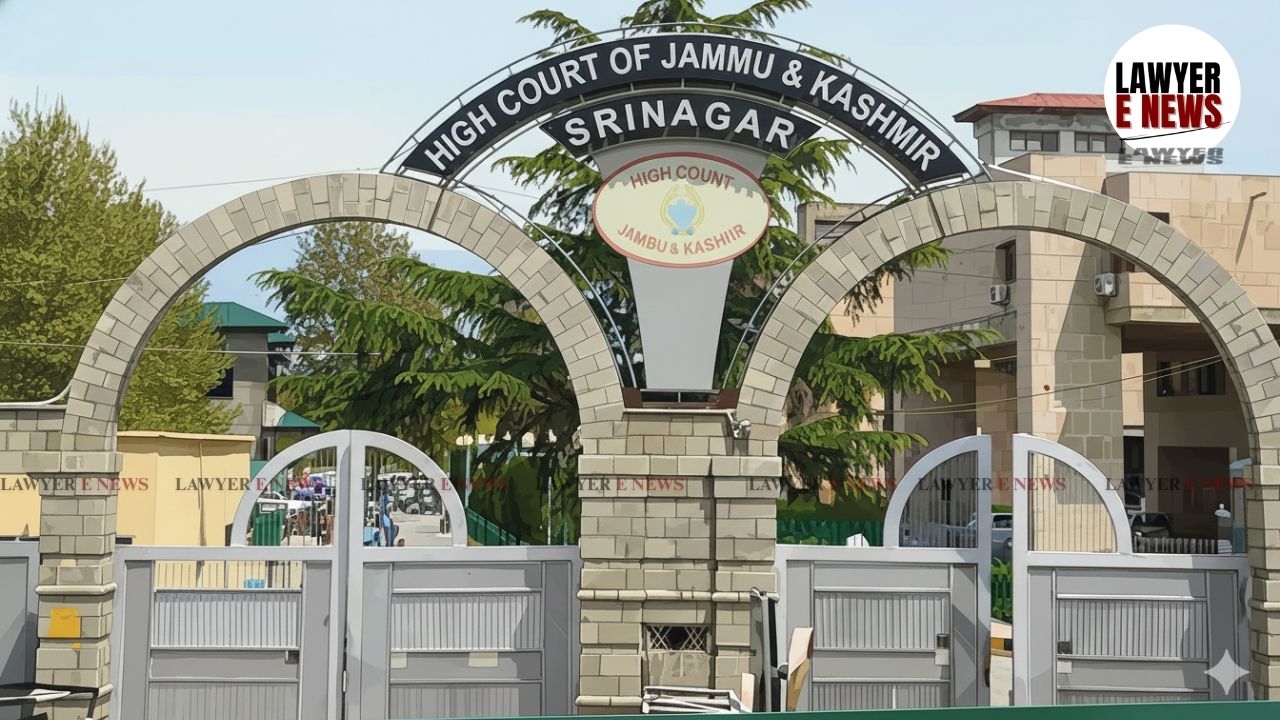
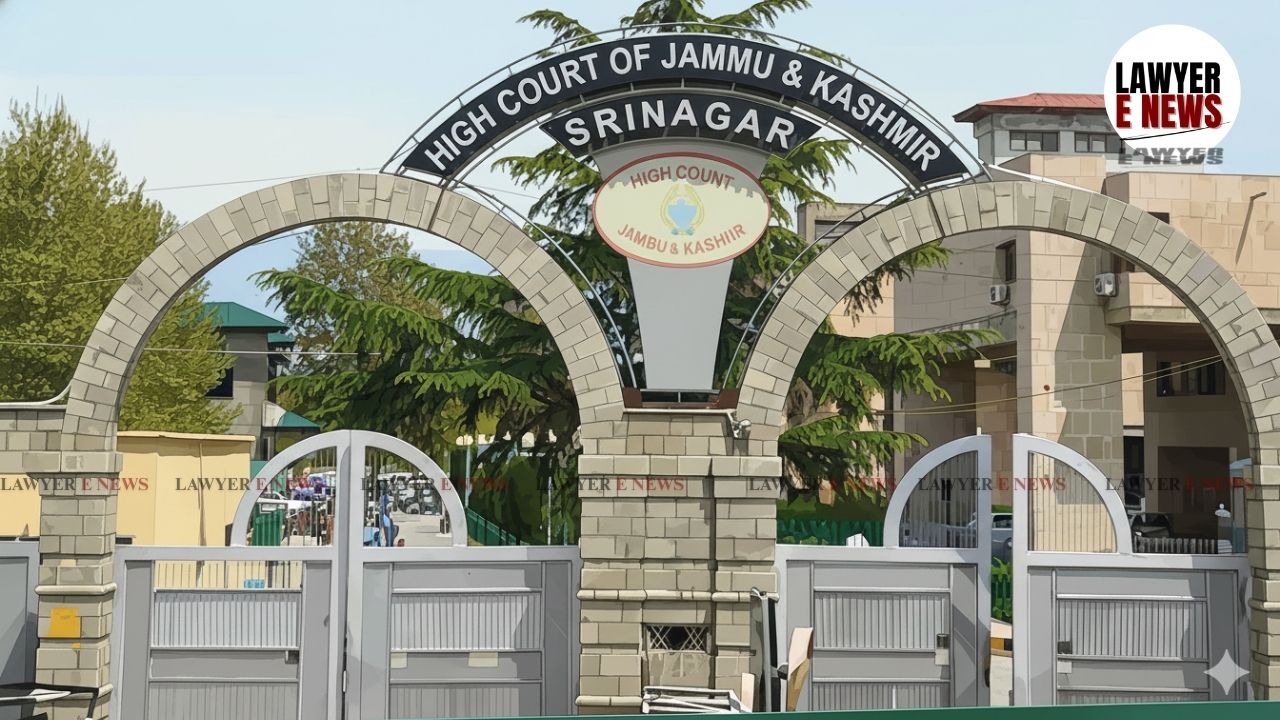
"Simply describing an act or transaction to be fraudulent will not extend the time for its correction to infinity; for otherwise the exercise of revisional power would itself be tantamount to a fraud upon the statute that vests such power in an authority," High Court of Jammu & Kashmir and Ladakh, in a significant ruling, held that revisional jurisdiction under Section 15 of the Land Revenue Act must be exercised within a reasonable period, even if the statute prescribes no specific limitation.
A bench of Justice Wasim Sadiq Nargal observed that entertaining a revision petition after an inordinate delay of nearly two decades, without any cogent explanation, undermines the doctrine of finality and settled rights.
The petitioners challenged an order passed by the Financial Commissioner (Revenue) on May 25, 2023, which had set aside Mutation No. 4813 of Estate KP Bagh, Srinagar, dated December 9, 2004. The respondent had instituted the revision proceedings in 2021, nearly twenty years after the mutation was originally attested. During this intervening period, the property had changed hands multiple times, and third-party rights had crystallized.
The primary question before the court was whether the revisional authority could have entertained a challenge to a mutation after a lapse of twenty years in the absence of a satisfactory explanation for the delay. The court was also called upon to determine whether the phrase "at any time" in Section 15 of the Land Revenue Act confers unfettered power to reopen concluded matters indefinitely.
Court Explains Scope of Revisional Power Under Section 15 Land Revenue Act
The court noted that while Section 15 of the Land Revenue Act does not prescribe a specific period of limitation for the Financial Commissioner to call for records, it is a well-settled principle of law that such power must be exercised within a reasonable timeframe. The bench emphasized that the concept of reasonableness acts as an inbuilt limitation on the exercise of discretionary jurisdiction.
Inordinate Delay of Two Decades Without Explanation is Fatal
The bench observed that the impugned exercise of revisional jurisdiction suffered from a fundamental infirmity as it permitted the reopening of a mutation that had attained finality nearly twenty years ago. The record failed to disclose any bona fide explanation for this prolonged inaction, and the Financial Commissioner had failed to record any satisfaction regarding the adequacy of the delay before interfering with the record.
Court Warns Against Keeping the 'Sword of Damocles' Over Litigants
Relying on the Supreme Court's decision in H. Guruswamy v. A. Krishnaiah (2025), the court stated that the rules of limitation are based on sound public policy and equity. The bench remarked that no court or authority should keep the "Sword of Damocles" hanging over the head of a litigant for an indefinite period, as it creates avoidable and endless uncertainty in human affairs.
"The length of the delay is definitely a relevant matter which the court must take into consideration while considering whether the delay should be condoned or not."
Fraud Allegations Do Not Grant Indefinite Extension for Revision
Addressing the respondent’s plea that the mutation was fraudulent, the court held that even allegations of fraud do not grant an indefinite extension for the exercise of revisional powers. Such jurisdiction must still be invoked within a reasonable period from the date of discovery of the alleged fraud. The bench noted that a mere bald allegation of fraud without specific particulars cannot be the basis for unsettling long-standing revenue entries.
Revisional Jurisdiction Ordinarily Limited to Three to Five Years
The court cited its earlier precedent in Ayub Gojar & Ors v. Financial Commissioner (2018), which established that revisional power should ordinarily be exercised within three years and in no case beyond five years, even where fraud is alleged. The bench observed that the passage of considerable time and the creation of third-party interests are factors that must be given due weight.
Passage of Time Lends Sanctity to Official Records
The bench observed that the passage of time lends a degree of sanctity to transactions reflected in official records. By entertaining a revision after an extraordinary lapse of time, the settled position was rendered uncertain. The court found that the Financial Commissioner’s order did not indicate any balancing of equities or consideration of the ramifications of unsettling entries that had been acted upon for decades.
"The exercise of revisional jurisdiction after such an inordinate lapse of time required the recording of compelling and cogent reasons, which are conspicuously absent in the impugned order."
Doctrine of Laches and Acquiescence Applies to Revenue Proceedings
The court further noted that the impugned order ignored the doctrine of laches and acquiescence. A party who remains indolent for an extended period despite having the opportunity to assert their rights cannot be permitted to revive stale claims to the prejudice of others. The direction for de novo consideration was found to be an indirect way of reviving a time-barred claim.
Final Directions and Quashing of the Impugned Order
Finding that the Financial Commissioner had committed legal and procedural improprieties, the High Court allowed the writ petition. The order dated May 25, 2023, was quashed, and Mutation No. 4813 dated December 9, 2004, was ordered to be restored. The court concluded that the absence of a limitation period does not confer a license to unsettle settled positions indefinitely.
Date of Decision: 02 June 2026