-
by sayum
28 July 2026 1:44 PM







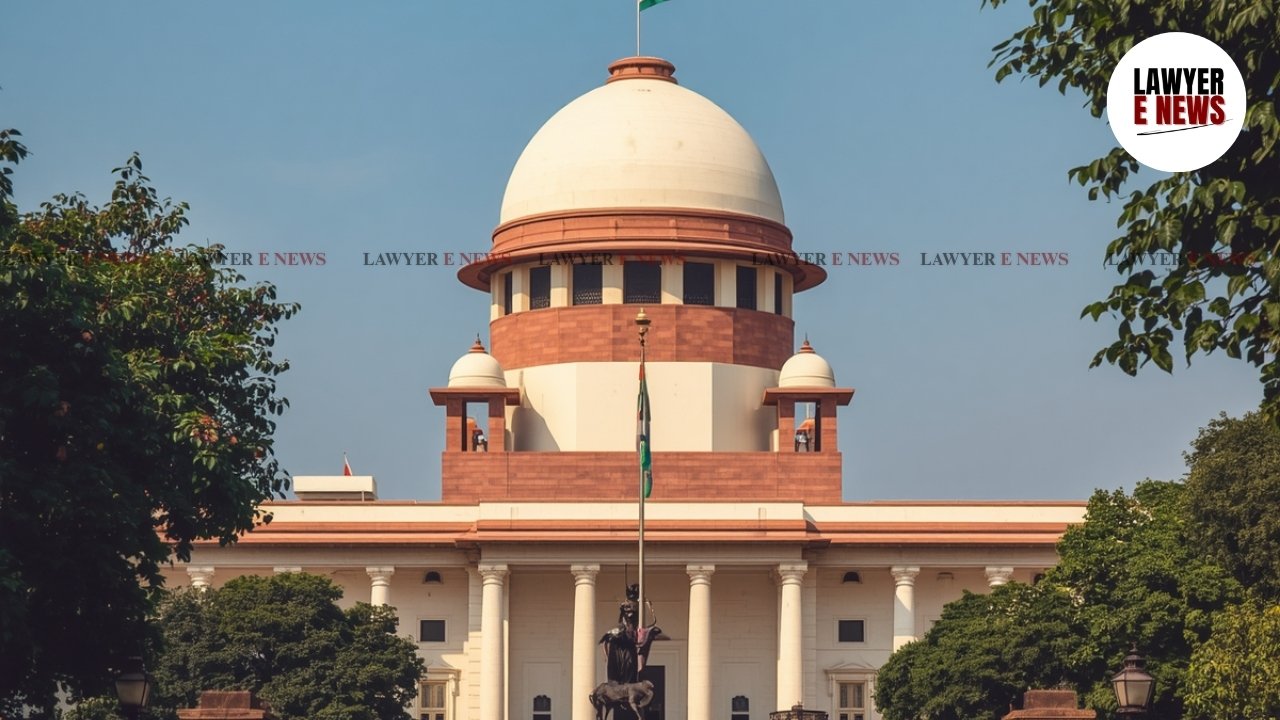
"A railway servant does not cease to be a member of the civil service of the Central Government merely because his conditions of service are regulated by rules specific to the Railways," Supreme Court, in a significant ruling dated May 26, 2026, held that employees of the Indian Railways are fundamentally Central Government servants holding civil posts under the Union.
A bench of Justice Dipankar Datta and Justice Satish Chandra Sharma observed that the mere existence of separate service rules for railway personnel does not alter their constitutional status as members of the Union’s civil services. The Court set aside a Kerala High Court judgment which had erroneously concluded that railway service could not be reckoned as Central Government service for pay weightage purposes.
The appellant, Bency John, served in the Indian Railways for over ten years before joining the Kerala State Electricity Board (KSEB). While the Board initially granted him pay weightage by reckoning his past railway service as "Central Government Service," it later sought to withdraw the benefit and recover the excess amount. The High Court’s Division Bench upheld the Board's withdrawal, reasoning that since railway servants are governed by separate rules and not the CCS (Conduct) Rules, 1964, they do not qualify as Central Government servants for weightage.
The primary question before the court was whether a railway servant ceases to be a member of the civil service of the Union merely because separate rules govern their recruitment, conduct, and pension. The Court also determined whether the Board, having accepted pro-rata pension contributions and acted upon its own orders for years, was estopped from unilaterally withdrawing the benefit.
Railways Is An Integral Department Of The Union
The Court began by emphasizing that the Indian Railways is the largest civilian employer in the country and functions directly under the Ministry of Railways. The bench noted that it is not a separate legal entity, a Public Sector Undertaking, or a statutory corporation, but an integral department of the Government of India. The judges observed that the business of the Railways is transacted in the name of the President of India under the Government of India (Allocation of Business) Rules, 1961.
Court Explains Constitutional Status Of Railway Servants
The Court clarified that Article 309 of the Constitution serves as the source for all service rules, including those for the Railways. While the Central Civil Services (CCS) Rules generally exclude railway servants, the President has framed nearly identical rules specifically for the Railways under the same constitutional authority. The bench noted that the existence of separate rules like the Railway Services (Conduct) Rules, 1966, is a matter of administrative convenience and does not diminish the status of the employees as Union civil servants.
"The Railway Board functions as the Government of India itself for railway administration; consequently, service under the Railway Board in the broader sense is service under the Central Government."
Protection Under Article 311 And Administrative Tribunals Act
The bench highlighted that it is undisputed that railway servants are entitled to the procedural safeguards provided under Article 311 of the Constitution. The Court reasoned that since Article 311 applies only to members of the civil services or those holding civil posts under the Union or a State, railway employees must necessarily fall within this category. Furthermore, the jurisdiction of the Central Administrative Tribunal (CAT) under Section 14 of the Administrative Tribunals Act, 1985, explicitly covers railway servants as Central Government employees.
Court Relies On Seven-Judge Bench Precedent
The Court placed heavy reliance on the landmark seven-judge bench decision in Moti Ram Deka v. North East Frontier Railway (1964). In that case, the Supreme Court had struck down certain railway service rules for violating Article 311(2), fundamentally acknowledging that railway servants hold civil posts under the Union. The bench observed that constitutional protection cannot be circumvented by merely changing the nomenclature of the rules or the department.
Nutshell: Separate Rules Do Not Create A Distinct Class Of Employment
The Supreme Court rejected the respondent's argument that "Central Government Service" refers only to those governed by the CCS Rules. The bench observed that if such an interpretation were accepted, it would create an "artificial and invidious distinction" between different departments of the same government. For instance, an employee from the Department of Posts would be treated as a Central Government servant while one from the Ministry of Railways would not, despite both working for the Union.
"Holding a post under the Railway Board does not detract from the position that a railway servant is a Government servant."
Doctrine Of Estoppel And Arbitrary Withdrawal Of Benefits
The Court further held that the KSEB was estopped from withdrawing the benefits after having accepted the pro-rata pension liability from the Railways. The bench noted that the Board's own orders and long-term settlements consistently provided that former Government service would be counted for weightage. The unilateral withdrawal of this benefit, years after the appellant had joined and eventually retired, was deemed arbitrary and illegal.
The Supreme Court allowed the appeals and set aside the Division Bench orders of the Kerala High Court. The Court restored the Single Judge's judgment, confirming that railway service must be reckoned as Central Government service for all consequential benefits including pay weightage. The Board has been directed to extend all benefits to the appellant within three months and was cautioned against discriminating against other similarly situated employees.
Date of Decision: May 26, 2026