-
by sayum
25 August 2026 12:32 PM







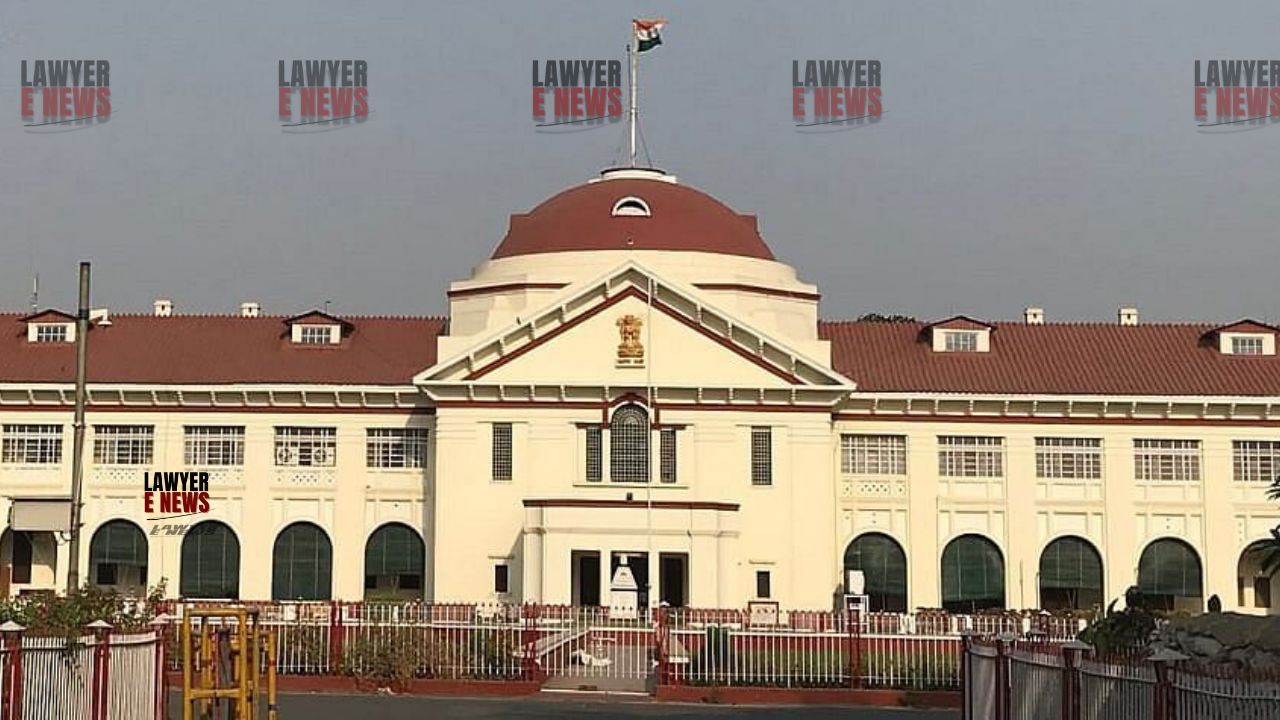
“Delay of Nine Years Defeats the Very Object of Compassionate Appointment”, In a significant ruling Patna High Court, while dismissing a claim for compassionate appointment made nearly nine years after the death of an employee, reaffirmed that compassionate appointment is not a matter of inheritance but a mechanism to alleviate sudden financial crisis. Justice Partha Sarthy emphasized that no vested right accrues under a compassionate appointment scheme and that delayed applications fail the very purpose behind such welfare measures.
The Court, however, directed the State Bank of India (SBI) to process the petitioner’s claim for ex-gratia compensation on submission of required documents and also ordered release of arrears of family pension without insisting on a life certificate, noting that the issue remained pending before the Court.
“The Whole Object of Granting Compassionate Employment Is to Enable the Family to Tide Over the Sudden Crisis” – Supreme Court Precedent Applied
The petitioner, Rahul Kumar Singh, whose father was working as a messenger at SBI’s Anisabad Branch and died in service on 12 May 2003, sought a writ of mandamus for appointment on compassionate grounds. He had applied only in August 2012, after attaining majority in 2011, and had approached the High Court in 2018. The SBI had meanwhile withdrawn its compassionate appointment scheme with effect from 04 August 2005, and a revised scheme introduced in 2011 explicitly excluded cases of deaths prior to the 2005 withdrawal.
Relying on the landmark decision in Umesh Kumar Nagpal v. State of Haryana [(1994) 4 SCC 138], the Court underscored the legal principle that:
“The whole object of granting compassionate employment is thus to enable the family to tide over the sudden crisis… The object is not to give a member of such family a post much less a post for post held by the deceased... What is further, mere death of an employee in harness does not entitle his family to such source of livelihood.”
Justice Sarthy added that “appointment on compassionate ground is not a vested right” and cannot be invoked after such a substantial delay, especially when the financial hardship is no longer pressing.
Delayed Application Filed in 2012 Not Maintainable; Scheme Withdrawn in 2005
The Court decisively held that even though the petitioner’s father had died during the operation of the 2003 scheme, the right to be considered for appointment under that scheme could not survive in perpetuity, particularly when the first application was made nine years later.
The Court observed:
“Even under the earlier scheme, the application filed after inordinate delay cannot be entertained… The petitioner having been able to tide over the financial crisis for a considerable period, no right survives.”
Thus, the claim for compassionate appointment was rejected.
Ex-Gratia Claim to Be Considered Upon Submission of Documents
The Court turned to the petitioner’s alternative prayer for ex-gratia lump sum compensation, which SBI had conditionally considered via letter dated 15 December 2018, seeking certain additional documents. The Court noted that since this request was made during the pendency of the writ petition, the Bank was under a duty to process it diligently.
Justice Sarthy directed:
“The petitioner will supply all required documents to the Bank within a period of six weeks… The respondent Bank will decide the application… within a period of three months… and either release the amount or communicate a reasoned order.”
This direction ensures that the petitioner, despite being ineligible for appointment, will not be denied any monetary compensation due under applicable schemes.
Family Pension Arrears To Be Released Without Life Certificate
On the issue of arrears of family pension for the period February 2018 to July 2018, the Bank had withheld payment on the ground that a life certificate was not submitted. The Court found this technical objection unsustainable since the matter had remained under judicial consideration and the petitioner was not at fault.
The Court ordered:
“The arrears of family pension… shall be paid to the petitioner without the requirement of furnishing any life certificate, within a period of three months…”
A Clear Message on the Purpose of Compassionate Appointment
The judgment reinforces the legal understanding that compassionate appointment is not an alternative mode of recruitment, but an exception to the rule, meant to provide immediate relief to families plunged into financial distress due to the death of a breadwinner. Courts have consistently held that compassionate appointment cannot be granted based on sympathy or passage of time, but must align with the original purpose of the scheme.
By refusing to entertain the petitioner’s delayed request, but still protecting his right to financial compensation and pension arrears, the Patna High Court struck a balanced and legally consistent position, upholding both institutional policy integrity and humanitarian considerations.
Date of Decision: 13 November 2025