-
by sayum
04 August 2026 6:31 AM







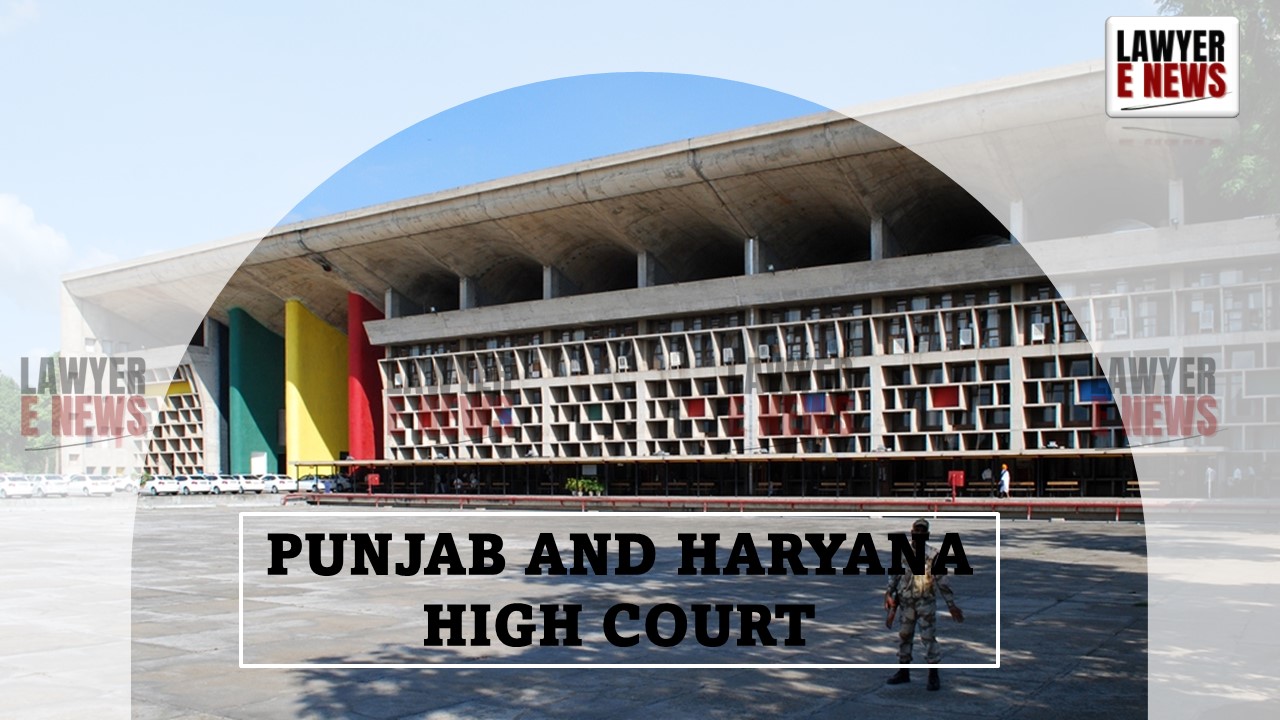
“What Cannot Be Done Directly Cannot Be Done Indirectly” - In a landmark ruling Punjab & Haryana High Court quashed the cognizance and summoning order passed against a public servant under Section 120-B IPC. Justice Manjari Nehru Kaul held that when the prosecution for the substantive offence under the Prevention of Corruption Act, 1988 (PC Act) is barred due to lack of sanction, the accused cannot be proceeded against solely for conspiracy under IPC if the alleged conspiracy pertains only to that barred offence. This judgment reaffirms the sanctity of the statutory protection under Section 19 of the PC Act and condemns prosecutorial overreach.
FIR No. RC0052021A0014 was registered by the CBI on June 28, 2021, under Section 7 of the PC Act read with Section 120-B IPC against CGST officials Rohit Sharma and Sachin Ahlawat. The allegation pertained to a conspiracy to demand illegal gratification.
Upon completion of investigation, CBI sought sanction under Section 19 of the PC Act. While sanction was granted for Rohit Sharma, it was denied in respect of the petitioner, Sachin Ahlawat, by the competent authority in the Ministry of Finance.
Despite this, the CBI pressed for prosecution of Ahlawat under Section 120-B IPC, and the Trial Court, Panchkula, took cognizance and summoned him via order dated February 13, 2025. Ahlawat challenged the order before the High Court, contending that the entire conspiracy was exclusively aimed at the alleged offence under Section 7 of the PC Act, and without sanction, he could not be prosecuted—directly or indirectly.
Can a Public Servant Be Prosecuted for Criminal Conspiracy Alone When Sanction for the Substantive Offence Under PC Act is Denied?
The Court answered this in the negative. Justice Kaul emphasized that: “Where the object of the alleged conspiracy is an offence for which the law prohibits prosecution—such as under the PC Act in the absence of valid sanction—the ancillary charge of conspiracy cannot independently survive.”
The CBI admitted that:
• No independent IPC offence other than Section 120-B was invoked.
• The entire conspiracy related exclusively to the demand of illegal gratification.
• The competent authority had expressly declined sanction to prosecute Ahlawat.
• That denial of sanction was never challenged by the CBI.
On Statutory Protection Under Section 19 of PC Act:
“Section 19 is not a procedural technicality but a substantive safeguard. Once sanction is refused, the embargo operates in full force.”
On Misuse of Section 120-B IPC to Circumvent Sanction Requirements: The Court condemned the attempt to invoke conspiracy as a backdoor prosecution mechanism: “Such an approach would render Section 19 of the PC Act nugatory. What cannot be done directly cannot be done indirectly.”
“The attempt to invoke Section 120-B IPC in such a scenario amounts to a colourable exercise of power.”
The Court also relied on Pavana Dibbur v. Directorate of Enforcement [(2023) 15 SCC 91], holding that conspiracy must relate to a triable offence. Since the alleged conspiracy only pertained to an offence under the PC Act—which was barred—the charge under Section 120-B IPC could not stand.
The Court noted that even prima facie, the material did not support the allegation of conspiracy. Paragraph 16.44 of the charge sheet revealed that: “Sachin Ahlawat had rejected the request not to arrest the complainant’s associate and proceeded with lawful enforcement action.”
This directly negated any role in a conspiracy to demand or accept bribes.
Justice Manjari Nehru Kaul allowed the petition and quashed the summoning order: “A public servant, against whom sanction under Section 19 of the PC Act has been expressly denied, and who is not charged with any substantive IPC offence, cannot be prosecuted solely for Section 120-B IPC when the alleged conspiracy relates only to the barred offence under the PC Act.”
This judgment strengthens the legal principle that sanction under anti-corruption laws is a substantive legal requirement and not a mere formality. It also limits prosecutorial discretion by reinforcing that conspiracy charges cannot be used to override statutory safeguards.
Date of Decision: April 23, 2025