-
by sayum
26 August 2026 8:37 AM







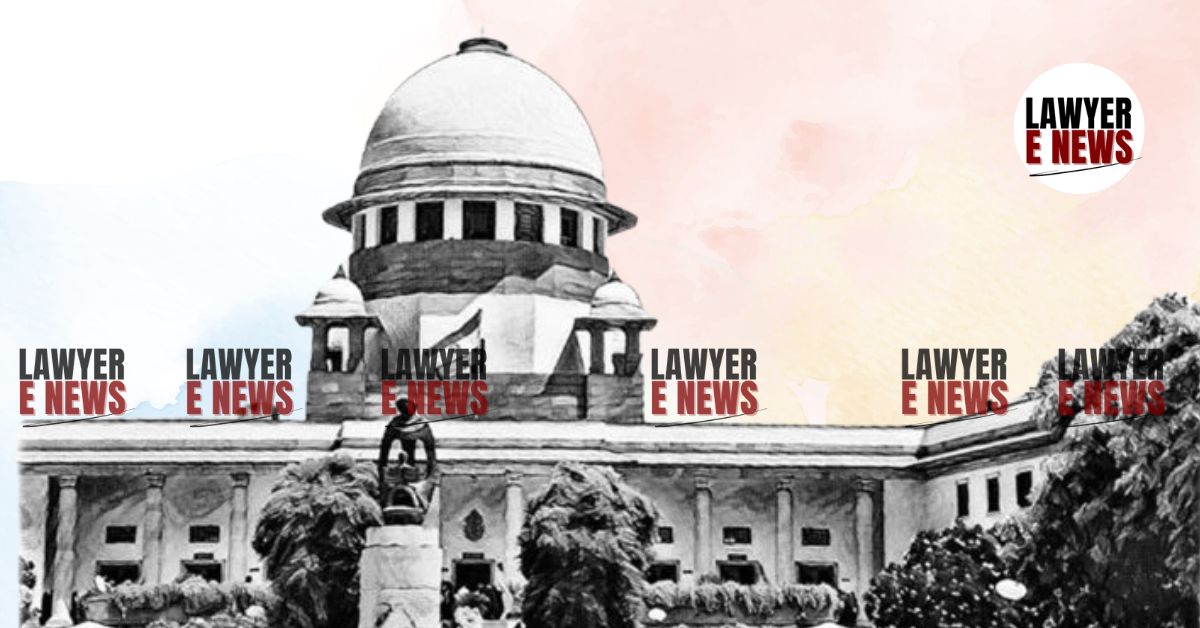
“It will be unjust to interpret a few letters to infer severance of service when resignation was withdrawn before final acceptance”, Supreme Court of India, in Konkan Railway Corporation Ltd. & Others v. S.D. Manohara, dismissed a review petition filed by Konkan Railway against its earlier ruling dated 13 September 2024. The apex court held that no error apparent on the face of the record had been demonstrated to justify interference under its review jurisdiction under Article 137 of the Constitution.
The judgment was delivered by a Bench comprising Justice Pamidighantam Sri Narasimha and Justice Pankaj Mithal, which upheld the reinstatement of the employee who had withdrawn his resignation prior to its final acceptance by the employer.
“Withdrawal of resignation prior to final acceptance is legally valid”
The case revolved around the resignation submitted by S.D. Manohara, an employee of the Konkan Railway Corporation, on 5 December 2013, intended to take effect from 5 January 2014. However, he withdrew this resignation by letter dated 26 May 2014, before it was conclusively accepted by the employer. The petitioners contended that the resignation had already been accepted through a communication dated 16 April 2014, and hence, the withdrawal had no legal effect.
Rejecting this argument, the Court reaffirmed its earlier findings and noted, “Though the respondent employee resigned by letter dated 05.12.2013, the final letters of the Konkan Railway dated 23.06.2014, 01.07.2014 and 15.07.2014 conclusively established that the resignation is accepted with effect from 01.07.2014”. Thus, the court held the withdrawal of resignation was valid and effective, as it was made “much before 01.07.2014, when he was relieved”.
The original appeal arose after the Karnataka High Court held that the employee could not retract his resignation. The Supreme Court reversed this finding on 13 September 2024, emphasizing the principle that a resignation can be withdrawn before it is finally accepted. In doing so, the Court acknowledged the employee's “23 years of unblemished service” and criticized the employer’s reliance on technicalities and delayed internal communications to assert severance of service.
The employer, dissatisfied with the direction to pay 50% back wages from 1 July 2014 (the date of formal acceptance) till the date of reinstatement, sought a review of the Supreme Court’s judgment, alleging factual inaccuracies and erroneous assumptions by the Court.
Legal Issue: Whether the alleged factual discrepancies justified review under Article 137
The Court considered whether the discrepancies pointed out by the petitioner—such as the date of communication of resignation acceptance or the employee’s physical presence in office—could be said to constitute errors apparent on the face of the record warranting a review.
Firmly rejecting this plea, the Bench reiterated the limited scope of review jurisdiction, observing: “Review cannot be an appeal in disguise”. The Court found no substantive error in its earlier ruling, noting that “the errors as pointed out in the review petition do not have the effect of changing our decision”.
On Back Wages and Equity: “Interests of justice justified partial relief”
The Court had earlier awarded 50% of salary from 01.07.2014 till the date of reinstatement, balancing the principle of “no work, no pay” against considerations of fairness and the prolonged litigation endured by the employee. In rejecting the employer’s challenge to even this partial relief, the Bench remarked:
“Justice and equity lie in favour of the employee, who has rendered 23 years of unblemished service. It will be unjust to interpret few letters exchanged between the parties to hold that the employee has deliberately and consciously resigned, particularly when he has been contesting the case for more than a decade.”
The Supreme Court firmly dismissed the review petition, stating that no new facts or legal errors were brought to its attention that would justify revisiting its earlier decision. It emphasized the settled law on resignation withdrawal and the sanctity of procedural fairness. The Court reiterated that “minor discrepancies in date of communication or presence in office did not alter the legal consequence of withdrawal before acceptance”, and accordingly, upheld its previous judgment.
The matter thus stands concluded, with the respondent-employee's reinstatement and partial back-wages awarded in equity, bringing an end to a decade-long dispute.
Date of Decision: 25 November 2025