
-
by sayum
26 August 2026 8:37 AM







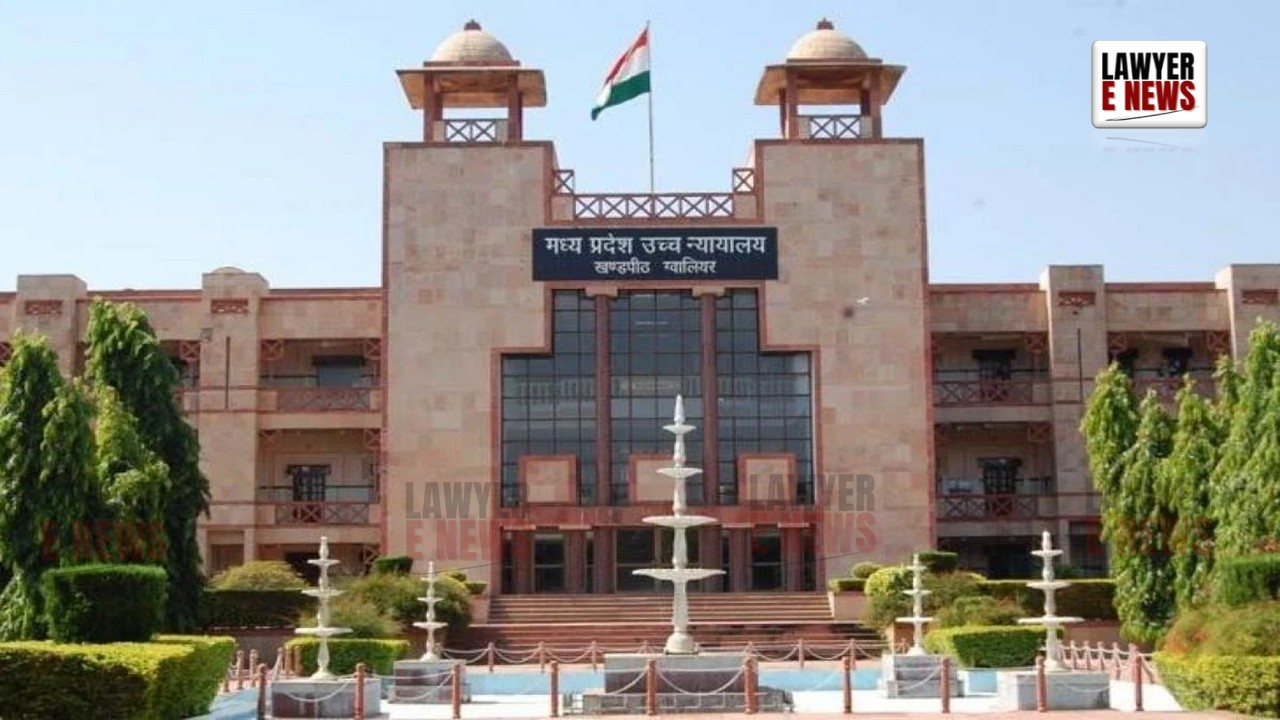
“Once Defendant Has Appeared, Return of Plaint Must Comply With Order 7 Rule 10-A CPC – Mere Return Without Notice and Fixing Date of Appearance Vitiates the Order” – Kerala High Court
In a significant ruling reaffirming the mandatory procedural safeguards under the Code of Civil Procedure, the Madhya Pradesh High Court held that a Trial Court cannot simultaneously dismiss a suit and return the plaint for lack of territorial jurisdiction without following the due process under Order 7 Rule 10-A CPC. The Court emphasized that once a defendant has appeared and a trial has proceeded, non-compliance with Rule 10-A renders the order vitiated in part.
The judgment was delivered by Justice Hirdesh in Miscellaneous Appeal No. 142 of 2016, filed by A.V.N. Tubes Ltd., Bhind challenging an order dated 18.02.2016 passed by the Additional District Judge, Gohad, District Bhind, wherein the Trial Court had held that it lacked territorial jurisdiction to entertain a civil suit for recovery and had erroneously both dismissed the suit and returned the plaint under Order 7 Rule 10 CPC.
"Dismissal of Suit and Return of Plaint in Same Order is Procedurally Contradictory"
The High Court expressed categorical disapproval of the Trial Court’s approach in dismissing the suit on merits while simultaneously returning the plaint, terming it a legally contradictory and unsustainable act.
Justice Hirdesh observed: “The Trial Court was legally bound to follow the procedure prescribed under Order 7 Rule 10-A CPC. The failure to intimate the plaintiff or fix a date of appearance before the transferee court renders the order unsustainable to that extent.”
A Recovery Suit Over Dishonoured Cheque Triggers Jurisdiction Dispute
The case stemmed from a civil suit filed by A.V.N. Tubes Ltd., a company with a factory at Malanpur, District Bhind, for recovery of Rs. 2,76,558/- against M/s Dynamic Engineering, based on supply of welded steel tubes and the dishonour of a cheque dated 12.01.1995. The appellant claimed that the goods were manufactured and dispatched from Malanpur under proper challans and invoices, and hence, part of the cause of action arose there, conferring territorial jurisdiction upon the Court at Gohad.
The respondent, however, contested jurisdiction, asserting that all elements of the transaction—offer, acceptance, payment and dishonour—occurred at Indore/Pithampur (District Dhar), where the goods were received and the cheque was issued. After full trial, including framing of issues and recording of evidence, the Trial Court ruled in favour of the defendant, returning the plaint and dismissing the suit for lack of jurisdiction.
“Trial Court Correct in Holding No Cause of Action Arose at Malanpur” – High Court Upholds Jurisdictional Finding
The High Court, after detailed examination of the record and testimony, affirmed the Trial Court’s finding on territorial jurisdiction. It agreed that the contract was negotiated, accepted, and performed primarily through the appellant’s Indore office, and the delivery took place at Pithampur, not Malanpur.
Justice Hirdesh held: “The evidence clearly shows that the registered and operational office of the plaintiff was at Indore; all offers, acceptances and correspondences were exchanged from there. The mere fact that the goods were dispatched from Malanpur under a gate pass does not confer jurisdiction upon the Bhind Court.”
The Court found no perversity in the Trial Court’s conclusion that Courts at Indore or Dhar alone had territorial jurisdiction.
Trial Court Violated Order 7 Rule 10-A by Not Fixing Date of Appearance Before Proper Court
However, the High Court partly allowed the appeal, taking strong exception to the Trial Court’s failure to comply with Order 7 Rule 10-A CPC, which mandates that once the defendant has appeared, the plaintiff must be intimated before return of the plaint, and a date must be fixed for appearance before the competent court.
Justice Hirdesh explained: “Order 7 Rule 10-A CPC is not a mere procedural formality. It is designed to protect the plaintiff from procedural prejudice when a case is transferred after trial has commenced.”
The Court further observed: “Once evidence has been recorded and final arguments heard, the return of the plaint without compliance with Rule 10-A causes manifest injustice, especially where a defendant has already participated in the proceedings.”
It held that non-compliance with this mandatory provision rendered the Trial Court’s order unsustainable to the extent that it dismissed the suit.
Appellate Court's Directions: Return Plaint, Follow Procedure, Fix Date
Accordingly, the Madhya Pradesh High Court:
Affirmed the Trial Court’s finding that it lacked territorial jurisdiction
Set aside the part of the order dismissing the suit
Directed the Trial Court to return the plaint strictly in accordance with Order 7 Rule 10-A CPC
Directed that the Trial Court must intimate both parties and fix a date of appearance before the competent court
The Court also noted that no costs were being imposed, given the procedural lapse involved.
Procedural Discipline in Returning Plaint is Not Optional
This ruling underscores the importance of procedural compliance under Order 7 Rule 10-A CPC, especially after a case has progressed beyond preliminary stages. It reaffirms that returning a plaint is not equivalent to dismissal, and that plaintiff’s right to present the plaint before a competent court must be protected through proper judicial process.
Justice Hirdesh’s judgment serves as a reminder to Trial Courts that jurisdictional findings must not be blended with merits, and procedural safeguards under CPC are not dispensable formalities.
Date of Decision: 17 December 2025