-
by sayum
26 August 2026 8:37 AM







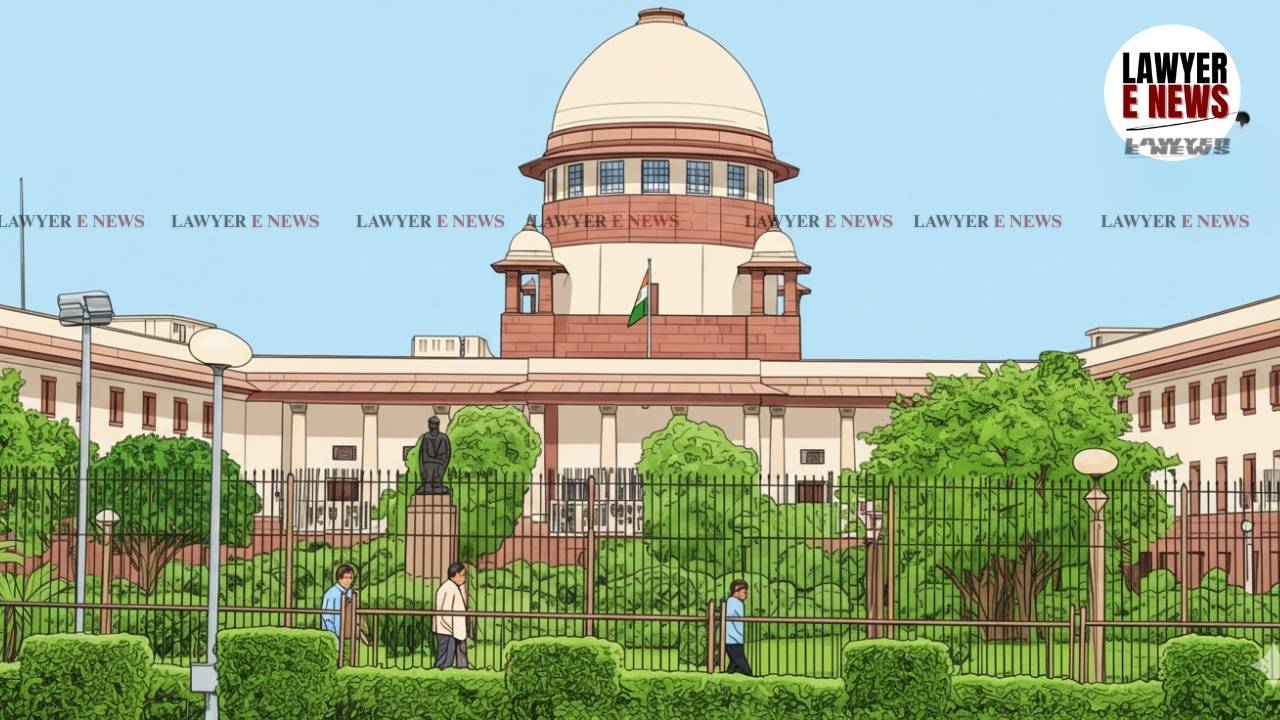
“Merely Facilitating Business Profitability Is Not Creation of a Capital Asset” – In a landmark judgment that resolves longstanding judicial divergence, the Supreme Court ruled that the non-compete fee paid by an assessee to its joint venture partner is an allowable revenue expenditure under Section 37(1) of the Income Tax Act, 1961, and not capital in nature as previously held by the Delhi High Court.
Delivering a unified opinion, a bench comprising Justice Ujjal Bhuyan and Justice Manoj Misra held, “Such payment neither results in creation of any new asset nor accretion to the profit-earning apparatus of the payer. The enduring advantage, if any, by restricting a competitor in business, is not in the capital field.”
The Court also dismissed a revenue appeal on interest disallowance and affirmed that interest paid on borrowed funds advanced to subsidiaries or sister concerns is deductible under Section 36(1)(iii) if made for reasons of commercial expediency, reaffirming the ratio of SA Builders Ltd. v. CIT.
Supreme Court Clarifies: No Creation of Capital Asset By Payment of Non-Compete Fee
“Payment Made to Ward Off Competition Cannot Be Considered Acquisition of a Capital Asset”—Court Resolves Judicial Conflict Across High Courts
The apex court delivered this ruling in a batch of five connected appeals, all revolving around the tax treatment of non-compete fee and interest on borrowed funds, with assessees including Sharp Business System, Pentasoft Technologies Ltd., and Piramal Glass Ltd.
The primary question before the Court was whether a non-compete fee—paid to restrain a former partner or competitor from engaging in similar business—could be considered a revenue expenditure or if it falls within the capital expenditure domain, and whether depreciation is allowable under Section 32(1)(ii) if such payment is treated as capital.
The case of Sharp Business System, a joint venture between Sharp Corporation Japan and L&T, formed the lead appeal. The assessee had paid ₹3 crores to L&T in 2001-02 for agreeing not to compete in the electronic office products segment for seven years. The claim was disallowed by the Assessing Officer and upheld by the Delhi High Court, which held the expense to be capital in nature and not eligible for depreciation either.
Rejecting this view, the Supreme Court held:
“Non-compete fee only seeks to protect or enhance the profitability of the business, thereby facilitating the carrying on of the business more efficiently and profitably. Such payment neither results in creation of any new asset nor accretion to the profit-earning apparatus of the payer. The enduring advantage, if any, by restricting a competitor in business, is not in the capital field.”
Enduring Benefit Test Not Conclusive: Commercial Reality Is the Key
The Court reiterated settled jurisprudence that the “enduring benefit” test is not determinative on its own, referring to Empire Jute Co. Ltd. v. CIT and Alembic Chemical Works Co. Ltd. v. CIT.
Justice Bhuyan observed:
“It is not every advantage of enduring nature acquired by an assessee that brings the case within the ambit of capital expenditure. What is material is whether the advantage lies in the capital field.”
The Court emphasized that payments made to enhance operational efficiency or protect business from potential competition do not alter the capital structure of the assessee, and thus remain revenue in character.
Rejecting the revenue’s submission that the seven-year restriction conferred an enduring benefit, the Court clarified:
“As long as the enduring advantage is not in the capital field, where the advantage merely facilitates in carrying on the business more efficiently and profitably, leaving the fixed assets untouched, the payment made to secure such advantage would be an allowable business expenditure.”
No Depreciation Claim Where Expenditure Itself Is Revenue
The Court noted that since it had accepted the non-compete fee as revenue expenditure under Section 37(1), the question of allowing depreciation under Section 32(1)(ii) did not arise in the Sharp Business System case. However, in related appeals involving other assessees such as Pentasoft Technologies and Piramal Glass, where the issue was depreciation on non-compete fees, the Court remanded the matters to the respective ITATs for fresh consideration in light of this judgment.
This sets aside the conflicting views of the Delhi High Court (which had denied depreciation on grounds that the right was in personam and not an “intangible asset”) and aligns with the Madras, Bombay, Karnataka and Gujarat High Courts, which had held non-compete fees as eligible for depreciation as “commercial rights of similar nature.”
Interest on Borrowed Funds to Subsidiaries Allowed—Reaffirms Commercial Expediency Test
In Piramal Glass Ltd.’s case (SLP(C) No. 719/2020), the Supreme Court upheld the Bombay High Court’s ruling allowing deduction of interest on borrowed funds that were used to acquire controlling interest in a subsidiary and also advanced interest-free loans to sister concerns.
The revenue had argued that such interest should be disallowed since the borrowings were not directly used to generate income. Rejecting this, the Court applied the test laid down in SA Builders Ltd. v. CIT, observing:
“Once it is established that there was nexus between the expenditure and the purpose of the business, which need not necessarily be the business of the assessee itself, revenue cannot justifiably claim to put itself in the arm-chair of the businessman.”
The bench concluded:
“The investment was made for controlling interest in the associate concern... thus the investment was clearly for commercial expediency... assessee is entitled to claim allowance of interest on the funds invested in sister concern.”
Supreme Court Ends Uncertainty Across Tax Benches on Non-Compete Fee
This judgment will have wide-ranging implications for businesses and tax authorities alike. By affirming that non-compete payments are revenue in nature, the Court has not only overturned the restrictive interpretation adopted by the Delhi High Court, but also harmonized the jurisprudence on this issue.
Further, by clarifying the scope of “commercial expediency” under Section 36(1)(iii) and applying it to investments in subsidiaries and interest-free loans to sister concerns, the Court has provided practical certainty for corporate financing structures, particularly those involving holding-subsidiary relationships.
In the Court’s own words:
“The purpose for which the advances were made to the sister concern and its directors would also be covered by the principle of commercial expediency.”
Date of Decision: December 19, 2025