-
by sayum
12 August 2026 1:53 PM







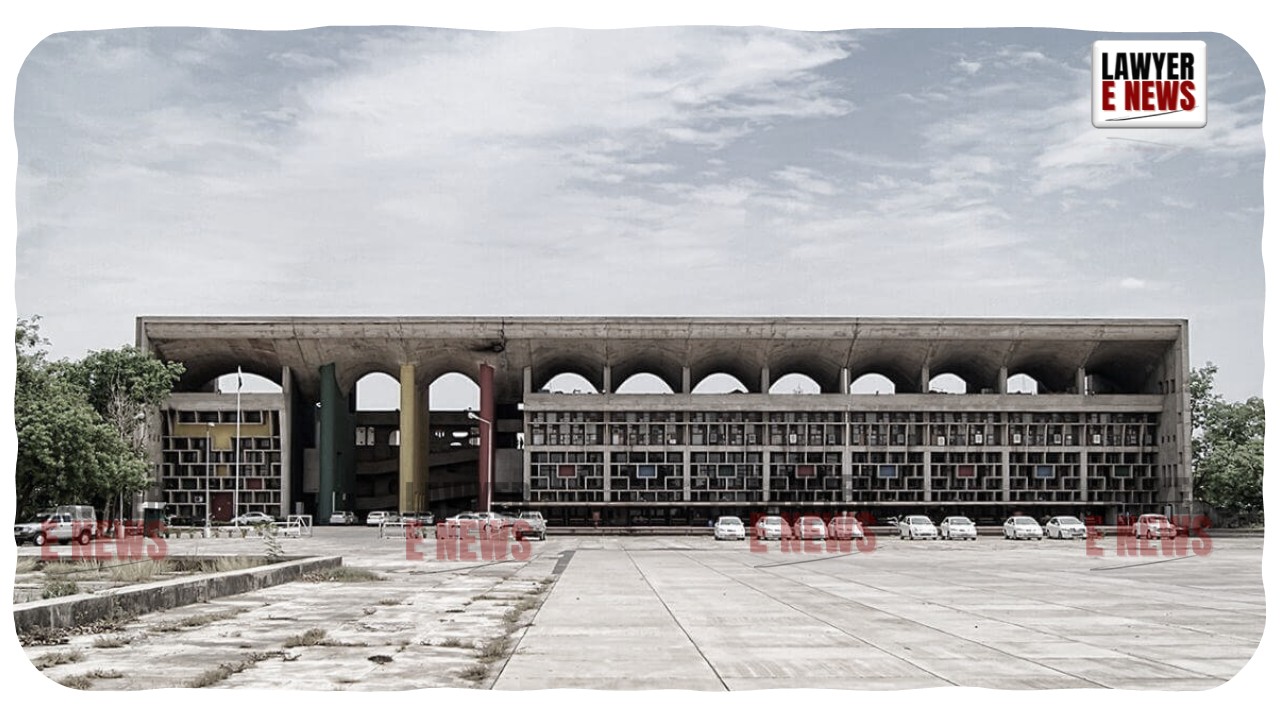
Punjab and Haryana High Court dismissed the appeal of Vijay Kumar Dhingra and others, affirming the lower court’s orders that denied their objections to the execution of a decree in a long-running property dispute over a plot in Faridabad. The appellants, who claimed to be bona fide purchasers of flats built on the disputed property, were held to have purchased the property during ongoing litigation, making their purchase invalid under the principle of lis pendens. The Court ruled that the execution of the decree for specific performance inherently included the delivery of possession, binding the appellants to the decree despite their claims.
The property in dispute is Plot No. AM-37 (New No. C-3649), located in Green Fields Colony, Faridabad, originally allotted to Shri S.V. Babber (respondent) by the Urban Improvement Company Pvt. Ltd. (respondent No. 2) in 1988. The allotment was later canceled by the company, and the plot was subsequently sold to Amitabh Sinha (respondent No. 3) in 2004.
Shri S.V. Babber filed a civil suit for declaration, injunction, and specific performance in 2005, challenging the cancellation of his allotment and the resale of the plot. The trial court initially dismissed his suit in 2014, but the decision was reversed on appeal by the Additional District Judge in 2016, who held the cancellation of Babber’s allotment to be illegal. The appellate court declared Babber to be the lawful owner of the plot, and the resale to Amitabh Sinha was held null and void.
After multiple rounds of litigation, including a Special Leave to Appeal to the Supreme Court, which was dismissed in 2017, Babber filed for the execution of the decree in 2017. By then, the appellants had purchased flats on the property through a series of transactions initiated by Rajeev Juneja and Puja Juneja, who bought the property from Amitabh Sinha during the pendency of the suit.
The appellants, Vijay Kumar Dhingra and others, claimed that they were bona fide purchasers of the flats built on the plot and argued that they were not parties to the original litigation. They contended that they had invested their hard-earned money in the property and should not be bound by the decree, especially since the decree did not explicitly mention possession of the property.
Their objections were dismissed by the Civil Judge (Sr. Divn.), Faridabad in 2018, and the decision was upheld by the Additional District Judge. The appellants then filed the present appeal in the High Court, challenging the execution of the decree and the dismissal of their objections.
Justice Deepak Gupta rejected the appellants’ claims, ruling that their purchase of the property during the pendency of the litigation was clearly hit by the doctrine of lis pendens. The Court emphasized that the principle of lis pendens ensures that no third party can claim rights over a property that is the subject of ongoing litigation, as any transactions made during the litigation are void with respect to the outcome of the case.
Relief of Possession Inherent in Specific Performance: The Court ruled that even though the decree for specific performance did not explicitly mention possession, the relief of possession is inherently included in such decrees. Referring to Supreme Court precedents, the Court stated:
"The relief of possession is ancillary to the decree for specific performance and need not be specifically claimed."
The appellants’ argument that they were bona fide purchasers and that the decree did not grant possession was rejected as contrary to established legal principles.
Applicability of Lis Pendens: The Court ruled that the appellants, having purchased the property during the pendency of the litigation, were bound by the outcome of the suit. The doctrine of lis pendens, as outlined under Section 52 of the Transfer of Property Act, 1882, was applied, making the appellants’ purchase invalid:
"The subsequent transfers in favor of Rajeev Juneja & Puja Juneja, and then to the appellants, are clearly hit by the principles of lis pendens."
No Need to Frame Issues: The appellants argued that the execution court should have framed issues to resolve their objections. The Court rejected this argument, noting that the appellants had no legitimate claim to the property since their purchase was made during the litigation. The Court found no illegality in the lower courts' decisions to dismiss the objections without framing issues.
The Punjab and Haryana High Court upheld the dismissal of the appellants' objections, confirming that the principle of lis pendens nullified their claims to the property. The Court further reinforced that the execution of a decree for specific performance inherently includes the right to possession, even if not explicitly stated. As a result, the appellants were held bound by the decree in favor of Shri S.V. Babber, and the appeal was dismissed as meritless.
Date of Decision: September 23, 2024