-
by sayum
25 August 2026 11:12 PM








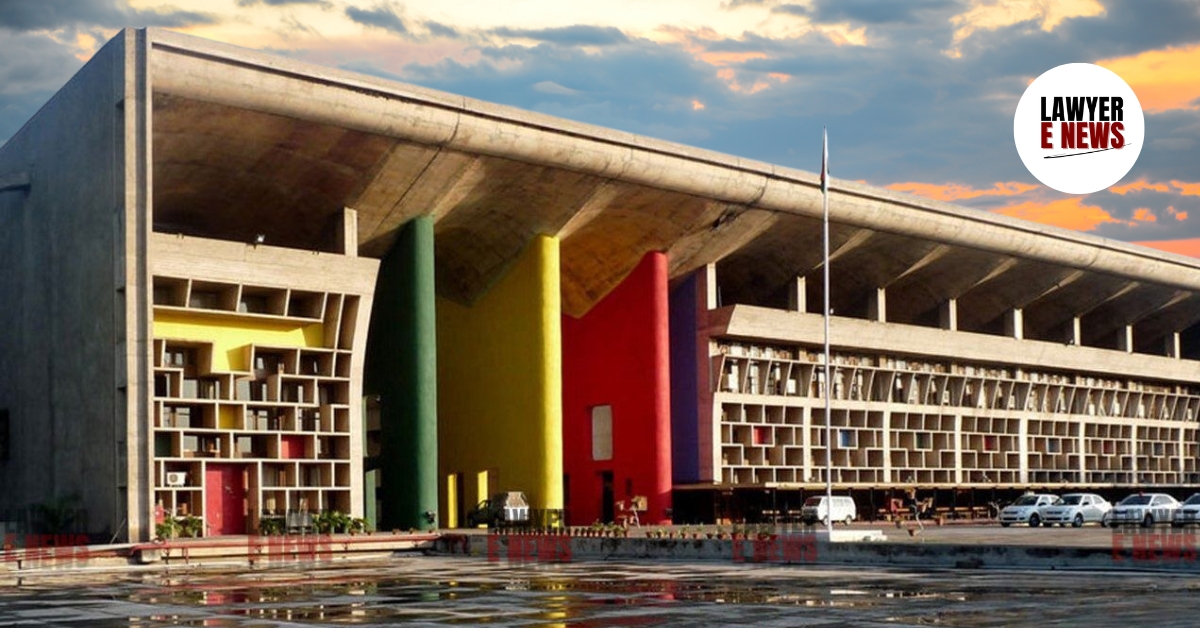
Default Bail Is an Indefeasible Right, Not a Privilege to Be Purchased – In a strongly worded judgment, the Punjab and Haryana High Court has ruled that imposing excessive financial conditions on default bail violates fundamental rights and effectively denies liberty to the accused. Justice Harpreet Singh Brar, while delivering the judgment in Pawan Kumar v. Inspector (Preventive), Central Goods and Services Tax on March 5, 2025, held that bail cannot be rendered illusory by imposing disproportionate monetary conditions that an accused is unable to fulfill.
The petitioner, who had been granted default bail under Section 167(2) of the CrPC due to the prosecution’s failure to file a charge sheet within the statutory period, remained incarcerated because he was required to furnish a surety bond of ₹1.10 crore and a bank guarantee of ₹55 lakh. The Court found these conditions "excessive, unreasonable, and an affront to personal liberty", and accordingly reduced them to a bail bond of ₹50,000 with one surety in the like amount.
"When bail is granted under Section 167(2) CrPC, it is an indefeasible right. This right cannot be frustrated by imposing stringent conditions that effectively prolong incarceration. What the law grants cannot be taken away through judicial conditions that violate Article 21," the Court declared.
"Four Years in Jail Without Trial Is a Mockery of Justice"
The Court took strong exception to the fact that the petitioner had already spent four years in custody despite the maximum sentence under the alleged offense being five years. Charges had not even been framed, and the trial had not commenced. The judgment emphasized that keeping an undertrial in jail for years without trial "is a gross violation of the right to a speedy trial under Article 21 of the Constitution."
Citing the Supreme Court’s ruling in Hussainara Khatoon v. State of Bihar, the High Court stressed that "no accused can be made to suffer an indefinite prison sentence merely because of trial delays. Pre-trial incarceration is meant to secure presence for trial, not to punish."
The judgment further noted that under Section 479 of the Bharatiya Nagarik Suraksha Sanhita (BNSS), 2023, the petitioner was statutorily entitled to release, as he had already undergone one-third of the maximum sentence prescribed for the offense. The Court observed that the Supreme Court had already directed the retrospective application of Section 479 BNSS in the case of In Re Inhuman Conditions in 1382 Prisons (2024), making the petitioner’s continued incarceration illegal.
"District Legal Services Authority (DLSA) Has Failed in Its Duty – Matter Referred to Chief Justice"
The Court strongly criticized the inaction of the District Legal Services Authority (DLSA) in assisting the petitioner, noting that despite Supreme Court directions in In Re Policy Strategy for Grant of Bail (2024), which mandated legal aid to undertrials unable to meet bail conditions, the DLSA did nothing to secure his release.
"The State cannot wash its hands of responsibility. It is the duty of the legal aid machinery to ensure that no one languishes in jail merely because they are too poor to furnish bail," the Court remarked.
The High Court directed that the matter be placed before the Chief Justice of the Punjab and Haryana High Court for appropriate action to ensure compliance with Supreme Court directives regarding bail conditions and legal aid.
"Liberty Cannot Be a Commodity for Sale – Courts Must Stop Pricing Freedom Beyond the Reach of the Poor"
Referring to the seminal Supreme Court judgment in Moti Ram v. State of M.P., the High Court reiterated that "bail must not be a privilege of the wealthy and a punishment for the poor. The imposition of exorbitant financial conditions transforms the constitutional right to bail into a privilege that only the rich can afford."
The Court further emphasized that "a surety bond of ₹1.10 crore is not just excessive; it is oppressive. Courts must ensure that bail is granted on reasonable conditions that secure attendance at trial rather than create financial hurdles that result in prolonged incarceration."
Bail Conditions Modified, Petitioner Ordered to Be Released
Holding that the exorbitant bail conditions imposed by the lower court were an abuse of judicial discretion, the High Court allowed the petition and modified the bail conditions. The petitioner was ordered to be released on bail upon furnishing a bond of ₹50,000 with one surety in the like amount.
The trial court was also directed to expedite the proceedings, ensuring that the petitioner is not kept in legal limbo due to procedural delays.
Before concluding, the High Court issued a stark warning: "The law cannot permit a system where bail is granted in theory but denied in practice through unreasonable financial conditions. Liberty cannot be put up for sale. Courts must safeguard justice by ensuring that no one is deprived of freedom merely because they cannot afford it."
Date of Decision: 05 March 2025