-
by sayum
25 August 2026 11:12 PM







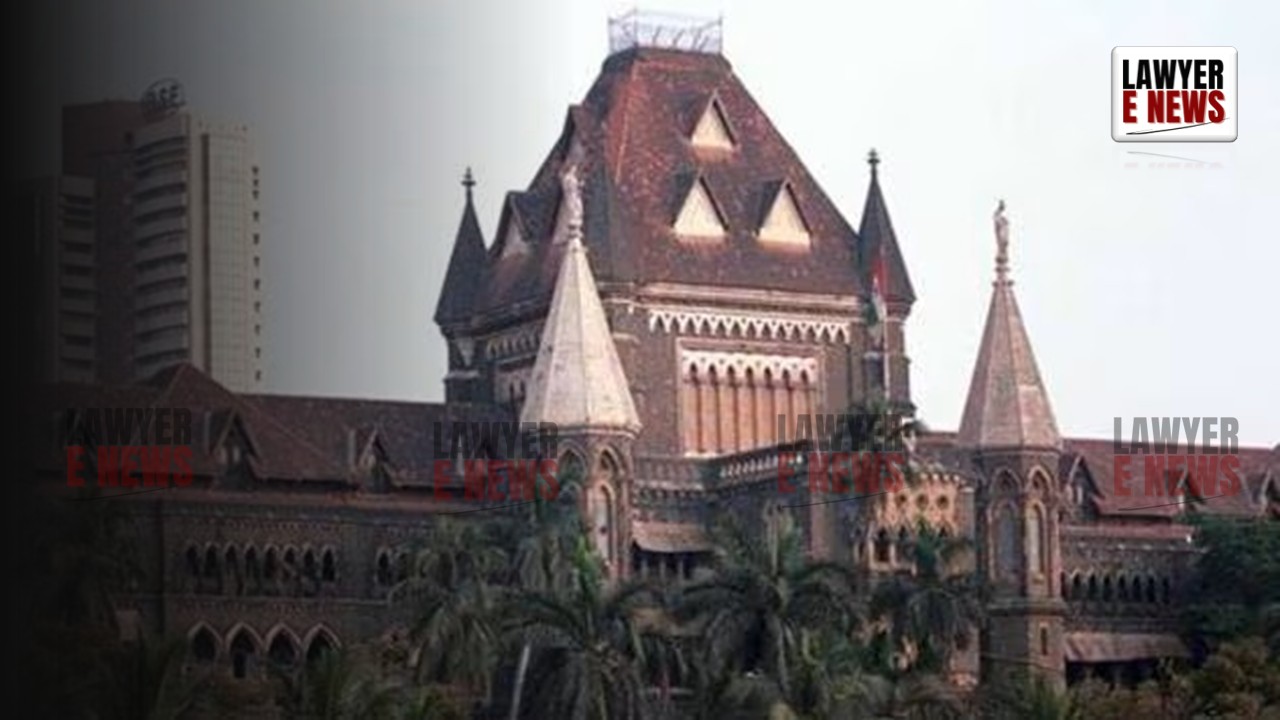
Dispensing With Section 5A Enquiry Without Justification Violates Landowners’ Rights - In a landmark judgment Bombay High Court struck down the acquisition of agricultural lands in Panvel for the Navi Mumbai Project, ruling that the process was vitiated by non-compliance with mandatory legal provisions. In Avinash Dhavji Naik & Ors. v. State of Maharashtra & Ors., the Court quashed the Section 6 declaration and subsequent acquisition proceedings, holding that the government's failure to conduct an enquiry under Section 5A of the Land Acquisition Act, 1894, deprived the petitioners of their statutory rights.
The Court observed that the urgency clause under Section 17(4) was invoked without issuing a valid notification, thereby illegally bypassing the landowners' right to object to the acquisition. Rejecting the argument that procedural lapses could be overlooked due to the public purpose of the project, the Court emphasized that "the rule of law cannot be sacrificed at the altar of administrative convenience."
"The Right to Object to Land Acquisition Cannot Be Denied Arbitrarily" – High Court Finds No Valid Justification for Bypassing Section 5A Enquiry
The petitioners, a group of landowners from Village Vahal, Taluka Panvel, District Raigad, challenged the acquisition of their agricultural lands for the Navi Mumbai Project, arguing that the government had violated their right to a fair hearing. They contended that no valid notification had been issued invoking the urgency provisions under Section 17(4) of the Land Acquisition Act, 1894, which would have been required to lawfully dispense with the enquiry under Section 5A.
The Court agreed with the petitioners, stating that "the most valuable right of landowners to raise objections under Section 5A has been denied in a completely arbitrary manner. The State cannot claim urgency without substantiating it with a valid notification, and its failure to do so renders the acquisition process fundamentally flawed."
Rejecting the government’s argument that the mere mention of Section 17(4) in the Section 6 declaration was sufficient, the Court ruled that "there can be no deemed invocation of urgency provisions under Section 17. Either the urgency is legally justified through a notification, or it is not. A casual mention of urgency in a declaration does not override statutory safeguards."
"Absence of Urgency Cannot Justify Bypassing Landowners' Rights" – High Court Questions Delays in Acquisition Process
The Court noted that even after the Section 4 notification was issued on December 7, 2013, the authorities took over a year to issue the Section 6 declaration on May 20, 2015, and the final award was passed only in July 2017. The Court observed that "if the project was truly urgent, the authorities would not have waited for years before finalizing the acquisition. The delay itself contradicts the claim of urgency and exposes the misuse of Section 17(4)."
Holding that the government failed to demonstrate any extraordinary circumstances necessitating an urgent takeover, the Court ruled that "the invocation of urgency under Section 17(4) must be backed by clear and compelling reasons. In the absence of such justification, denying landowners their right to be heard under Section 5A is an unacceptable violation of due process."
"Land Cannot Be Taken Without Legal Justification" – Court Slams CIDCO for Defending Flawed Acquisition
CIDCO, the beneficiary of the land acquisition, argued that the public purpose of the Navi Mumbai Project justified the minor procedural lapses. The High Court rejected this defense outright, stating that "public interest cannot be used as an excuse to circumvent the law. The acquisition process must adhere to statutory requirements, and failure to do so renders the entire process void ab initio."
The Court further criticized CIDCO’s attempt to argue that the Section 6 declaration itself could be treated as a valid notification under Section 17(4), calling this claim legally untenable. The Court ruled that "a notification under Section 17(4) must be issued separately and must contain explicit reasons justifying the urgency. The law does not permit implied or retrospective validation of urgency claims."
"Justice Cannot Be Delayed Due to Bureaucratic Lapses" – High Court Rejects Government's Plea to Mould Relief Instead of Quashing Acquisition
The government urged the Court not to quash the acquisition outright and instead mould the relief by directing enhanced compensation to the landowners, citing the Supreme Court’s ruling in Savitri Devi v. State of Uttar Pradesh (2015) 7 SCC 21. The High Court refused to accept this plea, ruling that "moulding relief is not an option when the entire acquisition process is void for non-compliance with mandatory statutory provisions."
Observing that "illegal acquisition cannot be cured by offering additional compensation," the Court ruled that "when there is a fundamental defect in the process, the only just remedy is to set aside the acquisition in its entirety."
Acquisition Declared Illegal, Section 6 Declaration and Award Quashed
Striking down the acquisition, the Bombay High Court ruled that:
• The Section 6 declaration dated May 20, 2015, and the subsequent acquisition proceedings, including the award dated July 7, 2017, are illegal and stand quashed.
• CIDCO and the State of Maharashtra are restrained from taking possession of the lands in question.
• All interim reliefs granted earlier, including the status quo order preventing dispossession of the petitioners, are made absolute.
The Court concluded that "where fundamental legal safeguards are ignored, courts must step in to ensure that citizens' rights are not sacrificed for administrative convenience. The right to property, though no longer a fundamental right, remains a constitutional right that cannot be taken away without following due process."
This judgment reaffirms that government authorities and urban development agencies cannot arbitrarily invoke urgency clauses to bypass statutory safeguards in land acquisition cases. The Bombay High Court has made it clear that:
• The right to object under Section 5A is a substantive right and cannot be taken away without a valid justification.
• The invocation of urgency under Section 17(4) requires a separate notification with a clear rationale, not just a vague reference in the declaration.
• Delays in acquisition contradict claims of urgency and expose the misuse of emergency provisions.
• Public purpose does not justify illegal acquisition—compliance with legal procedures is mandatory.
By striking down CIDCO’s acquisition of agricultural land due to serious procedural lapses, the Bombay High Court has reinforced the principle that the rule of law prevails over administrative expediency.
Date of Decision: March 4, 2025