-
by sayum
12 August 2026 1:53 PM







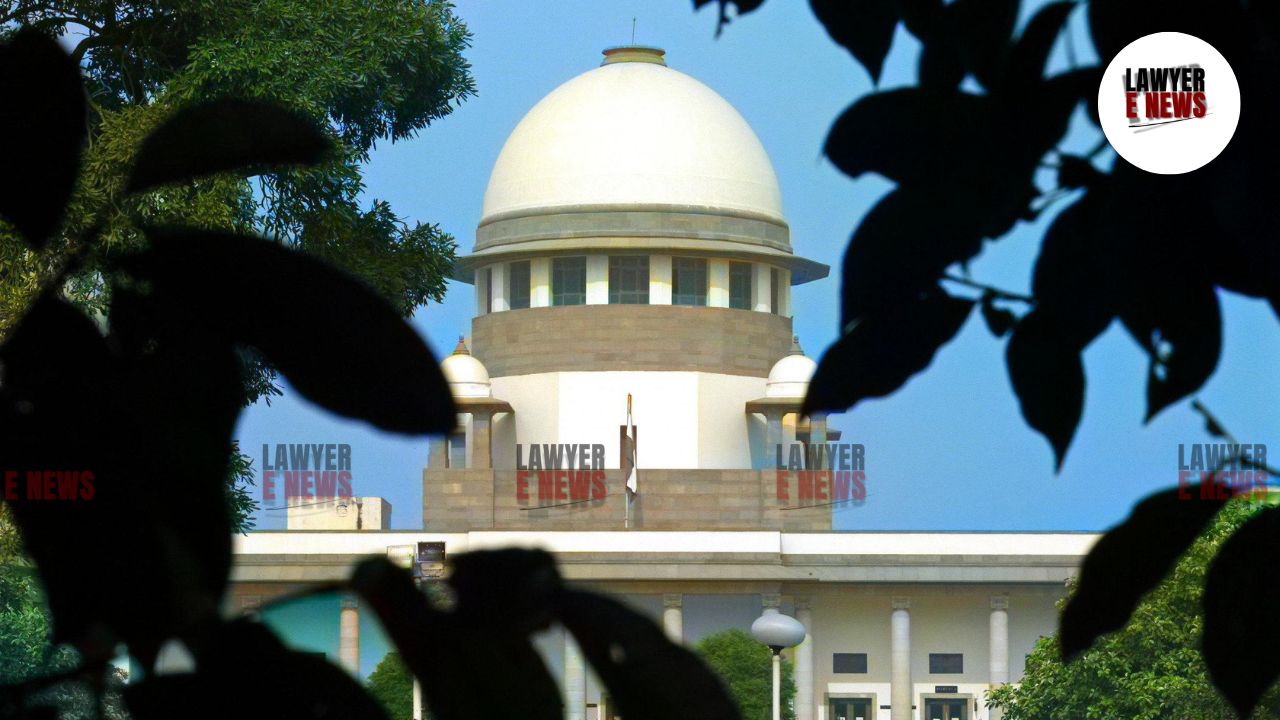
Power to Quash an FIR Must Be Exercised Only in Exceptional Cases – In a significant ruling on February 28, 2025, the Supreme Court of India refused to quash an FIR against Pradip N. Sharma, a former District Collector of Rajkot, Gujarat, accused of wrongfully restoring government land to private individuals in violation of revenue laws. The Court, however, granted him anticipatory bail, noting that the allegations involved documentary evidence rather than direct physical misconduct, making custodial interrogation unnecessary.
Observing that the misuse of official power cannot be shielded from investigation, the Supreme Court held: "The scope of quashing an FIR is limited. Allegations of misuse of position and breach of public trust require a thorough investigation, and courts should not preemptively stifle such inquiries."
The case involved allegations under Sections 409 (criminal breach of trust by a public servant), 219 (corrupt or malicious exercise of judicial functions), and 114 (abetment) of the Indian Penal Code, 1860, with the former bureaucrat accused of having favored certain private parties in a land dispute despite clear violations of law.
The case stemmed from FIR No. 33 of 2011, registered at Tankara Police Station, Rajkot (Rural), Gujarat, in connection with 65 acres of government land in Village Anandpara. The land was originally allotted in 1970 for personal cultivation, but since the allottees had left India decades ago and were not personally cultivating it, the Deputy Collector forfeited the land to the government in 2000.
Despite this, the appellant, as the District Collector of Rajkot, overturned the forfeiture order in 2008 and restored the land to the private allottees, who were ineligible under the law. The Gujarat government challenged his decision, and the Principal Secretary (Revenue) later set aside the restoration order, reinstating government ownership over the land.
The state alleged that the appellant acted in collusion with private parties to wrongfully transfer government land, ignored legal procedures, and even entertained an appeal after an unjustified delay of seven years. The FIR accused him of criminal breach of trust and abuse of official power.
The appellant sought quashing of the FIR before the Gujarat High Court, arguing that his decision was taken in his official capacity as a quasi-judicial authority and could not amount to a criminal offense. The High Court rejected his plea on December 12, 2018, holding that the allegations warranted an investigation.
Challenging this before the Supreme Court, the appellant claimed that the FIR was politically motivated and that the allegations merely amounted to an administrative decision, not a criminal offense. He further argued that the registration of multiple cases against him was evidence of political vendetta.
Rejecting his arguments, the Supreme Court emphasized: "Quashing of an FIR must be exercised only in the rarest of rare cases where it is manifestly clear that no offense is made out. Here, the allegations suggest prima facie misuse of official position, and such claims must be investigated."
The Court observed that the appellant had overturned a government forfeiture order in favor of private individuals despite knowing that they were residing abroad and were ineligible for the land restoration. It also noted that he entertained the appeal despite a seven-year delay and passed the order after he had already been transferred to another district, raising serious concerns about jurisdiction and intent.
Emphasizing the need to maintain accountability in the exercise of official power, the Court ruled that: "When a public servant is accused of passing orders in a manner that prima facie indicates abuse of power, it cannot be said that no cognizable offense is made out. Such allegations must be examined through a full-fledged investigation."
The Supreme Court concluded that quashing the FIR at this stage would amount to shielding an official from legitimate scrutiny, thereby dismissing the plea.
Grant of Anticipatory Bail: "Custodial Interrogation Not Warranted When Allegations Rest on Documentary Evidence"
The appellant had also sought anticipatory bail, arguing that since the case was based on official records, there was no need for his custodial interrogation. He further claimed that he had an unblemished career spanning over three decades and that the case against him was a result of administrative decisions that did not align with the state government’s interests.
The High Court had rejected his bail application on February 28, 2019, citing the seriousness of the allegations and the necessity of custodial interrogation.
The Supreme Court, however, took a different view and granted anticipatory bail, reasoning that:
"The prosecution’s case primarily rests on documentary evidence. There is no need for custodial interrogation unless material is placed before the Court indicating the likelihood of tampering with evidence or influencing witnesses."
The Court acknowledged that the appellant had faced multiple cases involving alleged land misuse, but since there was no evidence of obstruction of justice, pre-trial detention was not warranted.
While allowing his appeal for anticipatory bail, the Court imposed two conditions: "The appellant shall fully cooperate with the investigation and, if custodial interrogation is deemed necessary, the Investigating Agency may apply to the Magistrate for appropriate orders."
The Supreme Court’s decision reinforces the principle that public officials accused of abuse of power cannot claim immunity from investigation. By refusing to quash the FIR, the Court ensured that allegations of corruption and favoritism in public office are subject to proper legal scrutiny. At the same time, by granting anticipatory bail, the Court recognized that not every such case necessitates custodial detention, particularly where the allegations are based on documentary records.
This ruling serves as a crucial precedent in cases involving alleged misuse of bureaucratic power, striking a balance between accountability and protection from undue harassment.
Date of Decision: February 28, 2025