After Admitting Lease, Defendant Cannot Turn Around and Call It Forged—Contradictory Stand at Advanced Trial Stage Impermissible: Punjab & Haryana High Court Dismisses Revision Against Rejection of Amendment Plea Dismissed Employee Has No Right to Leave Encashment Under Statutory Rules: Punjab and Haryana High Court Section 13 of Gambling Act Is Cognizable — Magistrate Can Take Cognizance on Police Report: Allahabad High Court Clarifies Surveyor’s Report Not Sacrosanct, Arbitral Tribunal Has Jurisdiction to Apply Mind Independently: Bombay High Court Dismisses Insurer’s Challenge to Award in Fire Damage Dispute Anti-Suit Injunction in Matrimonial Dispute Set Aside: Calcutta High Court Refuses to Stall UK Divorce Proceedings Filed by Wife Res Ipsa Loquitur Not a Substitute for Proof of Negligence: Delhi High Court Affirms Acquittal in Fatal Road Accident Case NSA Detention Doesn’t Bar Framing of Charges If Prima Facie Evidence Exists: Punjab & Haryana High Court Upholds Charges in Ajnala Police Station Violence Case Continued Contractual Service Despite Sanctioned Posts Is Unfair Labour Practice: Orissa High Court Orders Regularization Of ECG Technicians After 15 Years Will Duly Proved Even If Witnesses Forget Details After Eight Years: Madras High Court Validates Bequest, Sets Aside Partition Decree Writ Petition Not Maintainable Where Commercial Appeal Remedy Exists: Karnataka High Court Dismisses Petition, Permits Conversion Under Commercial Courts Act Circumstantial Evidence Must Be Cogent, But Caste-Based Offences Demand Specific Intent: Supreme Court Draws Line Between Heinous Crimes and Caste Atrocities Court Must Step into Testator’s Shoes, Not Substitute His Intent: Supreme Court Upholds Will Excluding One Daughter Production of Arbitration Clause is Enough - Not Conduct Mini-Trials on Capacity or Consortium Structure: Supreme Court Title to Property Must Be Proven by Evidence, Not Just Claimed by Deed: Supreme Court Strikes Down Injunction Order Rejecting Police Investigation Is Not Interlocutory Where It Affects Complainant’s Right to Fair Probe in Murder Case: Madhya Pradesh High Court Restores Revision in 156(3) Application Rejection Conviction Cannot Rest On Contradictions, Hostility And Conjecture: Supreme Court Acquits Seven Accused In 2010 Village Murder Power to Lower NEET Percentile Lies Only With Centre - States Can’t Dilute NEET by Administrative Letters: Supreme Court Imposed 10 Crore Cost On Private Dental College Identification Without TIP, Electronic Records Without 65B Certificate – Conviction Set Aside: Patna High Court Nothing Inflicts A Deeper Wound On Our Constitutional Culture Than A State Official Running Berserk Regardless Of Human Rights: Jharkhand High Court Orders ₹1.5 Lakh Interim Compensation Identification Vitiated, Diamonds Not Produced, Last Seen Theory Unreliable: Bombay High Court Acquits Two in 2011 Diamond Courier Murder Dishonour Due to ‘Account Blocked’ Not Attributable to Drawer—No Offence Under Section 138 NI Act: Delhi High Court Quashes Criminal Proceedings Presumption Under Section 139 NI Act Cannot Be Rebutted By Mere Assertions: Delhi High Court Affirms Conviction In 32-Year-Old Cheque Bounce Case Accused Cannot Demand Documents During Investigation Merely to Assist in Answering Queries: Delhi High Court Upholds Dismissal of S.91 CrPC Plea in Bank Fraud Probe Once a Person is a Major, They Are Free to Choose Their Partner – Absence of Marriage No Ground To Deny Protection: Allahabad High Court Connivance Can’t Be Washed Away by Exoneration: P&H High Court Upholds Penalty on Forest Guard Despite Enquiry Clean Chit Disciplinary Authority Cannot Override Enquiry Officer’s Clean Chit Without Hearing the Employee: Madhya Pradesh High Court Remands Termination for Procedural Lapse Appointment Secured by Misstating Marks Is Void Ab Initio; Human Error No Excuse Where Advantage Gained: Allahabad High Court Appeal Maintainable Despite Modified MACT Award — Kerala High Court Clarifies Scope of Appellate Review in Motor Accident Claims Signature Alone Doesn’t Prove Debt: Kerala High Court Upholds Acquittal in Cheque Bounce Case, Rejects Blanket Presumption Under Section 139 NI Act

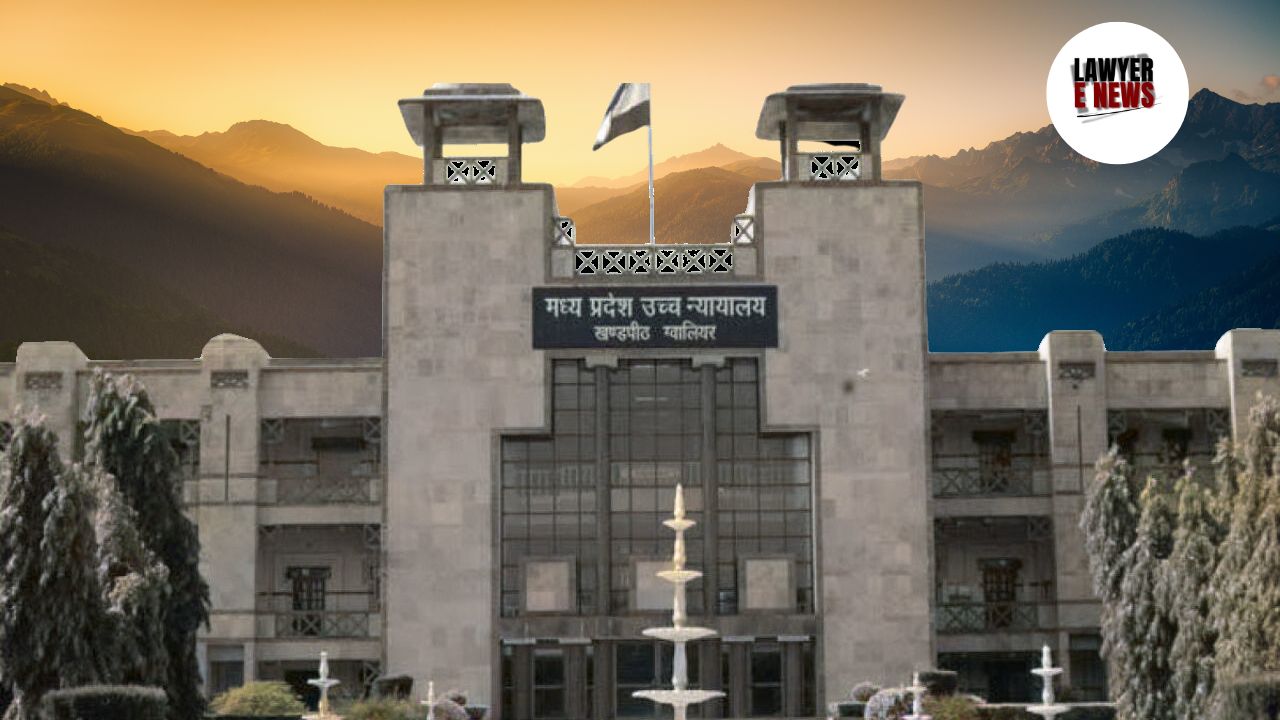
A Prior Divorce Decree Granting Custody Does Not Bar a Fresh Custody Claim – Madhya Pradesh High Court

11 March 2025 7:25 PM

By: sayum


Custody Orders Are Not Final, Can Be Modified If Child's Welfare Demands It - In a significant ruling, the Madhya Pradesh High Court reaffirmed that child custody orders, even if part of a divorce decree, are temporary in nature and can be revisited if circumstances change. The Single Bench of Justice Prem Narayan Singh, while dismissing Civil Revision held that the Family Court has jurisdiction to entertain fresh custody claims under Section 26 of the Hindu Marriage Act, 1955, even after a divorce has been granted.

The petitioner-mother had challenged the Family Court’s decision to entertain a fresh custody petition filed by the respondent-father under Section 11 of the Guardian and Wards Act, 1890, arguing that custody had already been awarded to her in the 2017 divorce decree.

Rejecting the petition, the High Court ruled that a parent cannot be permanently debarred from seeking custody modifications solely due to a prior decree, as the welfare of the child remains the paramount consideration.

"Welfare of the Child is Paramount – Family Court Has Jurisdiction to Modify Custody"

The petitioner contended that since custody was granted to her in the consent divorce decree, the Family Court lacked jurisdiction to entertain a fresh application by the respondent. She further argued that there was no material change in circumstances warranting reconsideration of custody.

The High Court, however, held that custody orders are not absolute and can be altered if the child's best interests demand it. Citing Rosy Jacob v. Jacob A. Chakramakkal (1973) AIR SC 2090, the Court observed:

"All orders relating to the custody of minor children must be considered temporary in nature. With changing conditions and circumstances, including the passage of time, the Court is entitled to vary such orders if the welfare of the child so requires."

Referring to Tejaswini Gaud v. Shekhar Jagdish Prasad Tewari (2019) 7 SCC 42, the Court reiterated that the welfare of the child takes precedence over procedural objections, stating:

"A custody arrangement made years ago does not preclude the Family Court from considering whether it continues to serve the best interests of the child."

"Custody Cases Require Full Adjudication – Cannot Be Rejected Under Order 7 Rule 11 CPC"

The petitioner had also sought dismissal of the father’s custody petition under Order 7 Rule 11 CPC, arguing that it was legally barred due to the prior decree.

The High Court rejected this contention, holding that: "Objections regarding custody must be raised during trial, not at the admission stage. The Family Court correctly rejected the Order 7 Rule 11 CPC application, as the case requires full adjudication based on evidence."

Final Verdict: Revision Petition Dismissed, Family Court to Decide Custody on Merits

The High Court dismissed the revision petition, affirming the Family Court's jurisdiction to hear the custody claim under Section 26 of the Hindu Marriage Act. However, it clarified that the petitioner was free to contest the matter on merits during trial and directed the Family Court to decide the issue independently, without being influenced by the High Court’s ruling.

This judgment reinforces the principle that custody matters must always be evaluated in light of the child’s best interests, irrespective of past decrees or parental disputes.

Date of decision: 07/03/2025



Latest Legal News