No Work No Pay Is Not a Universal Rule: Punjab & Haryana High Court Dock Identification Without Prior TIP Is Absolutely Useless: P&H High Court Upholds Acquittal in Attempt to Murder Case Filing Forged Court Pleadings in Union Government’s Name is Criminal Contempt: Karnataka High Court Sentences Litigant to Jail Execution of Will Proved, But Probate Justly Denied Due to Concealment of Property Sale: Delhi High Court Mere Designation Doesn’t Establish Criminal Liability: Bombay High Court Quashes Proceedings Against ICICI Officials in Octroi Evasion Case Law of Limitation Binds All Equally, Including the State: Allahabad High Court Dismisses Review Petition with 5743 Days’ Delay Once Selected, All Are Equals: Allahabad High Court Slams State for Withholding Pay Protection From Later Batches of Ex-Servicemen Constables Non-Compliance With Section 42 of NDPS Act Is Fatal to Prosecution: Punjab & Haryana High Court Acquits Two Accused In 160 Kg Poppy Husk Case Unregistered Agreement Creating Right of Way Inadmissible in Evidence: Punjab & Haryana High Court Summary Decree in Partition Suit Denied: Unequivocal Admissions Absent, Full Trial Necessary: Delhi High Court No Court Can Allow Itself to Be Used as an Instrument of Fraud: Delhi High Court Exposes Forged Writ Petition Filed in Name of Unaware Citizen "Deliberate Wage Splitting to Evade Provident Fund Dues Is Illegal": Bombay High Court Restores PF Authority's 7A Order Against Saket College and Centrum Direct Identification Vitiated, Diamonds Not Produced, Last Seen Theory Unreliable: Bombay High Court Acquits Two in 2011 Diamond Courier Murder Deposit of ₹5100 Crores Brings Quietus to Entire Criminal Web of Proceedings: Supreme Court Exercises Extraordinary Powers to Quash All Cases Against Hemant Hathi in Landmark Settlement-Driven Order Presumption Under Section 139 Can't Be Rebutted Pre-Trial: Supreme Court Restores Cheque Bounce Complaint Quashed By Patna High Court Supreme Court Invokes Article 142 to End Discrimination Against Ad-Hoc Employees in Allahabad High Court: Orders Reinstatement and Regularization Supreme Court Declares CSR a Constitutional Duty to Protect Environment: Orders Undergrounding of Powerlines in Great Indian Bustard Habitat A Minor’s Sole Testimony, If Credible, Is Sufficient for Conviction: Supreme Court Upholds Child Trafficking Conviction Under IPC and ITPA You Can’t Invent Disqualifications After the Bid: Supreme Court Holds Joint Venture Experience Can’t Be Ignored in Tenders High Court Can't Re-Appreciate Evidence or Rewrite Contract to Set Aside Arbitral Award: Supreme Court Reinstates Award Under Quantum Meruit Once Arbitration Invoked, Criminal Prosecution Cannot Be Weaponised in Civil Disputes: Supreme Court Quashes FIR Against Former Director in Rent Row Section 319 CrPC | Pursuing Legal Remedies in Higher Forums Is Not ‘Evasion of Trial’; Custody Not Required for Summoned Accused: Supreme Court Order 21 Rule 90 CPC | Undervaluation or Procedural Lapses Constitute ‘Material Irregularity’, Not ‘Fraud’; Separate Suit to Bypass Limitation Impermissible: Supreme Court Order 21 CPC | Separate Suit Challenging Auction Sale Barred for Pendente Lite Transferees; Remedy Lies in Execution Proceedings: Supreme Court Non-Signatories Cannot Force Arbitration: Supreme Court Blocks Claim by Sub-Contractor Against HPCL Resignation Forfeits Pension Rights, But Gratuity Is Statutory: Supreme Court Partly Allows Appeal of DTC Employee’s Legal Heirs Appellate Courts Can’t Blanket-Exempt Convicted Directors from Deposit under NI Act Merely Because Company Wound Up: Supreme Court Refers Interpretation of Section 148 to Larger Bench Inordinate Delay Cannot Be Condoned Without Reasons: Supreme Court Slams Madhya Pradesh High Court for Casual Approach in Condoning 1612 Days’ Delay Constitutional Rights & Witness Protection | State Authorities Cannot Victimise Litigants for Approaching Court: Supreme Court Review Jurisdiction is Not an Appeal in Disguise: Supreme Court Dismisses Konkan Railway’s Plea Over Employee’s Resignation Withdrawal Agreement to Sell Does Not Create Any Right in Property, Hence No Right to Compensation on Acquisition: Allahabad High Court Sexual Harassment Complaint Can Be Inquired by ICC at Woman’s Workplace Even if Accused Works Elsewhere: Supreme Court Settles Jurisdiction Under POSH Act Mandate Expired, Arbitrator Functus Officio: Supreme Court Orders Substitution After Delay in Arbitral Award

POCSO Law Cannot Be Used to Settle Property Disputes Between Siblings”: Karnataka High Court Quashes FIR Based on Family Rivalry

04 May 2025 7:37 PM

By: Deepak Kumar


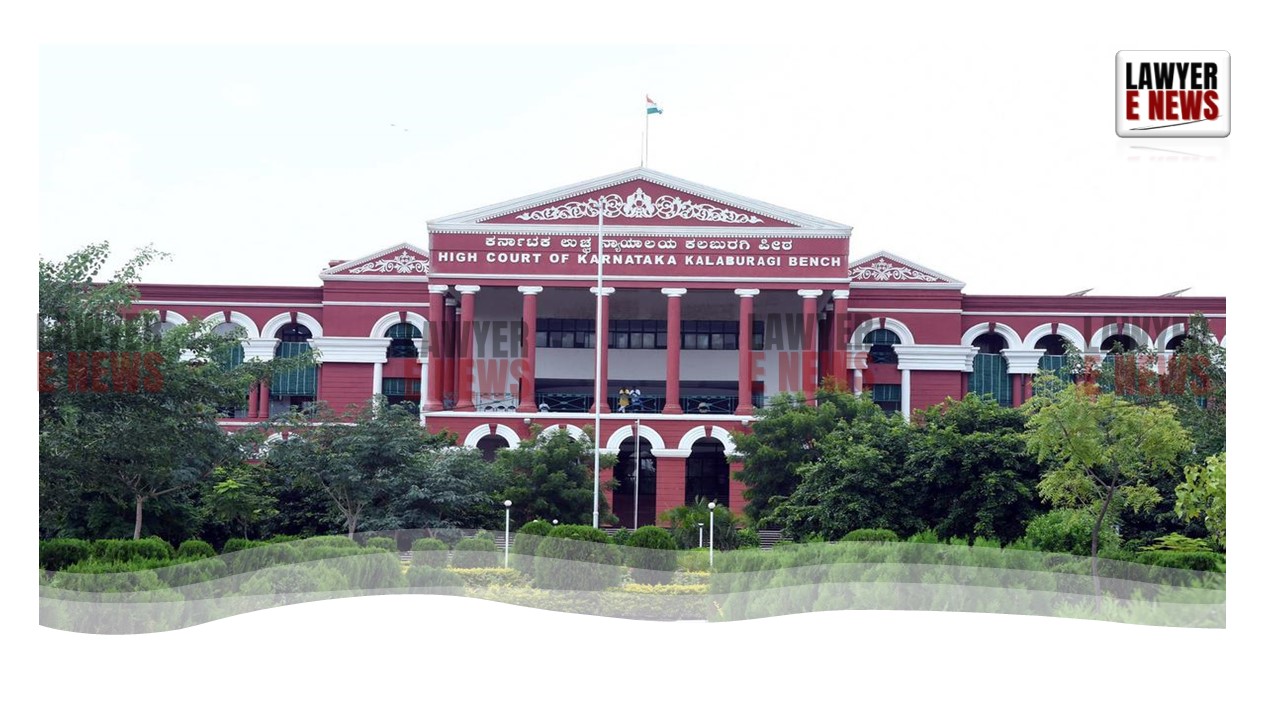
“Permitting investigation into such offences would be an abuse of the process of law and result in miscarriage of justice” — Karnataka High Court quashed an FIR under the POCSO Act and Indian Penal Code against family members amidst an ongoing property dispute. Justice M. Nagaprasanna, allowing the criminal petition filed by the accused siblings, found that the sexual harassment complaint lodged by their sister was a retaliatory move in the context of longstanding civil and criminal litigation over ancestral property. The Court held: “The offences under the Act are loosely laid and it is only to wreak vengeance that the complaint is registered.”

The complainant, a woman residing in Bengaluru, alleged that on May 18, 2024, her daughter (aged 17) was harassed by her uncles—petitioners in this case—when she and her brother went out for a walk. The FIR was registered four days later under Sections 8 and 12 of the Protection of Children from Sexual Offences Act, 2012, along with Sections 354, 506, and 34 IPC, accusing the brothers of assault and attempted rape.

However, the petitioners submitted that the complaint was a fabricated retaliation in a property dispute dating back several years. The Court recorded: “Petitioners and complainant are siblings involved in numerous litigations… The present complaint is a counterblast to those proceedings.”

“Ingredients of Sexual Assault and Harassment Under POCSO Not Made Out”: Court Analyzes Section 7, 8, 11 and 12 of the Act

The Court scrutinized the victim’s statement under Section 164 CrPC and found no specific allegations of sexual intent or inappropriate touching.

Quoting Section 7 of the POCSO Act, the Court emphasized that: “Whoever, with sexual intent, touches the vagina, penis, anus or breast of the child… is said to commit sexual assault.”

Finding no such allegation, the Court noted: “Except a vague reference that her hair was pulled and clothes were torn, there is no statement made by the victim about inappropriate touching.”

Similarly, the Court rejected application of Section 12 (sexual harassment) and Section 11 (which defines harassment), observing: “None of the ingredients under Section 11 is present even to its remotest sense.”

“Even Offence Under Section 354 IPC Not Made Out”: No Evidence of Intent to Outrage Modesty

The Court held that mere physical altercation or scuffle without any intent to outrage modesty does not fall within Section 354 IPC. It stated: “The entire complaint is narrating frivolous details of offences under the Act. There is nothing to indicate even a prima facie offence under Section 354 IPC.”

“No Criminal Intimidation Under Section 506 IPC Either”: Threat Allegations Held Baseless

The FIR also included allegations under Section 506 IPC (criminal intimidation), but the Court found no threat that met the threshold under Section 503 IPC.
“There is no foundation laid for an offence under Section 506 as well. Therefore, the said offence is also loosely laid.”

Allowing the petition under Section 482 CrPC, the Karnataka High Court quashed the FIR, citing its abusive nature rooted in family property rivalry. The Court referred to the Supreme Court's ruling in Mahmood Ali v. State of U.P. and reiterated that courts must guard against criminal law being weaponized in family feuds.

Justice M. Nagaprasanna concluded: “Complainant is the sister and the petitioners are her brothers. In that light, the crime being registered to wreak vengeance cannot be accepted… permitting investigation would become an abuse of the process of law and result in miscarriage of justice.”

Date of Decision: April 25, 2025

 

Latest Legal News