-
by sayum
26 August 2026 12:18 PM







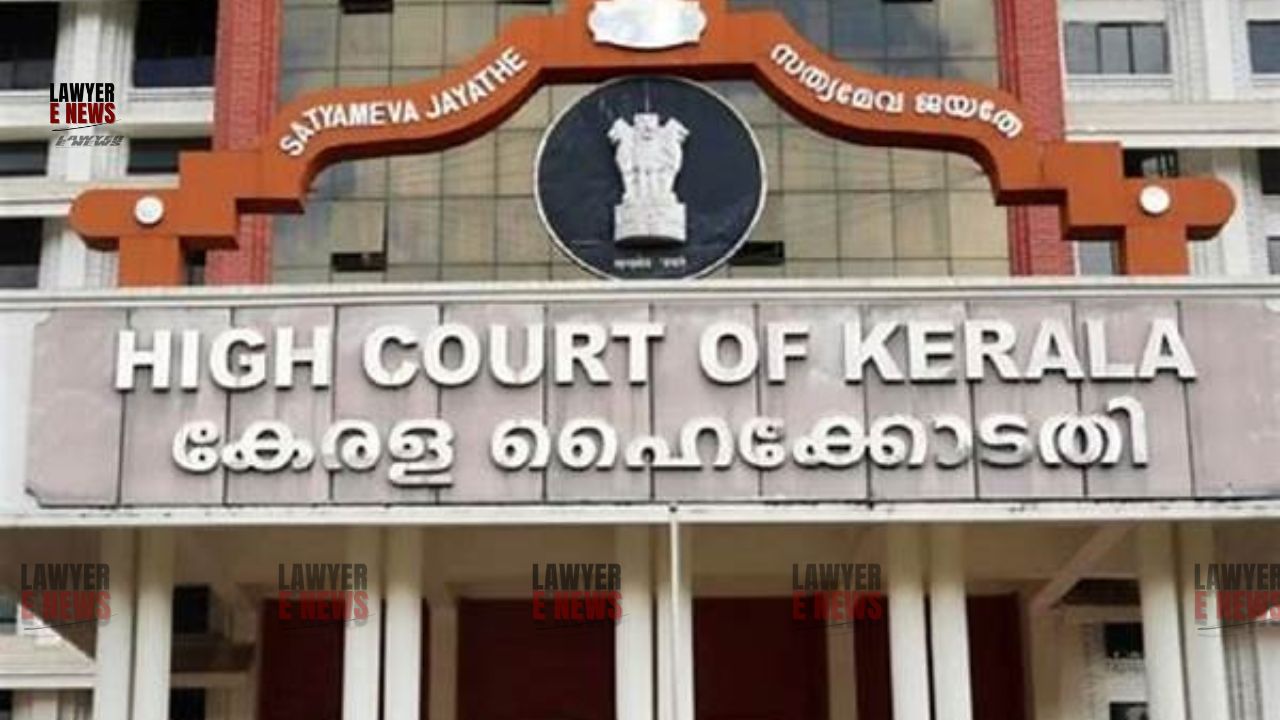
In a landmark ruling that reshapes the understanding of personal accident cover (PAC) in motor insurance, the Kerala High Court held that once a vehicle is sold and the transfer application is filed, the ownership and attached insurance rights — including the PAC — relate back to the date of application, not to the later date when the registration certificate is formally endorsed.
Justice Mohammed Nias C.P. quashed both the repudiation of the claim by the insurance company and the Ombudsman’s award upholding that denial, declaring that “statutory rights under the Motor Vehicles Act and IRDAI regulations cannot be defeated by procedural formalities.”
The Court concluded that “a deceased transferee who applies for ownership transfer and dies before endorsement cannot be penalised for non-compliance with a requirement rendered impossible by death — the law does not compel the performance of an impossibility.”
"Doctrine of Relation Back Applies to Motor Vehicle Ownership — Delay in Endorsement Cannot Nullify Deemed Transfer Under Section 157": Court Reasserts Transferee’s Statutory Entitlements
The writ petition arose out of the rejection of a personal accident insurance claim following the death of Aneesh Joseph, who had purchased a two-wheeler on 21 September 2023 and filed an application for ownership transfer on the same day. Tragically, he died in a road accident six days later, on 27 September, before the registration certificate could be updated in his name.
The insurer, National Insurance Company, repudiated the claim (Exhibit P4) on two grounds — a delay in claim intimation and absence of policy endorsement in the name of the deceased. The Insurance Ombudsman, through Exhibit P7, upheld the repudiation, holding that Aneesh was not the registered owner on the date of the accident and hence, not entitled to PAC benefits.
Rejecting this reasoning, the High Court ruled that ownership had legally passed with the filing of the application, and any procedural delay in updating the RC or insurance endorsement did not vitiate the substantive rights that had already vested.
“Registration Certificate Is Not a Document of Title — Ownership Transfer Is Effective Upon Sale and Application”: Court Rejects Insurer’s Technical Defence
The Court took strong exception to the insurer’s argument that the insurance policy remained in the name of the previous owner and that there was no privity of contract with the deceased. Justice Mohammed Nias noted that “the certificate of registration is not a document of title but merely evidences the ostensible owner for administrative purposes.”
Invoking the Doctrine of Relation Back, the Court held:
“Once the application for transfer of ownership is found valid and ultimately approved, the effect of such approval must relate back to the date of the application.”
The judgment categorically observed that Section 50 of the Motor Vehicles Act, 1988, presupposes that a transfer of ownership occurs first, and registration follows as a formality. Consequently, the deceased had acquired legal ownership as on 21 September 2023, the date of transfer application.
“Personal Accident Cover Is No Longer a Private Contract — It Is a Statutory, Non-Derogable, Social Security Right”: High Court Expands Scope of Section 157 MV Act
The core issue before the Court was whether the deemed transfer of insurance under Section 157 of the Motor Vehicles Act, 1988, applies to Personal Accident Cover, or whether it is restricted only to third-party liability.
Justice Nias answered emphatically:
“The regulatory intervention of the IRDAI has transformed personal accident cover from a contractual clause into a statutory obligation — PAC is no longer optional, it is embedded in every motor policy.”
Referring to General Regulation 36-A of the Indian Motor Tariff and IRDAI Circulars of 2018, the Court held:
“The personal accident cover travels along with the insurance policy, and once the ownership of the vehicle is transferred, the rights under the PAC also attach to the transferee, even in the absence of endorsement within 14 days.”
Dismissing the insurer’s plea that there was no privity of contract with the deceased, the Court observed:
“Once the insurer has received the premium and assumed risk, it cannot deny the insured benefit merely because the accident occurred before the formal endorsement — the cover attaches to the vehicle, not merely to a name on paper.”
“Law Does Not Demand the Impossible — Delay in Policy Endorsement Cannot Defeat a Claim When the Transferee Dies Within the Statutory Window”: Court Applies Lex Non Cogit Ad Impossibilia
The insurer relied heavily on General Regulation 17, which mandates that the transferee must apply for policy transfer within 14 days. Since the accident occurred before the endorsement and the deceased had not completed the formalities, the insurer claimed breach of policy.
But the Court ruled:
“The accident occurred within the 14-day statutory window — the deceased could not perform the endorsement due to death. The law does not compel performance of impossibility.”
Quoting the maxim lex non cogit ad impossibilia, the Court held that the deceased’s legal heirs could not be penalised for non-compliance with a procedural formality that was impossible to perform after death, and reiterated that the insurable interest already vested survives for the benefit of the estate and legal heirs.
“Premium Was Collected, No Breach of Policy Established — Insurer Cannot Evade Liability on a Technicality”: High Court Affirms Petitioner’s Right to Compensation
Justice Nias further rejected the insurer’s submission that the nominee on the policy was the previous owner’s wife, and therefore the current claim was not maintainable. The Court clarified:
“Nomination does not override the operation of statutory transfer under Section 157 — once the insurable interest passes to the new owner, and the policy is deemed to have transferred, the legal heirs of the deceased transferee become entitled to compensation.”
The Court emphasized that the insurer had collected the full premium, including PAC, and had not shown any breach of policy by the transferee. Therefore, it had no lawful basis to repudiate the claim.
Having found the rejection of the claim to be contrary to law, IRDAI regulations, and fundamental fairness, the Court declared:
“Repudiation of liability on the sole ground of non-endorsement within the 14-day window defeats the statutory deeming provision under Section 157 and the social security purpose of PAC. The insurer’s stand cannot be upheld.”
Accordingly, the Court:
Quashed the repudiation letter (Ext.P4) and Ombudsman Award (Ext.P7)
Directed the insurer to honour the claim (Ext.P3)
Ordered the insurer to release the full compensation of ₹15,00,000 within one month
The decision in N.J. Joseph v. National Insurance Co. Ltd. marks a significant expansion of judicial protection for transferee vehicle owners, especially in tragic circumstances involving death soon after purchase. The Kerala High Court’s unequivocal stance that "substantive rights cannot be lost to procedural defaults" sets a clear precedent.
By recognising that Personal Accident Cover is no longer just a contractual benefit but a mandatory statutory right, the Court ensures that technicalities cannot erode social security entitlements embedded in modern motor insurance.
This judgment is a critical reaffirmation of consumer rights in the insurance sector, and a stern reminder that insurance law must serve the ends of justice — not frustrate them.
Date of Decision: 29 October 2025