-
by sayum
26 August 2026 10:38 AM







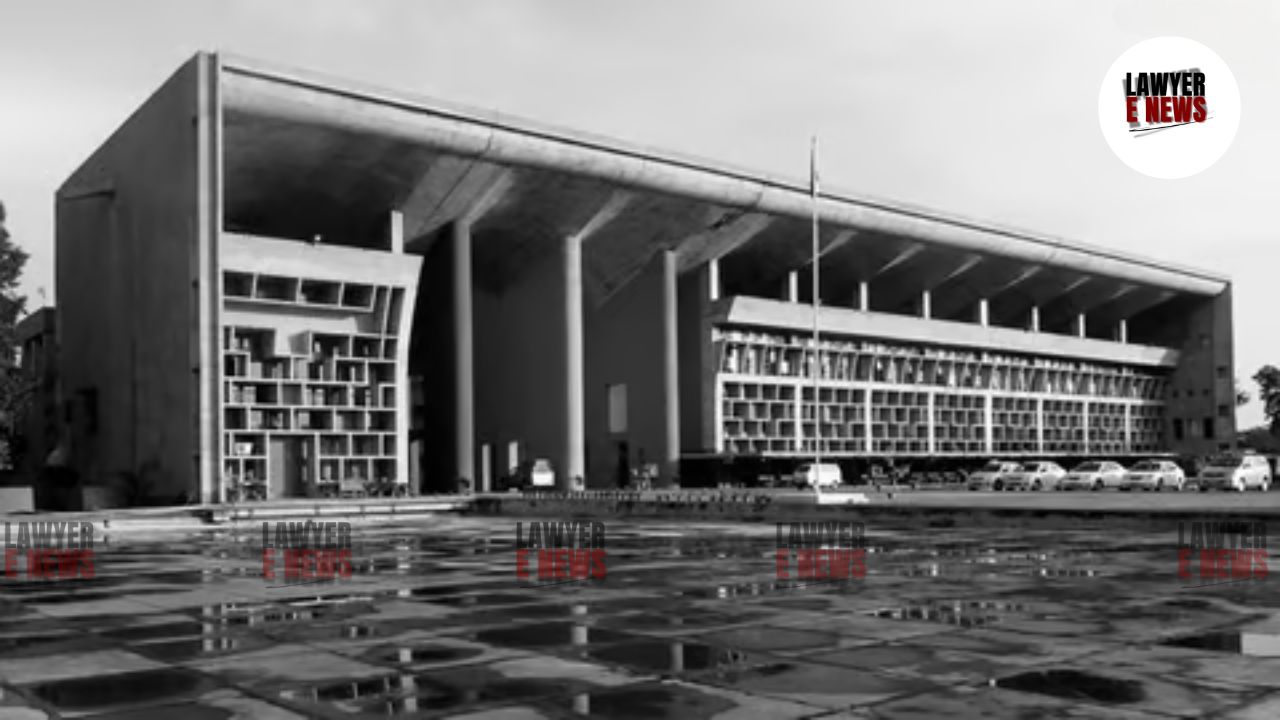
“Justice Should Not Only Be Done, But It Should Also Appear to Have Been Done”—Punjab and Haryana High Court rendered a speaking and reasoned judgment allowing transfer of two civil suits originally pending before courts in Garhshankar, District Hoshiarpur, to Hoshiarpur.
Presiding over the matter, Justice Archana Puri observed that the principle of judicial impartiality must be matched by its visible assurance. The Court noted that “when the entire Bar had gone on strike… the reason for apprehension in the minds of the applicants is seemingly genuine.”
The suits were initiated by Mahant Sitaram Dass, represented in one of the earlier proceedings by Advocate Madhu Bala, whose professional influence over the local Bar at Garhshankar was at the heart of the controversy. The applicants apprehended that such influence could deny them a fair and neutral adjudication.
“Not Just Justice, But the Appearance of Justice Matters”—Court Responds to Alleged Influence of Local Advocate Over Garhshankar Bar
The case arose from two civil suits, CS/79/2025 and CS/461/2024, both instituted by Mahant Sitaram Dass, a religious figure and litigant who had earlier engaged Advocate Madhu Bala for filing a permanent injunction suit concerning the Samadian Shiv Mandir Qila at village Lasara (Thapal), Tehsil Garhshankar.
The applicants—Onkar Singh and Janak Raj, among others—moved transfer petitions asserting that Madhu Bala, due to her position as a local practitioner, had mobilized the entire Bar Association of Garhshankar to strike work in her support during earlier criminal proceedings initiated under Section 164 of Bharatiya Nagarik Suraksha Sanhita, 2023 (analogous to Sections 107/151 CrPC).
They submitted that such conduct, including the submission of a memorandum to the SDM by the Bar (Annexure P-4), showed a disturbing willingness of the legal fraternity to rally behind one of its own, to the possible detriment of opposing parties. It was further argued that an FIR/DD report (DDR No.19 dated 24.08.2024) had also been lodged by the applicants against Madhu Bala and members of her family under Sections 115(2) and 3(5) of the Bharatiya Nyaya Sanhita, making her status as an interested party even more material.
“Bar's Collective Support to One Party's Advocate Erodes Perception of Fair Trial”: Court Weighs Applicants' Apprehension as Reasonable
Justice Archana Puri, after hearing both sides, emphasized that no universal formula exists for judicial transfers, and each case must be judged on its unique facts. Nonetheless, the Court held that “the interference of the Bar cannot be ruled out, though it may be with the sole purpose to support the Bar member.”
The respondent's counsel argued that:
Madhu Bala had no personal interest in the suits and was merely a supporter.
The applications were filed only to delay civil proceedings.
It was the respondent who had earlier filed a DDR against the applicants, not vice versa.
But the Court was not swayed by these submissions. Instead, it held that the institutional solidarity of the Bar—manifested through collective strikes and support—can be enough to raise valid concerns about impartiality.
Reaffirming the applicants’ concerns, the Court noted:
“It may not be so, as the Courts are required to work, without influence of any person… However, when the entire Bar had gone on strike… the reason for apprehension… is seemingly genuine.”
Transfer Allowed to Ensure Integrity of Judicial Process
Concluding that the applicants' apprehensions were not merely speculative, the Court ordered:
Civil Suit CS/79/2025 (Mahant Sitaram Dass v. Onkar Singh & Others) and
Civil Suit CS/461/2024 (Mahant Sitaram Dass v. Janak Raj & Others)
shall stand transferred from Garhshankar to Hoshiarpur, and be assigned to an appropriate court by the District & Sessions Judge, Hoshiarpur.
The Court gave one month's time to both parties to appear before the transferee court and directed that relevant case records be sent accordingly.
This decision not only underscores the substantive right to fair trial but also firmly acknowledges the procedural dimension of judicial neutrality, warning against any professional collusion or perceived bias that may stem from local legal influence.
“Apprehension of Influence—Whether Real or Perceived—Can Justify Transfer When Entire Bar Supports One Party's Advocate”
With this ruling, the Punjab and Haryana High Court has once again reiterated that neutrality in justice is not just about outcome but also about process and perception, placing the focus firmly on judicial confidence, even in the face of localized professional solidarity.
Date of Decision: 28 August 2025