-
by sayum
28 July 2026 1:44 PM







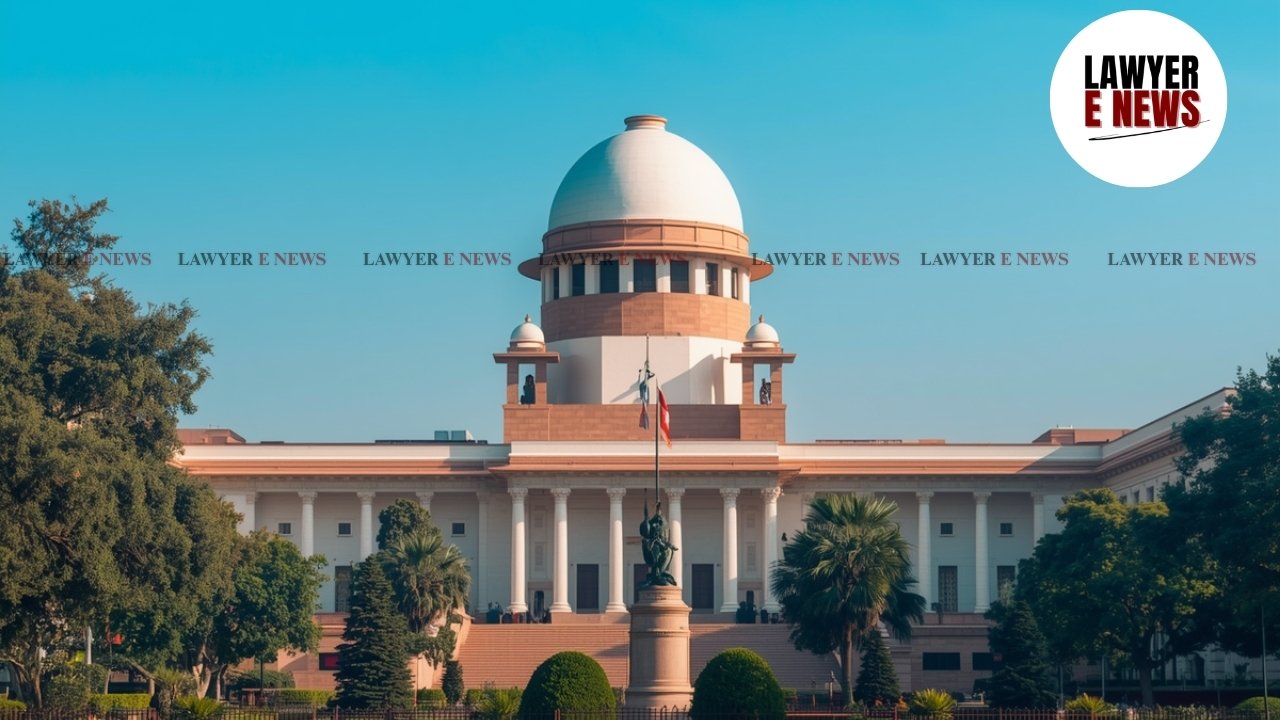
"This is not a case of there being consistency in all the statements but a case of verbatim reproduction of statements almost parrot-like, as a result of tutoring by the complainant and possibly her family," Supreme Court, in a significant ruling dated May 29, 2026, held that criminal proceedings must be quashed when a complaint under the POCSO Act appears to be a concocted "counter-blast" to matrimonial discord, especially where the victim's testimony is a "parrot-like" reproduction of the mother's allegations.
A bench of Justices B.V. Nagarathna and Ujjal Bhuyan observed that while genuine cases of sexual abuse must be dealt with vigorously, the court must "separate the wheat from the chaff" to prevent the legal machinery from being used as a tool for personal vendetta.
The case arose from a matrimonial dispute where the complainant wife, who had been living separately since 2011, filed a complaint in 2024 alleging that her husband and his brother had raped her minor daughter. The appellants moved the Supreme Court after the Allahabad High Court refused to quash the summons and cognizance orders issued by the Special POCSO Court in Meerut.
The primary questions before the court were whether the verbatim similarity between the complaint and the prosecutrix's statement indicated tutoring and whether the absence of medical evidence for grave allegations rendered the prosecution improbable. The court also examined the rising trend of using the POCSO Act as a weapon in family and civil disputes.
Court Finds Allegations Vague And Inherently Improbable
The bench noted that the father and uncle were accused of grave sexual offences despite the daughter having lived in their custody for fourteen years without any prior complaint. The court observed that a "blanket statement" alleging rape without specific dates or details cannot suffice to set the wheels of criminal law in motion, particularly when parties are embroiled in over ten civil and criminal cases.
"Casual Invocation Of Grave Charge Carries Social Stigma"
The Court emphasised that a man’s reputation is a sum total of how he is perceived in society, and such a perception cannot be distorted by a mere casual invocation of law. The bench noted that the judicial conscience cannot allow a grave and serious allegation to stand against a father and uncle without any supporting factual details or ancillary acts being narrated in the complaint.
"Specific Acts Falling Under Section 63 BNS Must Be Shown"
The bench clarified that to establish an offence of rape under Section 65 of the BNS or the POCSO Act, the prosecution must prima facie show specific positive acts of penetration or insertion. In the present case, the court found that the complaint was a "generic one" and lacked any description of the series of acts or the response of the prosecutrix that would qualify the conduct as a criminal offence.
Verbatim Reproduction Of Statements Indicates Tutoring
Upon a close scrutiny of the records, the Court found that the prosecutrix’s statement was "almost word by word similar" to the mother’s complaint. The bench remarked that when an event is narrated by different witnesses at different points in time, there are usually natural dissimilarities or contradictions due to lapse of memory.
"Parrot-Like Repetition Points To Deliberate Concoction"
The bench observed that the statements reflected a "stark repetition" of facts in the exact same order, tone, and vigour, which indicated a deliberate attempt to concoct facts. The court noted that the minor girl had been in her mother's custody for four months before the complaint was filed, providing ample time for her mind to be "swayed and coloured" by her maternal kin.
Absence Of Medical Evidence Deemed Fatal To Prosecution
The court expressed shock at the allegation that an aunt had inserted a hammer rod into the victim's private parts, yet no medical assistance was sought. The bench observed that the first instinct of any parent upon hearing such a narration would be to conduct a medical examination to prevent further complications.
"Justice Verma Committee Highlights Criticality Of Medical Reports"
Relying on the Justice J.S. Verma Committee Report, the Court underlined that a medical examination ensures the timely collection of forensic evidence and assists in linking the offence to the accused. The bench held that the absence of any injury report or medical assistance in the face of such "glaring contradictions" was fatal to the prosecution's case.
Rising Trend Of 'Matrimonial Bouquet' Cases Condemned
The Court took judicial notice of a worrying trend where spouses resort to a "matrimonial bouquet" of litigation, including dowry demands, cruelty under 498A IPC, and POCSO allegations to settle personal scores. The bench warned that these "phantom claims" divert judicial resources away from genuine cases of matrimonial oppression and violence against women.
"POCSO Act Should Not Be Used As Weapon For Arm-Twisting"
The bench observed that the threat of a false POCSO complaint is increasingly being used as a means to escape legal consequences of commercial transactions or to obtain higher monetary settlements in divorce. The Court stated that while true cases must be pursued vigorously, cases that are "prima facie vague, omnibus and general" should be shunned at the very threshold.
Guidelines On Quashing Under 'Bhajan Lal' Dictum
The Court reiterated the principles laid down in State of Haryana vs. Bhajan Lal, noting that where a criminal proceeding is manifestly attended with mala fide or maliciously instituted with an ulterior motive for wreaking vengeance, the High Court and Supreme Court must exercise their inherent powers to prevent the abuse of the process of law.
The Supreme Court concluded that the continuation of the present prosecution would not subserve the interest of justice. It set aside the Allahabad High Court's order and quashed the entire criminal proceedings, including the cognizance and summoning orders, while clarifying that other pending matrimonial proceedings between the parties should be decided on their own merits.
Date of Decision: May 29, 2026