-
by sayum
01 October 2026 8:21 AM







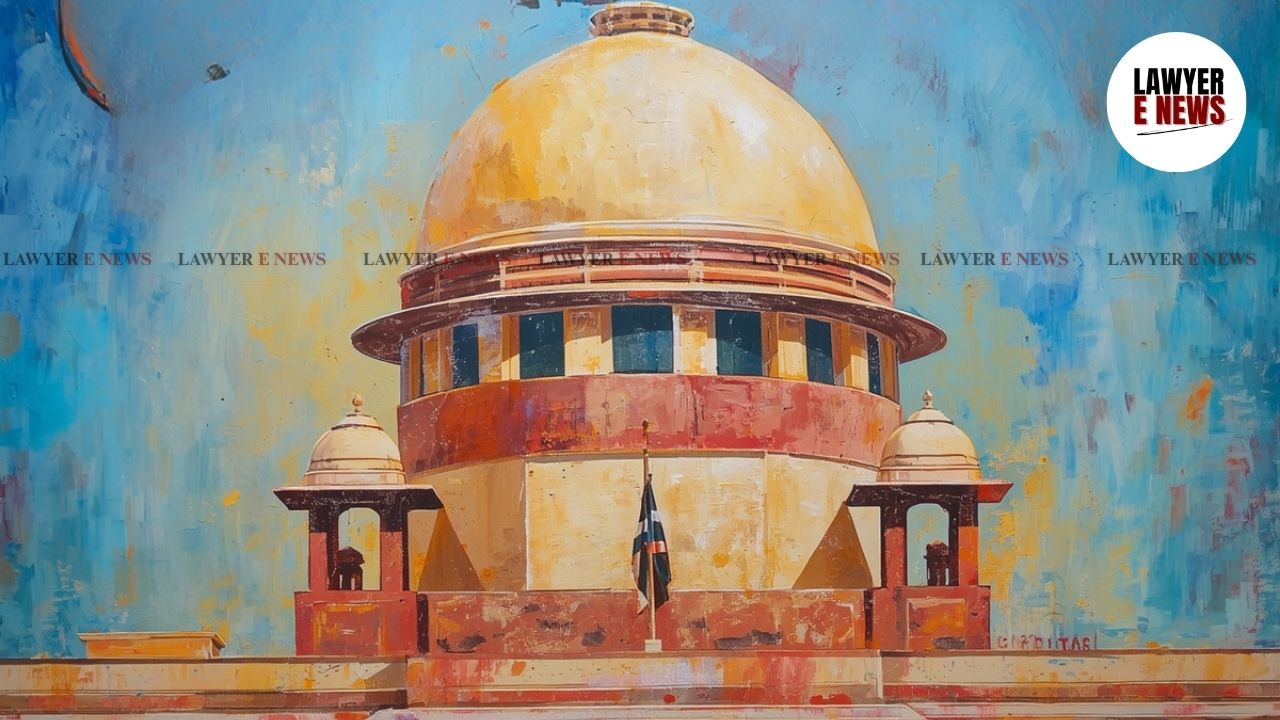
"It is trite that grant of bail to one accused does not, ipso facto, constitute a ground for granting bail to another accused. Parity is not a mechanical mathematical formula; it must be assessed based on the specific role attributed to each accused in the factual matrix." Supreme Court of India, in a significant ruling, underscored that the principle of parity cannot be invoked as a default mechanism for securing bail in criminal matters.
A bench comprising Justice Dipankar Datta and Justice Sheel Nagu held that the specific role attributed to an accused within the factual matrix of a case is the paramount consideration, rather than the mere fact that co-accused persons have been enlarged on bail.
The petitioner, Rajendra Prasad, was arrested in August 2023 in connection with the murder of one Chandrika @ Gabbar Sahani, following a dispute over property in Uttar Pradesh. The prosecution alleges that the petitioner was the mastermind who lured the victim to a residence in Goa, where he was brutally assaulted, tied to a heavy stone, and disposed of in the Gaundalim river. The trial is currently pending before the District and Sessions Court in North Goa, with the petitioner seeking bail primarily on the ground of parity with other co-accused who have already been released.
The court was called upon to determine whether the petitioner was entitled to bail based on the parity principle, given that co-accused persons had been granted relief. Additionally, the bench examined whether prolonged incarceration of three years, in the absence of substantial trial progress, justified a departure from the general refusal of bail in grave offences under Section 302 of the IPC.
Assessment of the Parity Principle
The court categorically rejected the petitioner's argument that parity with co-accused entitles one to bail as a matter of right. Relying on precedents such as Ramesh Bhavan Rathod v. Vishanbhai Hirabhai Makwana and Sagar v. State of U.P., the court clarified that judicial discretion in bail matters is not a mathematical exercise. The bench emphasized that the petitioner's role as the principal architect of the crime stood out as distinct and more specific compared to the facilitators who had been granted bail.
No Absolute Right to Parity
The bench observed that the prosecution’s material prima facie points to the petitioner’s direct and active involvement in a premeditated murder. By refusing to delve deep into the merits to avoid prejudice to the trial, the court asserted that the gravity of the offence and the active role of the accused are sufficient grounds to override claims of parity.
"The mere fact of the petitioner having been incarcerated for nearly three years or the likelihood of the trial not concluding within a reasonable period would not by itself entitle him to be released on bail, given the gravity of the offence alleged."
Judicial Concerns Regarding Witness Integrity
The court expressed serious concern regarding the possibility of witness tampering, noting that the prosecution's case relies heavily on the testimony of vulnerable employee-witnesses. The judges underscored that it is the duty of the court to ensure that such sensitive testimonies are recorded without any taint or external influence.
Court Encourages Expedited Testimony
While denying the bail plea, the Supreme Court directed the Sessions Court to make a sincere endeavour to record the testimonies of eight key sensitive witnesses within one year. The bench clarified that this directive does not prevent the trial court from regulating its own business or recording other witnesses simultaneously.
Liberty to Approach Court Afresh
The court granted the petitioner liberty to renew his bail application if the testimony of the designated eight witnesses is completed within the stipulated year, or if that period expires without the task being finished. This liberty is expressly conditional upon the petitioner’s continued cooperation with the trial court and ensures no delay is attributed to his conduct.
Date of Decision: 18 August 2026