-
by sayum
25 August 2026 12:32 PM







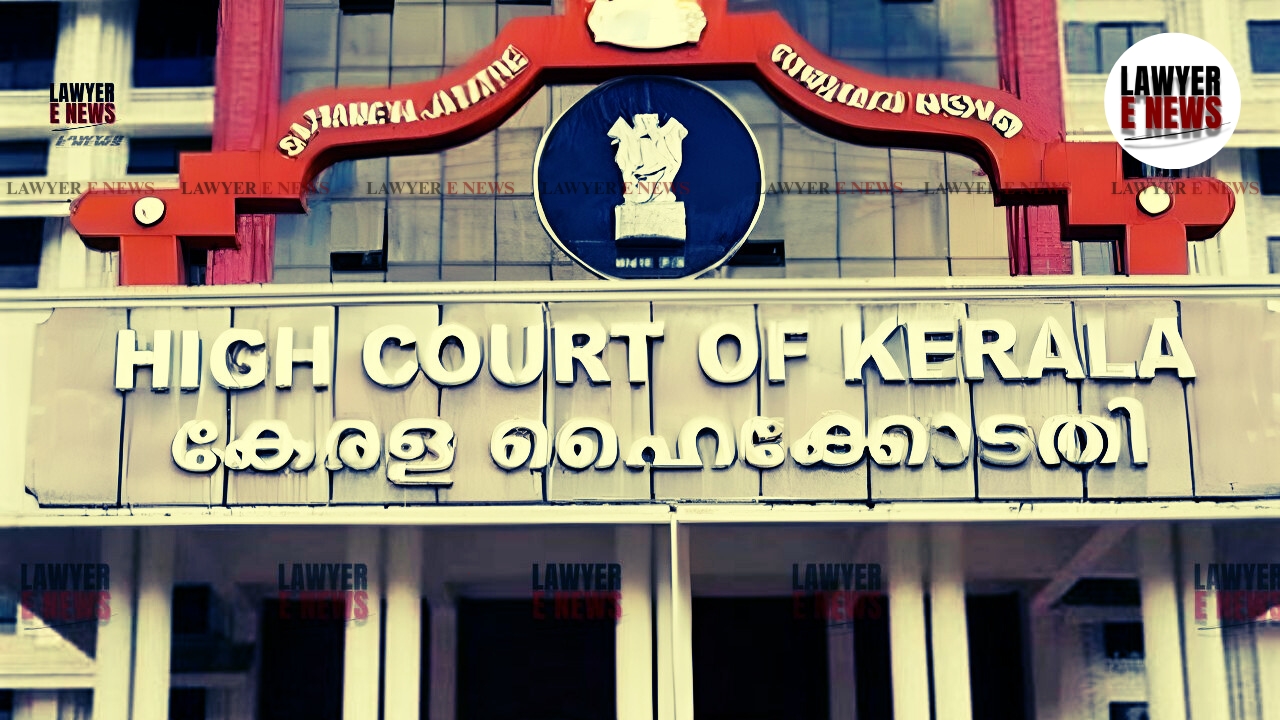
“No Child Should Be Told Her Father Owes Her Nothing Merely Because She Waited Until Adulthood To Ask”: In a judgment that strikes at the core of parental obligation and legal protections for minors, the Kerala High Court ruled that a daughter’s right to claim maintenance from her father survives the bar of limitation if she was a minor when the petition was filed, invoking Section 6 of the Limitation Act, 1963.
The Division Bench of Justice Devan Ramachandran and Justice M.B. Snehalatha overturned a Family Court’s limitation-based rejection of maintenance prior to 2014, holding instead that the petitioner, who was only 13 years old at the time of filing, was entitled to seek maintenance from her birth in 2004. The Court observed emphatically,
“We have little doubt that, going by Section 6 of the Limitation Act, the Cross Objector/respondent was fully entitled to seek maintenance from the time of her birth.”
The Court also scaled down the earlier awarded ₹20 lakhs for marriage expenses to ₹15 lakhs, stating that claims must be reasonable and not pegged to perceived parental wealth. It directed both parents—as co-equal guardians—to share the maintenance obligation, emphasizing that financial responsibility flows from the relationship, not the marriage status of the parents.
“A Father Cannot Hide Behind Alleged Poverty Without Disclosing His Inherited Wealth”: Court Finds No Proof of Inability to Pay
The appellant-father had challenged the Family Court’s order arguing that he earned only ₹10,000 per month as a daily wage worker and had no self-acquired assets. While he admitted to inheriting ancestral property in 2016, he contended that the land was unusable due to legal proceedings under the Kerala Land Reforms Act.
Rejecting this claim, the Court highlighted the absence of any evidence that would legally incapacitate him from accessing or leveraging his inheritance:
“There is neither any documentary evidence available in substantiation; nor did the appellant testify to such effect, when he deposed as RW1.”
The Court further condemned the father's failure to disclose full details of his assets, stating:
“He has kept away information—after unequivocally admitting that he has acquired inherited property from his father—as to its worth and capacity to generate income.”
The Court found the claim of impecuniousness to be a bare assertion unsupported by evidence, and further noted that the father had not even attempted to quantify the value of the inherited assets, including a residential house and 50 cents of land.
“Maintenance From Birth Is Not a Gift, It Is a Legal Obligation”: Court Corrects Family Court’s Limitation Error
The respondent-daughter had originally sought monthly maintenance of ₹5,000 from 2004 to 2010, ₹20,000 from 2010 to 2017, and ₹25,000 thereafter until her marriage. However, the Family Court, while granting some of her claim, wrongly limited past maintenance to only three years prior to the petition, i.e., post-2014.
The High Court categorically rejected this limitation-based approach, stating:
“This, in our firm view, is on account of misdirection qua the provisions of the Limitation Act, especially when it relates to a minor suing her father for maintenance.”
The judgment firmly reinforced the principle that limitation does not extinguish a minor’s right to parental maintenance. Relying on Section 6 of the Limitation Act, which protects the rights of minors and other disabled persons from limitation bars, the Court held that such a claim can be instituted after attaining majority, with time starting to run only from the date of majority.
“Marriage Is Not a Show of Wealth; Courts Must Award What Is Necessary, Not What Is Lavish”: Marriage Expenses Reduced to ₹15 Lakhs
The Court also scrutinized the Family Court’s grant of ₹20 lakhs for marriage expenses and held it to be excessive, particularly when the only basis for the award was the father’s alleged inheritance. The respondent had originally demanded ₹50 lakhs, but no concrete evidence of necessity was presented.
In a pointed remark, the Court stated:
“It is not a requisite that every marriage should be done on a grand scale—to be commensurate to the alleged worth of the father.”
The Bench noted the prevailing cost of gold and estimated that an amount of ₹15 lakhs would suffice, allowing for both gold and essential expenses. The Court underscored that the purpose of maintenance and marriage support is sustenance—not social prestige or excessive luxury.
“Both Parents Must Shoulder the Duty to Raise Their Child—Even After Divorce”: Equal Sharing of Maintenance Ordered
Another key aspect of the ruling was the Court’s recognition that the financial burden of child maintenance cannot be imposed solely on one parent, especially when both are capable of contributing. The respondent’s mother was a practicing doctor and financially independent.
The Court declared:
“Since the mother is admittedly working, we are of the definite view that this should be directed to be equally shared by the parents.”
The Court accordingly revised the maintenance schedule and directed the amount to be split equally between the father and mother. It held that the child is entitled to:
₹2,500 per month from 03.01.2004 to 03.01.2010
₹5,000 per month from 04.01.2010 to 04.12.2017
₹10,000 per month from 04.01.2018 onwards until marriage or gainful employment
All payments were to be cleared within three months to avoid 6% interest per annum, and no interest would apply if paid in time.
“Parental Duties Do Not Expire With Divorce, Distance, or Displeasure”: Kerala High Court Affirms Minor’s Full Entitlement
This ruling sends a clear message on the non-negotiable legal responsibilities of parenthood, particularly in the context of estranged relationships or divorce. The Court decisively held that neither the father’s claim of being deserted nor his vague financial hardships could absolve him from providing for his daughter.
Rejecting the notion that a daughter could be denied support due to the parents’ fractured relationship, the Court emphasized:
“It is not open to the father to claim that he owes nothing to his daughter merely because she and her mother allegedly left him. That is not a defence to legal obligation under the Hindu Adoptions and Maintenance Act.”
Ultimately, this judgment clarifies that a daughter’s right to maintenance is absolute and continuous until she is married or self-sufficient, and courts must measure support not by sentiment or status, but by necessity and law.
Date of Decision: 10 November 2025