-
by sayum
28 August 2026 8:44 AM







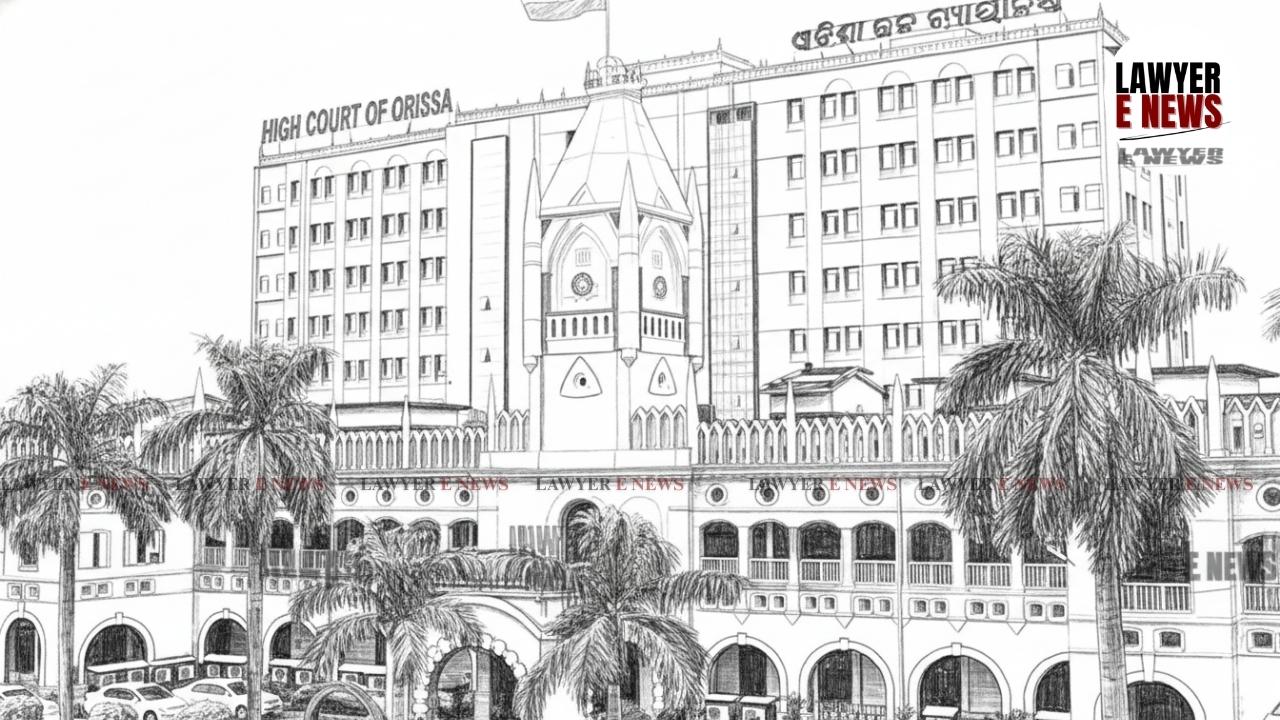
"No civilized society can ever accept the leaking of question papers for recruitment to Government posts forcing the Government to cancel the examination, " Orissa High Court, in a significant ruling, refused to grant bail to 17 individuals allegedly involved in a massive syndicate that leaked question papers for the Combined Police Service Examination (CPSE) 2024.
A single-judge bench of Justice G. Satapathy observed that such socio-economic offences of huge magnitude undermine the integrity of the recruitment system and unfairly disadvantage meritorious candidates who work honestly for such opportunities.
The case originated from the interception of three luxury buses near the Odisha-Andhra border carrying 114 candidates to a safe house to receive leaked question papers for the CPSE 2024. Investigations by the CBI revealed a deep-rooted conspiracy involving officials of outsourced private firms entrusted with exam conduct, who allegedly leaked papers for illegal gratification ranging from Rs. 15 to 25 lakhs per candidate. The recruitment examination had to be cancelled twice due to these systemic leaks, affecting thousands of aspirants across the state.
The primary question before the court was whether the petitioners, who had been in custody for seven to eight months, were entitled to bail despite the gravity of the allegations. The court was also called upon to determine if the completion of a preliminary charge sheet by the CBI significantly altered the grounds for detention in a socio-economic offence of this scale.
Systematic Sabotage Of Recruitment Process
The Court observed that the allegations against the petitioners involved leaking question papers in a "systematic and organized manner" by receiving illegal gratification amounting to crores of rupees. It noted that the petitioners, including directors of outsourced technical firms, allegedly exploited their confidential access to subvert the examination process.
The bench highlighted that the CPSE 2024 was cancelled twice due to these activities, which forced the government to restart the process and caused significant administrative loss. The court noted that the petitioners were allegedly involved in hoarding candidates at resorts in West Bengal and Andhra Pradesh to digitally display leaked papers.
"The allegations against the petitioners definitely reveal a crime against society which cannot be accepted in any way."
Scams Corrode Trust Of Meritorious Candidates
Justice Satapathy emphasized that such scams do not just affect the government but have a devastating impact on the morale of deserving students. The Court noted that if undeserving candidates obtain jobs through corrupt means, it is "unfair for those meritorious candidates who are honestly working hard and waiting for the exam."
The bench further remarked that such fraudulent practices result in a situation where honest aspirants find themselves "disentitled to the post" because of the "unscrupulous persons" managing the leaks. The judgment pointed out that the recruitment examination being cancelled twice "definitely corrodes the trust of the general public on the system."
Socio-Economic Offences Constitute A Separate Class
The Court reiterated the established legal principle that socio-economic offences constitute a "class apart" and require a different approach during bail considerations. It held that the gravity of the crime and its impact on the social fabric outweigh the personal liberty of the accused in such instances.
Refuting the petitioners' argument regarding the duration of their custody, the Court cited the Supreme Court's decision in State of Bihar v. Amit Kumar alias Bachcha Rai. The bench noted that when the seriousness of the offence is high, the mere fact that the accused has been in jail for a long time should not be the primary concern of the courts.
"The mere fact that he was in jail for, however, long time should not be the concern of the courts... in a case which has the effect of undermining the trust of people in the integrity of the education system."
Syndicate’s Role and Ongoing Investigation
The Court scrutinized the specific roles of the petitioners, including T. Abhimanyu Dora, Muna Mohanty, and Suresh Chandra Nayak, noting that some were also wanted in other recruitment scams. It found that the petitioners acted as intermediaries, transporters, and masterminds who monitored the illegal operations and collected original certificates from candidates as security for payments.
Since the CBI investigation is still open and further "things are yet to be unearthed," the Court concluded that granting bail would be inappropriate. The bench dismissed all 17 applications, holding that the nature and gravity of the offences vis-a-vis the accusations made them unfit for release at this stage.
The High Court dismissed the bail applications of all 17 petitioners, emphasizing that the organized leaking of recruitment papers is a socio-economic crime that sabotages state progress. The court also directed petitioner Muna Mohanty, who was on interim medical bail, to surrender to custody within 21 days after his prescribed bed rest.
Date of Decision: 22 May 2026