-
by sayum
26 August 2026 8:37 AM







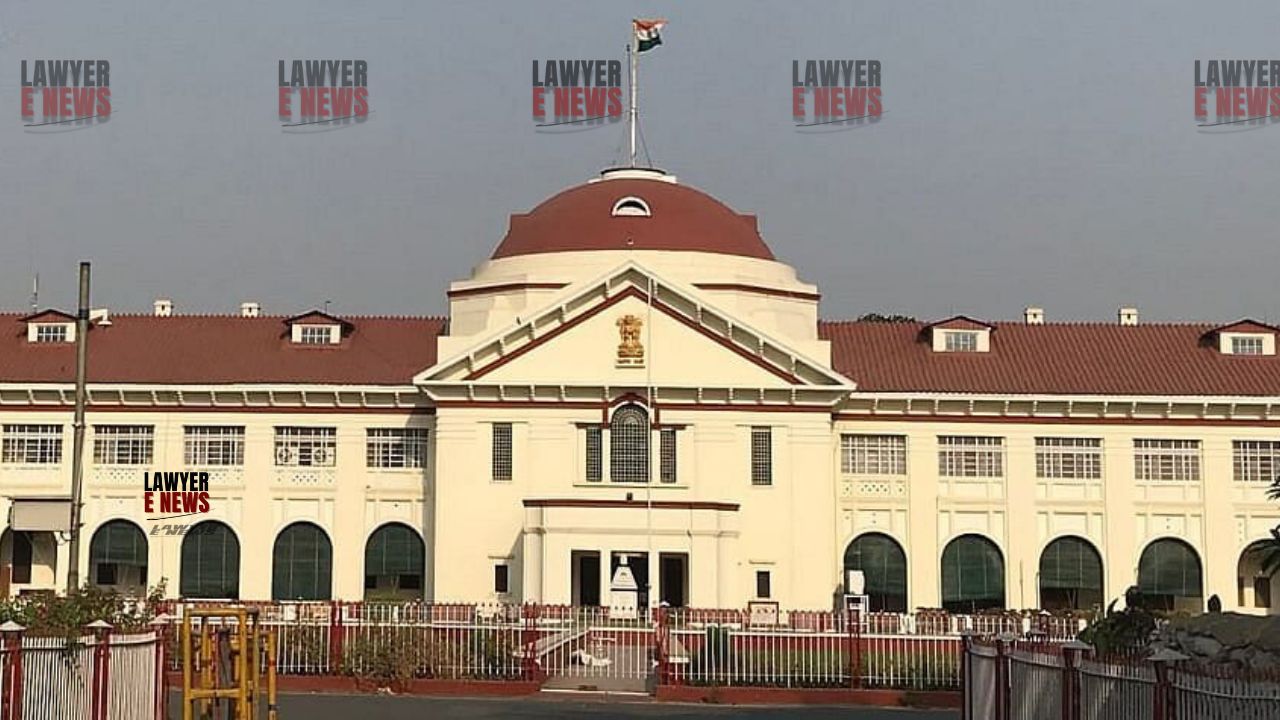
“Despite serious allegations of procedural irregularity and denial of natural justice, no writ jurisdiction can override the constitutional bar under Article 329(b) once the election process has commenced.” - Patna High Court, through Justice A. Abhishek Reddy, clarifying the non-maintainability of writ petitions under Article 226 once the election process has commenced, even where nomination rejection is alleged to be arbitrary or violative of natural justice. The Court, relying on a string of Supreme Court precedents and statutory framework under the Representation of the People Act, 1951, dismissed the writ petitions filed by Sweta Suman and Rakesh Kumar Singh challenging the rejection of their nomination papers for the upcoming Bihar Assembly Elections.
“Court cannot act as a substitute for the Election Tribunal; Rejection of nomination is a valid ground for election petition, not a writ”
Main Observation: “Once the election process begins, irrespective of the legality or illegality of rejection of nomination, the only remedy is to file an election petition after results are declared.”
The petitioners—Sweta Suman (CWJC No. 17396/2025) and Rakesh Kumar Singh (CWJC No. 17397/2025)—approached the High Court under Article 226 of the Constitution, alleging that their nomination papers were arbitrarily and illegally rejected during the scrutiny stage of the Bihar Legislative Assembly Elections, scheduled for November 11, 2025.
Sweta Suman, contesting from the Mohania (SC) Constituency, argued that her Caste Certificate was declared dubious by the Returning Officer based on a report by the Circle Officer, without being supplied the objection copy or the report. Rakesh Kumar Singh, contesting from Ghosi Constituency, alleged non-service of rejection order and rejection on non-existent grounds.
However, the Court held that such disputes cannot be entertained at the pre-election stage, as it would interfere with the election process and bypass the exclusive jurisdiction of the Election Tribunal.
The petitioners had submitted their nominations during the second phase of Bihar Assembly Elections 2025. Upon scrutiny, their nominations were rejected by the Returning Officers. Sweta Suman’s nomination was rejected due to alleged doubts over the authenticity of her caste certificate, whereas Rakesh Kumar Singh’s nomination was dismissed without even serving the copy of the rejection order.
Their core legal contention was that they were not afforded an opportunity to respond to objections, thereby violating the principles of natural justice and procedural fairness under the RP Act, 1951. They urged the Court to exercise its extraordinary jurisdiction under Article 226, asserting that the rejection was not merely irregular but malafide and arbitrary.
The central legal issue before the Court was:
Whether the High Court can entertain a writ petition challenging the rejection of nomination once the election process has commenced, in light of the bar under Article 329(b) of the Constitution and the statutory remedy provided under Sections 80 and 100(c) of the RP Act, 1951.
Justice Reddy held unequivocally that once election notification is issued, the entire process from nomination to polling and declaration of results becomes part of the "election process" as contemplated under Article 329(b) and Section 80 of the RP Act.
The Court held: “Irrespective of the fact as to whether the rejection of the nomination is bad in law or has been passed in an arbitrary manner, the same cannot be questioned under Article 226 of the Constitution in view of the specific bar laid down in Article 329(b).”
Further, the Court clarified that Section 100(c) of the RP Act specifically includes improper rejection of nomination as a ground to void an election, and hence the proper remedy is to challenge the result via election petition.
The Court placed strong reliance on the following landmark decisions:
N.P. Ponnuswami v. Returning Officer (AIR 1952 SC 64)
"Election matters should be brought up only at the appropriate stage in an appropriate manner before a special tribunal and should not be brought up at an intermediate stage before any court."
Mohinder Singh Gill v. Chief Election Commissioner (1978) 1 SCC 405
“All substantial reliefs including declaration of election to be void and declaring petitioner as duly elected must be sought through an election petition, not writ.”
Election Commission of India v. Ashok Kumar (2000) 8 SCC 216
“While judicial review is not completely barred, courts must act with caution and only intervene to facilitate—not interrupt—the election process.”
Gujarat University v. N.U. Rajguru (AIR 1988 SC 66)
“Right to contest election is a statutory right; statutory machinery must be followed for challenging elections.”
The Court also considered its own earlier rulings in CWJC No. 9127/2019, CWJC No. 4305/2023, and CWJC No. 1745/2021, which consistently held that once elections are notified, writ jurisdiction is barred and the only recourse is an election petition.
Petitioners’ Reliance on Inapplicable Precedents Rejected
The Court rejected the petitioners' reliance on municipal and panchayat election cases, including Rama Ballabh Singh Kesari, Manik Lal Prasad, and Prafful Chandra Sudhanshu, on the ground that these were not related to Assembly or Parliamentary elections and did not consider the constitutional bar under Article 329(b).
On the reliance placed on Union Territory of Ladakh v. J&K National Conference, the Court noted:
“The said case involved denial of election symbol, not rejection of nomination. It also carved out exceptions only in cases of executive mala fides or deliberate attempts to disrupt level-playing field—which is not made out in the present case.”
While the Court acknowledged the seriousness of the allegations regarding non-service of objections and possible bias, it reiterated:
“If any interim or final orders are passed at this stage, it would directly affect the election process and will have the effect of delaying and protracting the election process which has already commenced.”
Accordingly, the Court held that it lacked jurisdiction to intervene and that it would be inappropriate to enter into factual disputes or merits which can be adjudicated in an election petition under Sections 80 and 100(c) of the RP Act.
Dismissing both writ petitions, the Court emphasized:
“This Court has not gone into the merits or demerits of the case, leaving all questions open to be decided by the appropriate forum in an election petition.”
The judgment reinforces the constitutional scheme of non-interference in electoral matters during the process, upholding the independence of the electoral machinery and the primacy of election tribunals in adjudicating disputes.
Date of Decision: November 3, 2025