-
by sayum
25 August 2026 12:32 PM







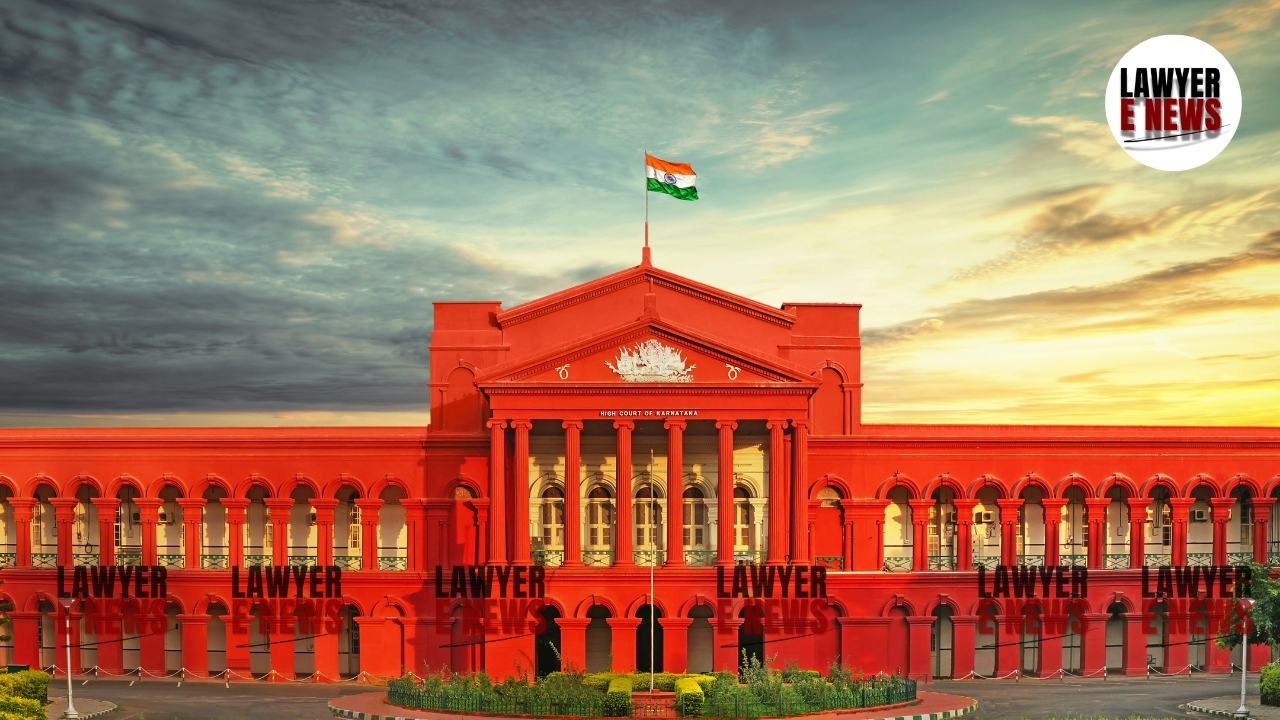
“Cognizance Is Not a Mini-Trial — Magistrate Need Only Apply Mind to Materials Before Proceeding”, In a significant ruling Karnataka High Court, refused to interfere with the order of cognizance and issuance of summons passed by the trial court against former Chief Minister B.S. Yeddyurappa and three others in a case involving serious allegations under the Protection of Children from Sexual Offences Act, 2012 (POCSO) and various provisions of the Indian Penal Code, 1860.
The court ruled that the trial court had applied its judicial mind as required under law and reiterated that “the truthfulness or falsity of the allegations is not the subject matter of judicial review under Article 226 at the stage of cognizance — it can only be established after a full-blown trial.”
This decision comes in the wake of petitions filed under Article 226 and 227 of the Constitution of India, along with Section 528 of the Bharatiya Nagarik Suraksha Sanhita, 2023, challenging the order dated 28 February 2025 passed by the Special Court (FTSC-1), Bengaluru in Spl.C.C.No.420/2025, wherein the trial court had taken cognizance of offences alleged against Yeddyurappa (Accused No.1) and his three co-accused.
“Court Has Already Held Allegations, If True, Disclose Offence — Petitioners Cannot Keep Re-Opening Settled Matters”
The petitioners had earlier challenged the trial court’s first order of cognizance dated 04 July 2024. While setting aside that order due to lack of reasons, the High Court had explicitly observed that the allegations warranted a trial. In the present judgment, the court highlighted that its earlier observations had attained finality.
“Though the learned Senior Counsel for the petitioners has argued the matter at length… the same is not open for reconsideration in the light of the order passed in W.P. No. 15522/2024 c/w W.P. No. 18538/2024,” the court held.
Justice Arun emphasized that “the only question before the Court now is whether the trial Court, in its second order dated 28.02.2025, has taken cognizance in accordance with law.” On this limited aspect, the court found no irregularity in the trial court’s reasoning.
"Allegations of Political Vendetta Cannot Eclipse the Need for a Proper Trial Where Prima Facie Offence Exists"
The petitioners, including the former CM, had contended that the complaint was politically motivated, that the complainant had an alleged history of misusing the legal process, and that most other witnesses were favorable to the accused. They also raised doubts regarding the delay in filing the complaint and alleged suppression of exculpatory statements by the police.
However, the High Court noted that these contentions had already been considered in the previous round of litigation and that a prima facie case was found to exist, warranting a full trial.
“Whether the said allegations are true or false can only be determined after a full-blown trial,” the court reiterated, refusing to engage in a premature analysis of the evidentiary value of materials collected by the CID.
“Trial Court Need Not Conduct Mini-Trial at Cognizance Stage — Only Application of Mind to Materials Required”
On the key question of whether the trial court’s fresh cognizance order was valid in law, the High Court made important observations on the standard of scrutiny required at the pre-trial stage:
“It has to be borne in mind that the trial Court need not conduct a mini trial while taking cognizance. It is required to apply its mind and form an opinion by analyzing the materials produced before it. The impugned order shows that the trial Court has done so.”
The court observed that the trial judge had listed the allegations, referred to the applicable provisions of law, and formed a judicial opinion that there was sufficient ground to proceed. This, the court held, satisfied the legal requirement under Section 528 of the BNSS and corresponding provisions under the IPC and POCSO.
“Accused No.1 Is Aged and Infirm — Presence Need Not Be Insisted Unless Necessary”: High Court Extends Procedural Relief But Allows Prosecution to Continue
Taking into account the advanced age and health condition of Accused No.1, the High Court directed the trial court to show procedural leniency:
“The trial Court shall not insist upon the presence of accused No.1 unless it is necessary during the course of the trial and will entertain the exemption application filed on behalf of accused No.1.”
This direction balances the rights of the accused with the interest of justice, while ensuring the trial proceeds unhindered.
The court further clarified that observations made in the earlier and present writ proceedings should not influence the trial court, which must decide the case purely based on evidence:
“The trial Court shall decide the case based on the evidence let-in during the course of the trial without being influenced by any of the observations made by this Court.”
Summing up, the High Court refused to quash the cognizance and issuance of summons, stating:
“I do not see any error in the manner in which the trial Court has taken cognizance of the offences alleged against the accused and the process that has been issued.”
The petitioners were granted liberty to approach the trial court with applications for discharge or other remedies under law.
Date of Decision: 13 November 2025