-
by sayum
01 October 2026 8:21 AM







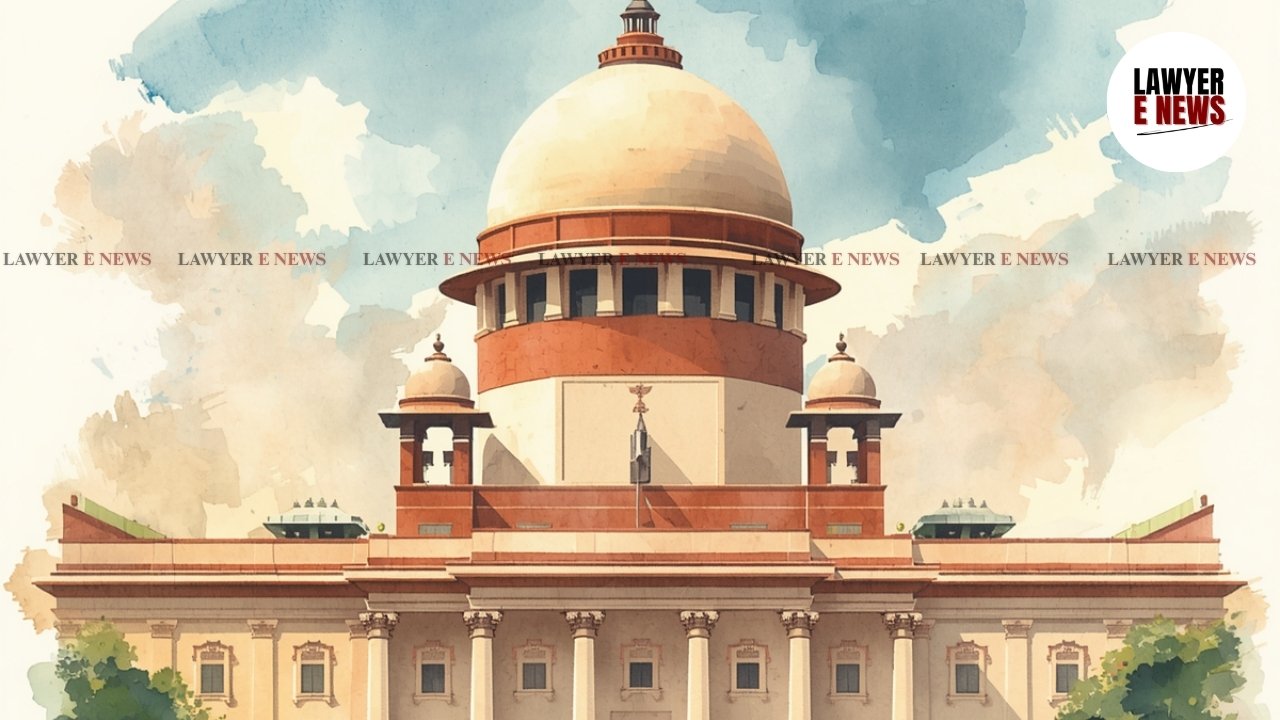
"The intention to omit the rule without any saving clause was to bring to an end, the unnecessary complications once and for all and the intention cannot be to keep alive the unnecessary complications insofar as the pending proceedings are concerned." Supreme Court of India, in a significant ruling, held that the omission of Rule 96(10) of the Central Goods and Services Tax (CGST) Rules, 2017, applies to all pending proceedings as of the date of its omission.
A bench of Justices J.B. Pardiwala and K. Vinod Chandran observed that in the absence of a specific saving clause or sunset provision in the notification, the omission of the rule effectively brings an end to the "unnecessary complications" it previously imposed on exporters claiming integrated tax refunds.
The dispute arose following the issuance of Notification No. 20/2024, which omitted sub-rule (10) of Rule 96 of the CGST Rules, 2017, effective from October 8, 2024. The Union of India challenged various High Court judgments which held that this omission applied to all pending proceedings, thereby allowing exporters to claim tax refunds without the restrictive conditions previously contained in the rule. The matter reached the Supreme Court as a batch of appeals filed by both the Revenue and the assessees.
The core legal issue was whether the omission of Rule 96(10) of the CGST Rules, 2017, operates prospectively or if it applies to pending proceedings as well. The court was also tasked with determining whether the lack of a "saving clause" in the notification mandates the immediate cessation of the rigors imposed by the omitted rule on pending refund claims.
Applicability of Omitted Provisions
The Court relied heavily on the Constitution Bench decision in Kolhapur Canesugar Works Ltd v. Union of India. The bench reiterated the common law principle that the omission of a rule, absent a saving clause, effectively obliterates it from the statute book as if it had never existed. Because Section 6 of the General Clauses Act applies only to Central Acts and regulations, not rules, the absence of a legislative saving clause is fatal to the continuation of proceedings under the omitted rule.
Principle of Legislative Intent
The Court noted that the GST Council, in its 54th meeting, admitted that Rule 96(10) was causing "unnecessary complications without any intended benefit." While the Union of India argued that the recommendation for omission was intended to be prospective, the Court clarified that these recommendations are merely advisory and not binding on the rule-making authority.
Absence of Saving Clause is Decisive
The bench observed that the legislature's failure to incorporate a saving or sunset clause signifies a clear intent to terminate the problematic rule entirely. If the legislature had intended to keep the rule alive for pending cases, it could have adopted a specific legal device or fiction to do so. Without such a provision, the Court refused to allow the Revenue to continue enforcing a rule that has been discarded for its inherent lack of utility.
"The intention to omit the rule without any saving clause was to bring to an end, the unnecessary complications once and for all and the intention cannot be to keep alive the unnecessary complications insofar as the pending proceedings are concerned."
Final Directions to High Courts
The Court dismissed the appeals filed by the Union of India, affirming the High Court rulings. Emphasizing the need for judicial consistency, the Supreme Court directed its Registry to circulate the order to all High Courts. The Chief Justices of the respective High Courts have been requested to ensure that all pending litigation on this specific issue is brought to a swift conclusion, ensuring a final quietus to the matter.
The ruling settles a major ambiguity in GST litigation, providing much-needed relief to exporters whose refund claims were stalled by the restrictive nature of Rule 96(10). By confirming that the omission applies to pending proceedings, the Court has effectively closed the door on further disputes regarding the application of the now-deleted provision.
Date of Decision: 06 August 2026