-
by sayum
26 August 2026 10:38 AM







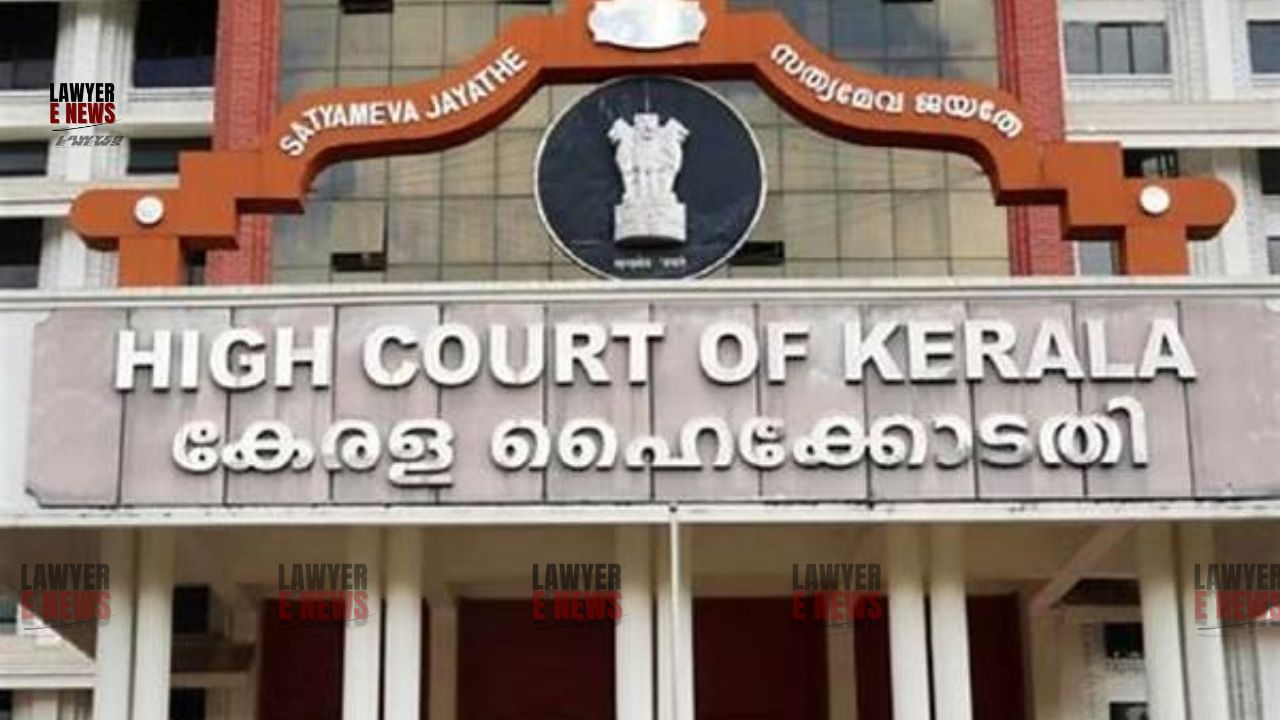
“Public duty under the PC Act is not confined to duties created by statute or government direction” - Division Bench of the Kerala High Court comprising Dr. Justice A.K. Jayasankaran Nambiar and Justice Jobin Sebastian delivered a landmark judgment in Harish V. & Ors. v. T.C. Mathew & Ors., setting aside a Single Judge ruling that had quashed corruption proceedings against office bearers of the Kerala Cricket Association (KCA). The High Court ruled that KCA officials perform “public duties” and are “public servants” within the meaning of Sections 2(b) and 2(c)(viii) & (xii) of the Prevention of Corruption Act, 1988 (PC Act), thus restoring criminal proceedings before Special Courts under the PC Act.
This judgment marks a significant legal pronouncement on the definition of “public servant” and the scope of “public duty” under anti-corruption law, especially as applied to private bodies performing public functions in sectors such as sports.
Stadium Land Scandal and Quashed FIRs
The controversy originated from complaints alleging corruption by KCA office bearers in land purchases for stadiums in Edakochi (Ernakulam) and Manakkad (Thodupuzha). Based on these complaints, the Special Courts at Thrissur and Kottayam ordered preliminary inquiries under the PC Act.
The accused KCA officials filed writ petitions before the Kerala High Court, asserting that they could not be deemed “public servants” under the PC Act. A Single Judge accepted this contention, holding that KCA's functions were not mandated by positive law or executive instruction and therefore did not amount to “public duty” under the Act. The FIRs and proceedings were quashed.
The State of Kerala and original complainants appealed, arguing that the Single Judge had misconstrued the definition of “public duty” and wrongly excluded KCA officials from the ambit of the PC Act.
“Definition of Public Duty Cannot Be Narrowed by Hohfeldian Constructs or Statutory Mandate Alone”
Rejecting the Single Judge’s restrictive interpretation, the Division Bench held that the PC Act was never intended to be confined to officials acting under direct statutory mandate or governmental instruction.
“Given the aims and objectives of the PC Act… the concept of public duty envisaged thereunder cannot be understood save against the backdrop of the public accountability of public servants that it seeks to achieve,” the Court observed (para 15).
The Bench criticized the earlier reasoning that “public duty” required a corresponding “public right” under positive law, holding such a framework unsuitable for interpreting a socially beneficial statute like the PC Act. The Court emphasized that the functional nature of the duties performed and their impact on public interest are determinative.
The Bench drew from Justice Mathew’s opinion in Sukhdev Singh v. Bhagatram (1975), reiterating that public power—wherever situated—must be accountable and exercised as a trust. “Public duty is now seen as a constitutional trust reposed in all holders of public power…” (para 15), it stressed.
“KCA Performs Public Functions Despite Being a Private Society”
The Court relied heavily on the Supreme Court’s ruling in Board of Control for Cricket in India v. Cricket Association of Bihar (2015) 3 SCC 251, which held that although BCCI is not “State” under Article 12, it is amenable to writ jurisdiction under Article 226 due to the public nature of its functions.
By extension, the High Court found that the Kerala Cricket Association—being a BCCI affiliate performing similar functions—must be held to public law standards.
“Any organization or entity that has such pervasive control over the game and its affairs and such powers as can make dreams end up in smoke or come true cannot be said to be undertaking any private activity. The functions of the Board are clearly public functions…” the Court quoted with approval from the BCCI judgment (para 10).
The Court further noted that KCA receives financial assistance from the State and exercises control over cricketing infrastructure and player careers, thereby engaging in activities of public significance.
Applicability of Section 2(c)(viii) & (xii): Public Duty Not Tied to Formal Appointment
The judgment clarified that under Section 2(c)(viii) of the PC Act, anyone authorized to perform a public duty qualifies as a public servant, even if not appointed by the government. Section 2(c)(xii) extends the definition to office bearers of institutions receiving government assistance.
The Court found both limbs satisfied in KCA’s case:
It performs functions in which the public has a clear interest, such as managing cricket infrastructure and teams;
It has received financial aid from the State.
“The above developments also serve to fortify our finding that the office bearers of the Kerala Cricket Association would be 'public servants' within the meaning of the term under Section 2(c)(viii) of the PC Act, 1988 in relation to the public duties discharged by them,” the Bench held (para 16).
Criminal Proceedings Not to Be Quashed: Prima Facie Offence Made Out
The Court also rejected the alternate prayer by the respondents seeking quashing of FIRs on merits. Citing the contents of the complaints—including alleged pecuniary advantage and misuse of public funds—the Court concluded that the ingredients of an offence under the PC Act were prima facie present.
“The said averments, if proved, definitely make out an offence under the PC Act. We therefore do not see any reason to exercise our discretion to quash the proceedings before the Special Courts,” the Court held (para 17).
“Public Accountability Is Not Optional for Private Bodies Discharging Public Functions”
In a notable observation linking rule of law and democratic governance, the Court stated:
“To assume otherwise would be an affront to the concept of good governance that is an integral aspect of the rule of law which, in turn, is recognised as a basic feature of our Constitution” (para 15).
It thus rejected the argument that absence of a statutory or executive mandate immunized private sports bodies from anti-corruption oversight.
With this verdict, the Kerala High Court has expanded the functional reach of the Prevention of Corruption Act, holding that public accountability attaches to any institution—governmental or private—that performs duties in which the public has a substantial interest, especially where public funds are involved.
By treating office bearers of the Kerala Cricket Association as public servants for the purposes of anti-corruption law, the Court has set a precedent for future cases involving regulatory bodies in sports and other fields.
Date of Decision: 31 October 2025