
-
by sayum
25 August 2026 12:32 PM







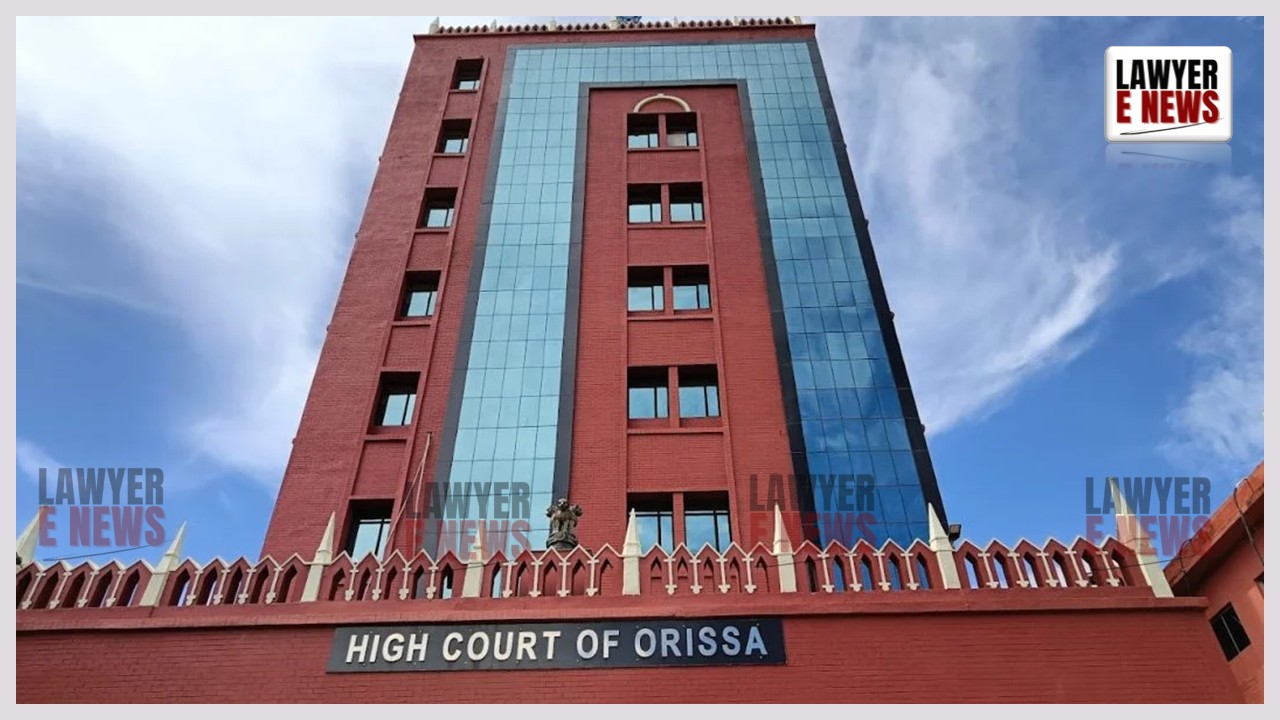
“The right, if any, of Maa Chandi WSHG to continue in the work can only be limited to the period of the contract and not beyond that under any circumstances.” - Orissa High Court rendered a decisive verdict in the case of Maa Santoshi Women’s S.H.G., Puri & Maa Chandi Women’s S.H.G., Puri v. State of Odisha & Others, disposing of two competing writ petitions regarding distribution rights under the Take Home Ration (THR) scheme in Kanas Block, Puri. Justice Sashikanta Mishra, sitting in Civil Original Jurisdiction, upheld the re-engagement of Maa Santoshi WSHG, whose earlier disengagement had been quashed for violating principles of natural justice, while limiting Maa Chandi WSHG’s contractual rights strictly to the duration of its subsisting contract ending on 31.12.2025.
The Court held that once Maa Santoshi was cleared by an official inquiry and its disengagement was found unsustainable, it had a right to be re-engaged—but only after the expiration of the current contract with Maa Chandi WSHG, who had been allotted the work temporarily following the disengagement.
“Disengagement Without Hearing Violates Natural Justice; Re-engagement Must Follow If Defects Are Cured”
“The said order of disengagement was set aside by this Court being found to be contrary to the principle of natural justice.”
The case originated from a long-standing administrative tussle over the right to supply wheat-based Ready-To-Eat (RTE) food, or 'Chhatua', as part of the Supplementary Nutrition Programme. Both Maa Santoshi and Maa Chandi WSHGs had been engaged in 2012 to distribute THR across 28 Gram Panchayats in Kanas Block—21 assigned to Maa Chandi and 7 to Maa Santoshi.
However, on 19.10.2020, Maa Santoshi WSHG was suddenly disengaged based on an adverse report from a district squad, and its allocated 7 GPs were temporarily handed over to Maa Chandi. The Court noted that this disengagement was done without notice or opportunity of hearing, and was therefore quashed in W.P.(C) No.29969/2020. A fresh Joint Inquiry conducted thereafter absolved Maa Santoshi WSHG of earlier alleged irregularities and recommended its re-engagement “under close watch”.
Despite these findings, bureaucratic hesitations continued, and the Director of ICDS and SW, Odisha, deferred the re-engagement citing an ongoing contract with Maa Chandi WSHG. This led to a second round of litigation by Maa Santoshi in W.P.(C) No.10976/2024, where the Court again directed authorities to act on the inquiry report “if there is no other legal impediment”.
“Interim Contracts Are Not Indefeasible Rights” – No Perpetual Extension Beyond Validity
“The work in respect of 7 Gram Panchayats allotted to Maa Santoshi WSHG was diverted to Maa Chandi WSHG… not a positive award of contract, but a sort of interim/adhoc arrangement.”
Justice Mishra rejected Maa Chandi WSHG’s assertion of a vested right over the disputed 7 Gram Panchayats. The Court clarified that its engagement in those areas was a mere stop-gap arrangement to ensure continuity of nutrition delivery, following the unexpected disengagement of Maa Santoshi WSHG.
The Court emphasized that “such a situation does not confer any permanent or vested contractual right”, and any continuation beyond the valid term of contract would be legally unsustainable. Referring to the contractual arrangement which was renewed up to 31.12.2025, the Court stated:
“The right… can only be limited to the period of the contract and not beyond that under any circumstances.”
Accordingly, it held that Maa Santoshi WSHG, having been cleared by the Joint Inquiry, must be re-engaged after 31st December 2025, upon completion of the current contract period.
“Possession Of Food License Is A Mandatory Precondition, But Mere Allegations Cannot Defeat Eligibility”
“It is not disputed that possessing a food license is a sine qua non… It is nevertheless claimed by Maa Santoshi WSHG that it does have a food license valid till 2026.”
One of the objections raised by Maa Chandi WSHG was that Maa Santoshi lacked a valid food license, rendering it ineligible for re-engagement. The Court addressed this by noting that eligibility under the Government guidelines certainly includes possession of a food license, but mere assertion without substantiated proof cannot suffice to deny re-engagement.
Since Maa Santoshi WSHG asserted that its food license is valid till 2026, and no contrary evidence was placed on record, the Court did not find any reason to reject its eligibility at this stage. It, however, maintained that re-engagement would be strictly conditional upon fulfilment of all formalities, including validation of the food license under updated Government norms.
Administrative Delay and Disregard of Court Directions Criticised
While refraining from issuing strictures, the Court hinted at administrative lethargy and procedural confusion within the concerned departments. It noted that despite a favourable inquiry report and judicial directions, the re-engagement of Maa Santoshi was neither initiated nor properly followed up. The Court remarked:
“The whole issue appears to have been dealt with in a lackadaisical manner by the concerned authorities on which, this Court does not wish to pass any comment.”
Even the conditional approval granted by the Director on 04.12.2024 was not acted upon promptly. The eventual re-engagement order issued by the DSWO on 06.06.2025 was stayed just a week later due to a fresh petition by Maa Chandi WSHG. The Court, however, clarified that between 14.05.2024 and 13.06.2025, when no stay was in force, the authorities were free and expected to act upon the re-engagement order.
Conditional Re-engagement After Contract Expiry
In conclusion, the Orissa High Court held that Maa Santoshi WSHG shall be re-engaged after 31.12.2025, subject to fulfilment of all formalities and verification of eligibility under the revised Government guidelines. It clarified that all interim orders stood vacated, and the ongoing contract with Maa Chandi WSHG must be allowed to run its course but cannot be renewed indefinitely to the prejudice of the rightful claimant.
The judgment brings clarity to the limits of interim contractual arrangements under public schemes and reaffirms that natural justice and fair inquiry must inform administrative actions, especially in service allocation involving grassroots institutions like Women’s Self Help Groups.
Date of Decision: 11 November 2025





