
-
by sayum
25 August 2026 12:32 PM







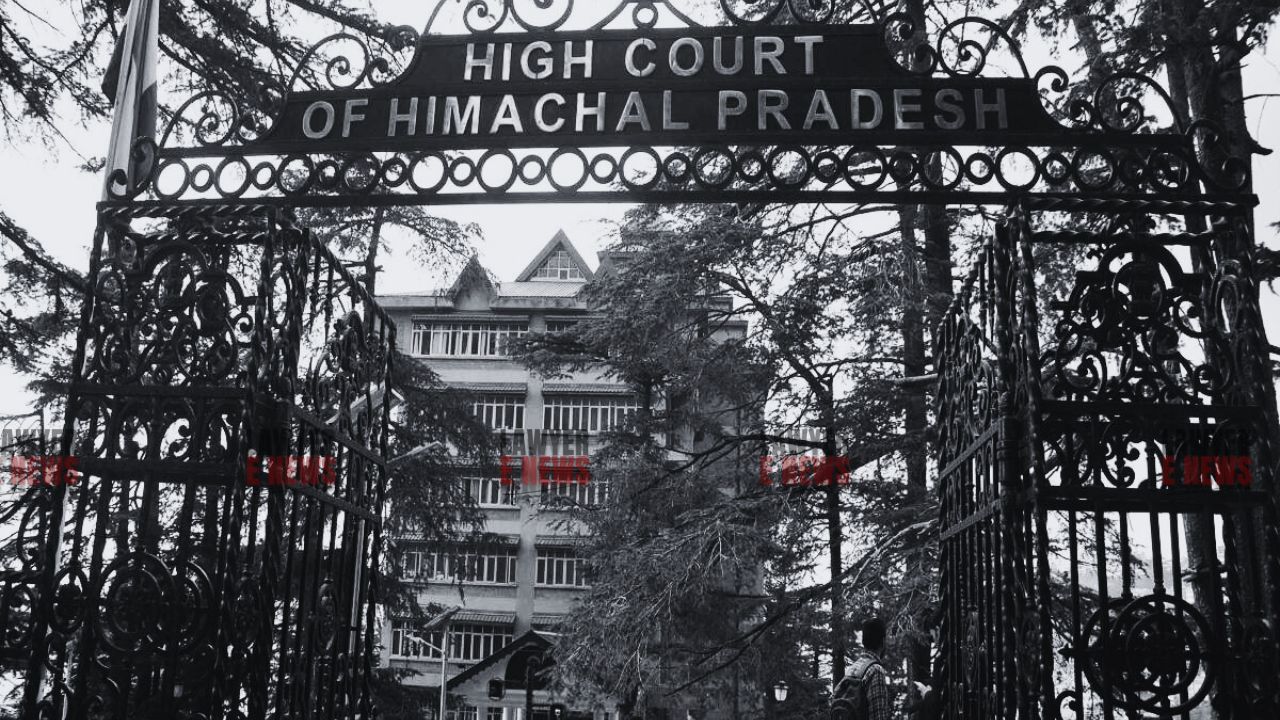
“Findings are duly borne from the records… No illegality or perversity found”: Himachal Pradesh High Court delivered a significant ruling under Section 100 of the Code of Civil Procedure, reaffirming that second appellate jurisdiction cannot be invoked to reappreciate evidence when the lower courts have arrived at concurrent factual findings based on cogent and legally compliant evidence. The Court dismissed the second appeal, holding that no substantial question of law arose since the trial court and first appellate court had acted within the framework of the law in relying on a more credible demarcation report in a land encroachment dispute.
The case addressed the legal challenge to an alleged encroachment over a portion of agricultural land in Khasra No. 505, measuring 2½ feet in width and 81 feet in length. The High Court held that the findings of the subordinate courts were not perverse and that the measurement methodology, adherence to Revenue Manual instructions, and evidentiary basis of the demarcation report Ex. D-1 strengthened its legal validity.
“Demarcation Must Be Based on Spot Measurements and Comply with Financial Commissioner’s Instructions”
In his oral judgment, Justice Satyen Vaidya observed that the courts below had rightly assessed the credibility of two rival demarcation reports submitted by the plaintiff and the defendant. The dispute stemmed from alleged encroachment by the defendant over land comprised in Khasra No. 505, which was adjacent to the defendant’s land in Khasra No. 506.
The plaintiff, Krishan Lal, relied on Ex. P-1, a demarcation report dated 30.11.2003, while defendant Devi Ram relied on Ex. D-1, dated 26.11.2002. Both reports were supported by testimonies of the respective revenue officials who conducted the demarcation.
The Trial Court found Ex. D-1 more plausible, particularly in light of the plaintiff’s own earlier admission as to the correctness of that report. The officer responsible for Ex. D-1 had also measured both disputed fields (Khasra Nos. 505 and 506) and used the Musabi, a standard field measurement tool, in accordance with instructions issued by the Financial Commissioner, Himachal Pradesh.
Justice Vaidya emphasized:
“The demarcation report Ex. D-1 clearly spells out the mode and manner in which the measurements were carried by the demarcating officer on spot. It includes specific reference to the measurement of different sides of fields comprised in Khasra No.505 also.”
The First Appellate Court had affirmed the trial court’s decision, noting the absence of foundational documents and non-usage of Musabi in the plaintiff’s demarcation report Ex. P-1, thereby diminishing its probative value.
Second Appeal Under Section 100 CPC Not a Platform for Reassessment of Facts
The High Court reiterated the scope of Section 100 CPC, which permits intervention only where a substantial question of law is involved. The appeal had been admitted on the question of whether the findings of the courts below were based on “misreading, misinterpretation of the evidence and material on record and against the settled position of law.”
Justice Vaidya, however, categorically held:
“Thus, both the Courts have concurrently found on facts the case of the plaintiff, not proved. Having considered the reasons assigned by both the Courts, I am of the view that no interference is required as no illegality or perversity has been found. The findings recorded by both the Courts are duly borne from the records.”
The Court found no merit in the argument raised by the appellant’s counsel that the demarcation report Ex. D-1 was flawed because it only measured one khasra number. On the contrary, the report clearly reflected that both Khasra Nos. 505 and 506 were measured, and the cross-examination of the demarcating officer did not dislodge this fact.
No Grounds for Interference – Judgment of Lower Courts Affirmed
In concluding the matter, the High Court dismissed the second appeal, upholding both the trial court decree dated 20.04.2006 and the first appellate court judgment dated 01.08.2014. The appeal was found devoid of merit, and no substantial question of law was held to exist.
The Court thus reaffirmed the sanctity of concurrent factual findings, especially in cases involving land disputes, where evidence, compliance with official procedures, and the credibility of revenue reports are pivotal.
“In result, I find no merit in the instant appeal and the same is dismissed. Accordingly, the impugned judgment and decree is affirmed.”
Date of Decision: 6th November, 2025





