-
by sayum
28 July 2026 1:44 PM







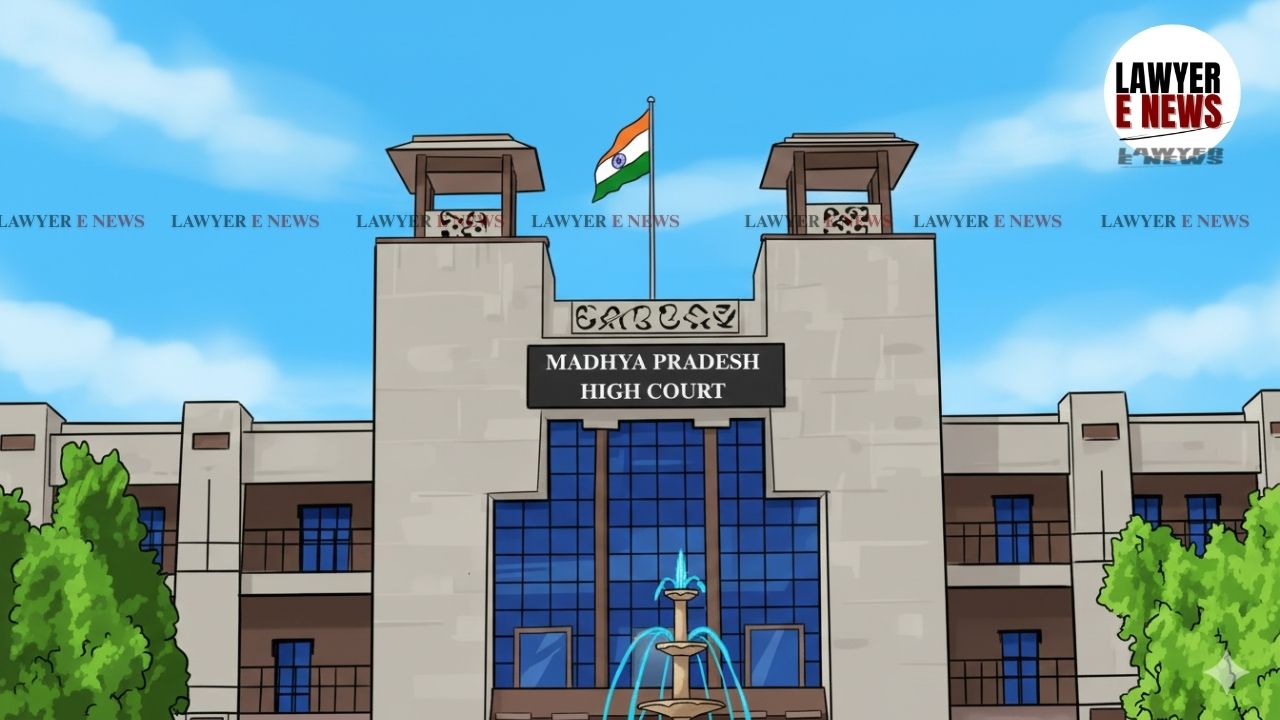
"Misconduct means, misconduct arising from ill motive; acts of negligence, errors of judgment, or innocent mistake, do not constitute such misconduct," Madhya Pradesh High Court, in a significant judgment, has quashed a state government order withholding the pension of a retired Naib Tahsildar, ruling that revenue officers performing quasi-judicial duties are entitled to the same protections as "Judges" under the Judges (Protection) Act, 1985.
A single bench of Justice Anand Singh Bahrawat observed that a mere mistake or error of judgment in an isolated mutation proceeding does not amount to "grave misconduct" warranting the forfeiture of pensionary benefits.
The petitioner, Brij Bihari Rajput, retired as a Naib Tahsildar in July 2011. While posted in District Guna in 2009, he handled a mutation proceeding which was initially rejected and later allowed. A departmental enquiry was initiated, and just one day before his retirement, an enquiry report was submitted. Nearly five years later, on April 21, 2016, the State Government passed an order withholding 5% of his pension permanently under Rule 9 of the M.P. Civil Services (Pension) Rules, 1976, alleging misconduct in the mutation case.
The primary question before the court was whether a Naib Tahsildar performing quasi-judicial functions under the M.P. Land Revenue Code qualifies as a "Judge" under the Judges (Protection) Act, 1985. The court also examined whether the non-supply of advice from the Public Service Commission (PSC) violated principles of natural justice and whether an error of judgment without ill-motive could be categorized as "misconduct" for withholding pension.
Non-Supply Of PSC Advice Vitiates Disciplinary Proceedings
The Court first addressed the procedural irregularity regarding the advice sought from the Madhya Pradesh Public Service Commission (MPPSC). It noted that the State had relied upon the PSC’s concurrence while passing the final punishment order but failed to supply a copy of that advice to the petitioner for his response.
Court Relies On Apex Court Precedents On Natural Justice
Citing the Supreme Court's rulings in S.N. Narula Vs. Union of India and Union of India Vs. R.P. Singh, the High Court emphasized that the principles of natural justice require that any material used against a delinquent employee, including PSC advice, must be communicated before the imposition of punishment.
Failure To Provide PSC Advice Is A Breach Of Natural Justice
The Court observed that since the advice from MPPSC was not supplied to the petitioner in advance, the entire enquiry stood vitiated on the count of violation of natural justice. It noted that the requirement to furnish the enquiry report and any utilized material is a settled position in service jurisprudence following the B. Karunakar case.
Governor Acts Through Council Of Ministers In Pension Matters
The petitioner had argued that an order under Rule 9 of the Pension Rules must be passed by the Governor personally. However, the Court rejected this, referring to the Full Bench decision in State of M.P. v. P.N. Raikwar and the landmark Samsher Singh judgment.
Personal Satisfaction Of Governor Not Required Under Rules Of Business
The Court clarified that the executive power of the State is exercised by the Governor on the aid and advice of the Council of Ministers. The "satisfaction" required by the Constitution or service rules is not the personal satisfaction of the Governor but the satisfaction in the constitutional sense, exercised through the Rules of Business.
Naib Tahsildar Entitled To Protection Under Judges (Protection) Act, 1985
The Court delved into the definition of a "Judge" under Section 2 of the 1985 Act. It noted that the definition is wide and includes any person empowered by law to give a definitive judgment in any legal proceeding.
Revenue Officers Are Protected For Acts Done In Good Faith
The Bench held that a Naib Tahsildar exercising powers under the M.P. Land Revenue Code is indeed a "Judge" for the purpose of the Act. Consequently, under Section 3(1) of the Act, no court or authority can entertain proceedings against such an officer for any act done in the discharge of their official or judicial duty.
Mere Errors Of Judgment Do Not Amount To Misconduct
Addressing the definition of "misconduct," the Court relied on Union of India v. J. Ahmed and Inspector Prem Chand v. Govt. of NCT of Delhi. It held that "misconduct" necessarily implies a blameworthy condition of mind or ill-motive.
Lack Of Efficiency Or Carelessness Is Not Grave Misconduct
The Court observed that there was nothing on record to show that the petitioner had any ill-motive while handling the mutation of Survey No. 80/1/1. It noted that a mere mistake or an error of judgment, especially an isolated instance of negligence, does not partake the character of misconduct.
Pension Is A Proprietary Right That Cannot Be Taken Away Arbitrarily
The Court reiterated that pension is not a bounty but a proprietary right of a retired employee. To take away such a right, the State must record a definite finding of "grave misconduct." Since no such finding was present in the impugned order, the penalty was held to be unsustainable.
The High Court quashed the impugned order dated April 21, 2016. It directed the State to refund the withheld 5% pension to the petitioner with 6% interest per annum from the date of his retirement within three months. The Court further mandated that if the payment is delayed beyond three months, the interest rate shall increase to 12% per annum.
Date of Decision: 22 May 2026