-
by sayum
28 August 2026 8:44 AM







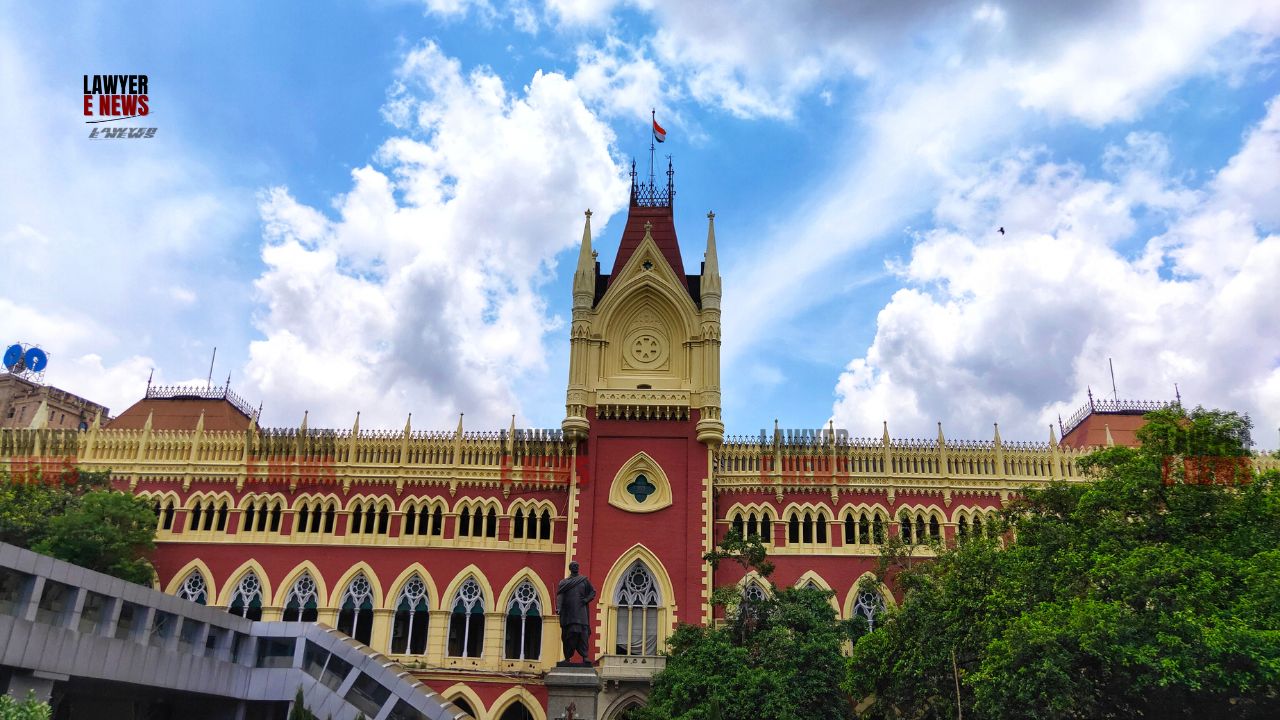
"Mutation or recognition of tenancy by a municipal authority is essentially administrative in nature and though such mutation does not confer title, the authority concerned is nevertheless obligated to act fairly, transparently and in adherence to the principles of natural justice while deciding rival claims relating to municipal tenancy," Calcutta High Court, in a significant ruling, held that municipal authorities are duty-bound to maintain neutrality and adhere to the principles of administrative fairness when resolving competing claims for mutation and tenancy recognition.
A Single Judge Bench of Justice Rajarshi Bharadwaj observed that granting exclusive recognition to one party while a prior objection from another claimant is pending constitutes an arbitrary exercise of power. The Court emphasized that while mutation does not determine title, the decision-making process must remain procedurally sound and transparent.
The dispute centered on a municipal shop room in the School Bazar Market Complex under the Midnapore Municipality, originally allotted to one Triranjan Mahapatra. The petitioner, Munmun Pal, claimed to have taken possession of the premises from Mahapatra’s legal heirs in September 2021 after paying ₹11,00,000 and obtaining an affidavit of "no objection." However, the Municipality subsequently granted mutation and a certificate of enlistment in favour of Respondent No. 4 in August 2022, leading the petitioner to challenge the administrative action as collusive and illegal.
The primary question before the court was whether the Midnapore Municipality acted arbitrarily and in violation of natural justice by granting mutation to Respondent No. 4 despite a prior objection and claim by the petitioner. The court was also called upon to determine whether the pendency of civil proceedings regarding possession barred the exercise of writ jurisdiction to review the municipality’s administrative decision.
Municipal Authority Bound By Principles Of Administrative Fairness
The Court noted that the shop room was originally held by late Triranjan Mahapatra and subsequently by his legal heirs, who allegedly entered into transactions with both the petitioner and Respondent No. 4. While the Municipality contended that it merely recognizes tenancy for administrative purposes, the Court clarified that such recognition must be preceded by a fair hearing of all affected parties.
"The authority concerned is nevertheless obligated to act fairly, transparently and in adherence to the principles of natural justice while deciding rival claims relating to municipal tenancy," the bench observed.
Granting Exclusive Recognition Despite Unresolved Competing Claim Is Arbitrary
Justice Bharadwaj found substance in the petitioner's argument that the Municipality proceeded to favour Respondent No. 4 despite being aware of the petitioner’s prior claim and pending objection dated August 18, 2022. The Court remarked that the Municipality was under a legal obligation to withhold final recognition until the rival claims were examined upon notice to all parties.
"Administrative fairness required the Municipality to maintain neutrality and refrain from conferring exclusive recognition upon one claimant in the face of an unresolved competing claim supported by documentary materials," the Court held.
Non-Communication Of Order Affecting Civil Consequences Violates Natural Justice
The Court took a dim view of the Municipality’s failure to formally communicate an order dated September 26, 2022, which had directed the sealing of the shop and maintenance of status quo. It was held that the non-communication of an order that carries civil consequences amounts to a violation of natural justice, as it deprives the affected party of the opportunity to seek timely legal remedies.
"Non-communication of an order affecting civil consequences amounts to violation of principles of natural justice and deprives an affected party of meaningful opportunity to seek appropriate remedies," the judgment stated.
Civil Court Proceedings No Bar To Judicial Review Of Administrative Action
The Court rejected the contention that the petitioner should be non-suited due to pending civil litigation. It clarified that while civil courts deal with issues of possession and interim injunctions, the High Court under Article 226 is concerned with the legality and procedural propriety of the administrative decision-making process. The Bench emphasized that the writ petitioner was not seeking a declaration of title but was challenging an arbitrary exercise of municipal power.
"The pendency of civil proceedings cannot bar judicial review where violation of natural justice and arbitrariness in administrative action are apparent on the face of the record," the Bench noted.
In light of the procedural impropriety, the Court set aside the mutation and certificate of enlistment granted in favour of Respondent No. 4. The Midnapore Municipality was directed to reconsider the issue of tenancy recognition and mutation afresh. The Bench ordered the authorities to grant an adequate opportunity of hearing to the petitioner, Respondent No. 4, and the legal heirs, and to pass a reasoned order thereafter. Until the reconsideration is complete, the Municipality has been directed to maintain status quo regarding the nature and character of the premises.
The ruling reinforces the doctrine that even in purely administrative matters like municipal mutation, public authorities cannot bypass the mandate of natural justice. By setting aside the impugned mutation, the High Court has ensured that the Municipality must act as a neutral arbiter rather than a partisan entity when faced with competing private claims over public property.
Date of Decision: 22 May 2026