-
by sayum
26 August 2026 8:37 AM








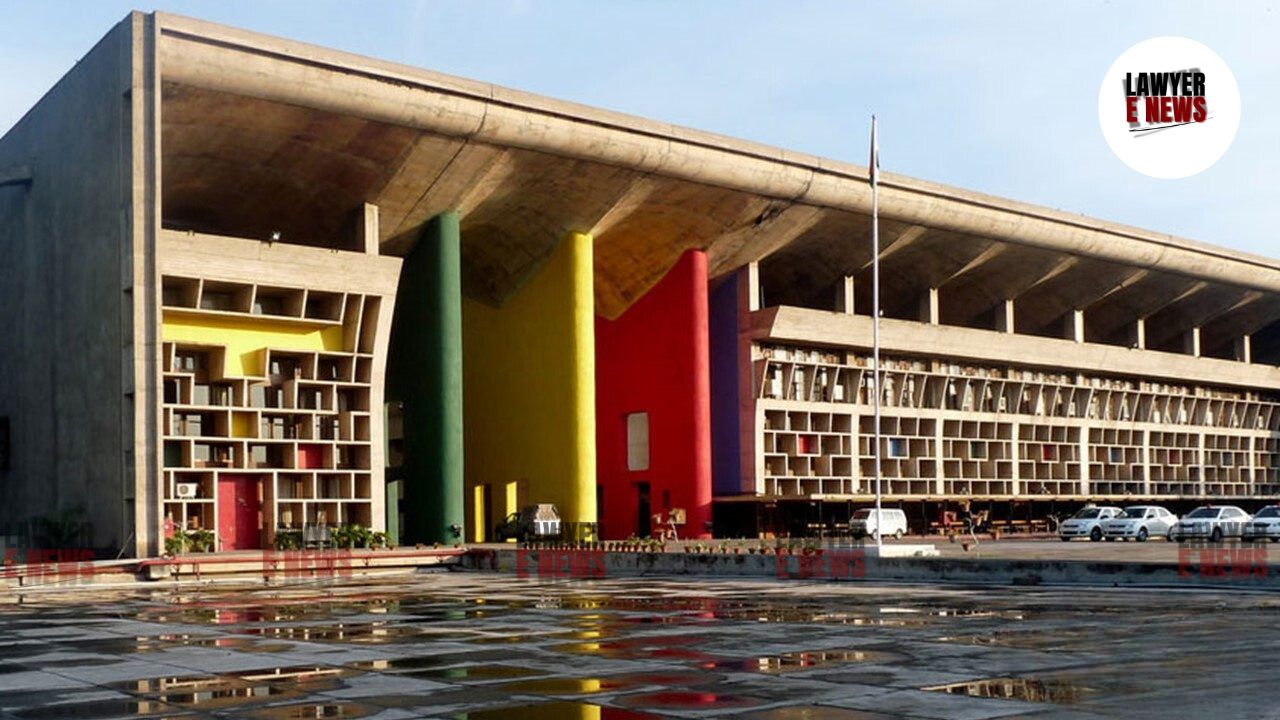
In a significant reaffirmation of the protective rights enshrined under the Juvenile Justice (Care and Protection of Children) Act, 2015, the Punjab and Haryana High Court set aside concurrent bail rejections by the Juvenile Justice Board and the Appellate Court in a murder case, granting bail to a 17-year-old child-in-conflict-with-law. Justice Sumeet Goel ruled that "the mere nature of the offence alleged to have been committed by the CCL does not make it a case calling for rejection of bail so as to preserve the ends of justice."
The Court held that in absence of any material suggesting the juvenile’s exposure to criminal influences or psychological danger, the statutory presumption in favour of bail under Section 12 of the JJ Act must prevail, regardless of the seriousness of the alleged offence.
“Bail to Juvenile is the Rule, Refusal Requires More Than Fear or Speculation”: High Court Raps Lower Courts for Ignoring Social Investigation Report
The case titled PXXXX through Gurmeet Singh v. State of Haryana and Another, arose from a petition under revisional jurisdiction (CRR-2499-2025), wherein a 17-year-old accused in a fatal stabbing was denied bail by both the Juvenile Justice Board, Kaithal (on 04.08.2025), and the Additional Sessions Judge, Kaithal (on 22.08.2025). The minor had been booked under Sections 103(1) and 61(2) of the Bharatiya Nyaya Sanhita, 2023, which replaced Sections related to murder and common intention under the Indian Penal Code.
Justice Sumeet Goel observed that both courts below had rejected bail solely on the basis of the serious nature of the offence and a presumed risk of the accused absconding if released. The High Court strongly disapproved of such an approach, stating, “These findings appear to have been recorded on a mere apprehension and without any material or basis on record.”
The Court highlighted that the juvenile was only 17 years and 4 months old at the time of the incident and had no criminal antecedents. He was not found to be part of any criminal gang nor had he previously engaged in unlawful activity. It was also noted that the child had cooperated with the investigation and had been produced by his father shortly after the registration of the FIR.
"Continued incarceration of the juvenile is detrimental to his mental and emotional well-being"
Emphasizing the importance of the Social Investigation Report, which is a statutory requirement under Section 8 of the Juvenile Justice Act, the Court noted that the petitioner had a clean record, a stable family environment, and educational background. His habits included reading books, and his conduct with family and society was described as normal. The Report indicated that the accused had likely been influenced by peers or bad company but had not shown any criminal tendencies on his own.
Justice Goel remarked, “The CCL has not been used by any gangs or adults… has not been subjected to any form of abuse, is not a victim of any offence and has never been involved in any kind of illegal activity.” He added that prolonged detention would jeopardize the child’s future prospects and moral well-being, stating, “Continued incarceration may affect his moral character, jeopardize his career prospects and he may also be rendered jobless forever.”
The Court also quoted from its earlier ruling in Jatin v. State of Haryana (CRR-2876-2023, decided on 30.01.2024), reiterating that a juvenile’s bail can only be refused under three specific exceptions — association with known criminals, exposure to danger, or if release would defeat the ends of justice. “For a Board to hold that a given case falls under the above-said three exceptions, it is required to rely upon tangible material to so hold and mere apprehension would not suffice to decline bail.”
“Denial of bail to the child is an unjust deprivation of liberty without adjudication of guilt”
The High Court took note of the fact that the final investigation report had already been filed against the juvenile, while the investigation against the co-accused was still ongoing. In this light, the Court found no reason to keep the child confined in an observation home for an indefinite period pending trial.
Justice Goel concluded, “Denying bail to the CCL-petitioner may lead to an unjust deprivation of the CCL-petitioner’s liberty without final adjudication of guilt.” Stressing that the statutory scheme of the Juvenile Justice Act is built around rehabilitation and not retribution, the Court observed that it would be in the "fitness of things, especially in the overall interest of the CCL," that he be released on bail.
Accordingly, the High Court allowed the criminal revision petition, set aside the orders of the Juvenile Justice Board and the Appellate Court, and ordered that the petitioner be released on bail on furnishing of adequate surety to the satisfaction of the concerned Chief Judicial Magistrate or Duty Magistrate. The Court permitted the Magistrate to impose such conditions as may be deemed fit to ensure the child’s presence and proper conduct.
Justice Goel was also cautious to clarify that “nothing said hereinabove shall be construed as an expression of opinion on the merits of the case.”
Date of Decision: 4 November 2025