-
by sayum
28 July 2026 1:44 PM







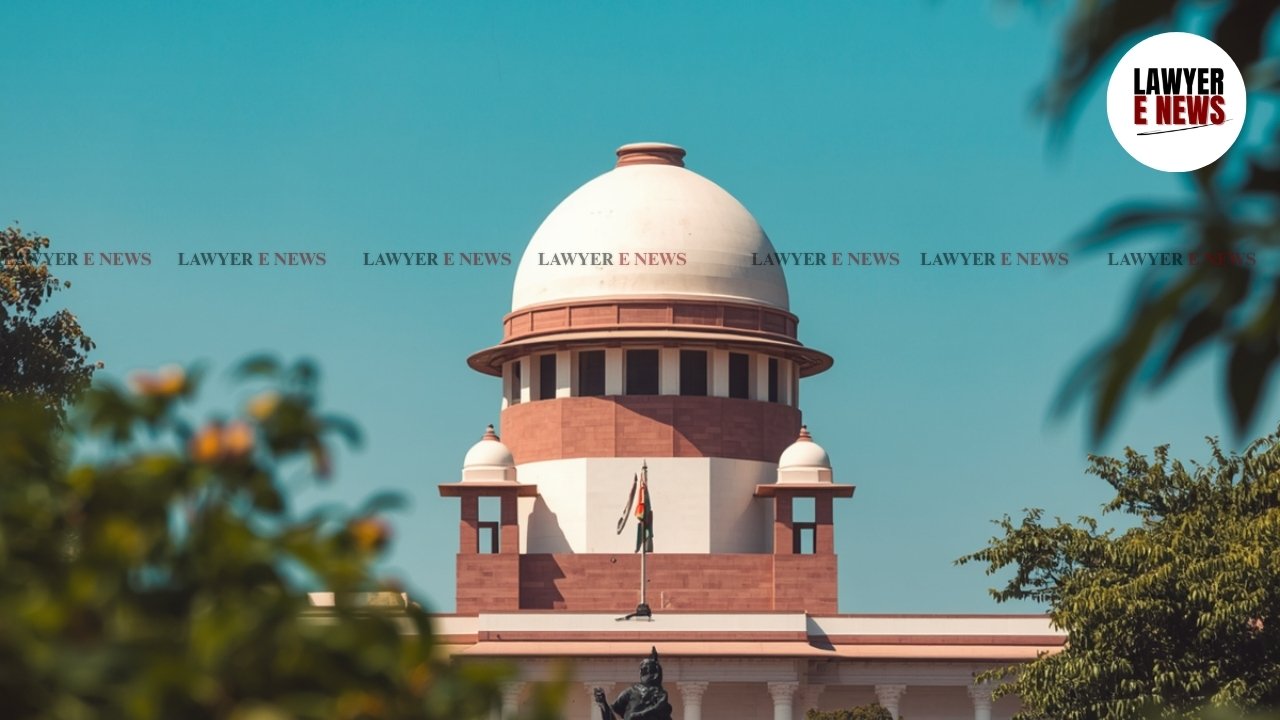
"When a person executes a document claiming property as his own, there is no making of a false document merely because the claim is ultimately found to be incorrect," Supreme Court, in a significant ruling dated May 22, 2026, held that asserting a claim of title over a property by executing a document does not amount to "forgery" under the Indian Penal Code, even if the claim is ultimately found to be unsustainable.
A bench of Justice Sanjay Karol and Justice Vipul M. Pancholi observed that the High Court erred in equating a disputed claim of title with the making of a "false document" as defined under Section 464 of the IPC.
The dispute pertained to ancestral land in Surat, Gujarat, involving the children of Nemabhai Patel. While the appellants asserted a two-third share based on Urban Land Ceiling (ULC) Act proceedings and revenue entries, Respondent No. 2 claimed exclusive ownership through a 1987 settlement decree. In 2009, nearly nine years after civil litigation began, Respondent No. 2 filed an FIR alleging forgery, cheating, and extortion, specifically targeting a Power of Attorney executed by the appellants in 2001.
The primary question before the court was whether the execution of a Power of Attorney asserting a claim over disputed property constitutes the making of a "false document" under Section 464 of the IPC. The court was also called upon to determine if the High Court was justified in refusing to quash the criminal proceedings under Section 482 of the CrPC despite a significant delay and the predominantly civil nature of the dispute.
Distinction Between Disputed Title And Forgery
The Court meticulously analyzed the definition of forgery under Section 463 of the IPC and the making of a "false document" under Section 464. It noted that the High Court had proceeded on the flawed premise that since the appellants allegedly lacked title, the execution of the Power of Attorney and the institution of civil proceedings automatically amounted to forgery.
The bench clarified that the essential ingredient of forgery is the fabrication of a document by someone pretending to be another person or the unauthorized use of signatures. In the present case, the execution of the document by the appellants was admitted, and there was no allegation of impersonation or forged signatures.
"The High Court erred in equating a disputed claim of title with the making of a false document."
False Claim Of Ownership Is Not A False Document
Relying on the landmark precedent in Mohd. Ibrahim v. State of Bihar, the Supreme Court reiterated that when a person executes a document claiming property as their own, they are not claiming to be someone else, nor are they claiming to be authorized by someone else. Even if the claim is eventually found to be incorrect by a civil court, the act of executing the document does not attract the penal provisions for forgery.
The bench observed that whether the appellants' claim is sustainable is a matter for adjudication before a competent civil court. It held that if there is no "false document" as defined under Section 464, the offences under Sections 467 and 471 of the IPC cannot be attracted.
"If what is executed is not a false document, there is no forgery. If there is no forgery, then neither Section 467 nor Section 471 of the IPC are attracted."
Material Improvements In FIR Indicative Of Ulterior Motive
The Court expressed concern over the chronology of the complaints filed by Respondent No. 2. It was noted that an initial complaint filed in May 2009 contained no allegations of extortion or monetary demands. However, seven months later, a subsequent FIR was lodged introducing a specific allegation that the appellants had demanded Rs. 1.5 crores.
The bench found that these "material improvements" supported the appellants' contention that the criminal proceedings were an afterthought intended to give a "criminal colour" to a longstanding civil dispute. It observed that the High Court failed to examine the legal effect of the suppression of the earlier complaint and the subsequent introduction of grave accusations.
"Such material improvements cannot be ignored while examining whether the criminal process is being abused or not."
Unexplained Delay And Abuse Of Process
The Supreme Court highlighted the unexplained delay of nearly nine years in registering the FIR, considering the incidents in question related to 2001. While the High Court had accepted a Government Circular as an explanation for the delay, the Supreme Court found this unsatisfactory, noting that the respondent was actively litigating in civil courts and had access to legal remedies throughout that period.
Citing Mohd. Wajid v. State of U.P., the bench emphasized that where delay is coupled with circumstances creating serious doubt about the genuineness of the prosecution, the proceedings warrant quashing. It held that the criminal process cannot be permitted to become a weapon of harassment in disputes concerning title over immovable property.
"The criminal process cannot be permitted to become a weapon of harassment and coercion in disputes concerning title over immovable property."
Antecedents Cannot Replace Ingredients Of Offence
The bench further criticized the High Court's reliance on the criminal antecedents of one of the accused to justify the refusal to quash the FIR. It clarified that while antecedents may be a factor, they cannot constitute the sole or primary basis for declining the exercise of jurisdiction under Section 482 of the CrPC if the essential ingredients of the alleged offences are absent.
The Court held that the High Court is not expected to conduct a "mini trial" or adjudicate disputed questions of title while exercising its inherent powers. Since the dispute was predominantly civil and the FIR failed to disclose the ingredients of forgery, cheating, or extortion, the continuation of the prosecution amounted to an abuse of the process of the court.
The Supreme Court concluded that the case fell squarely within the categories warranting interference as delineated in State of Haryana v. Bhajan Lal. It allowed the appeals, set aside the High Court's order, and quashed the FIR and all consequential proceedings. The Court clarified that its observations were confined to the Section 482 proceedings and should not influence the pending civil litigation regarding title and ownership.
Date of Decision: 22 May 2026