-
by sayum
26 August 2026 4:44 AM







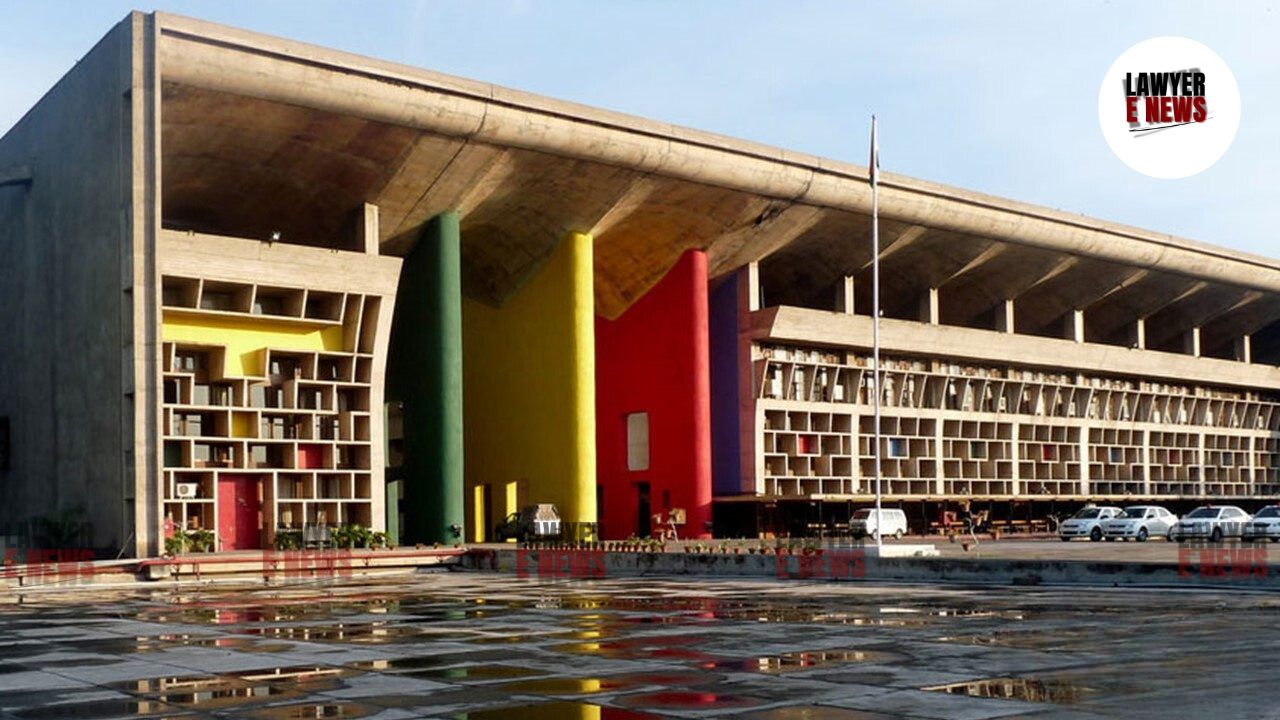
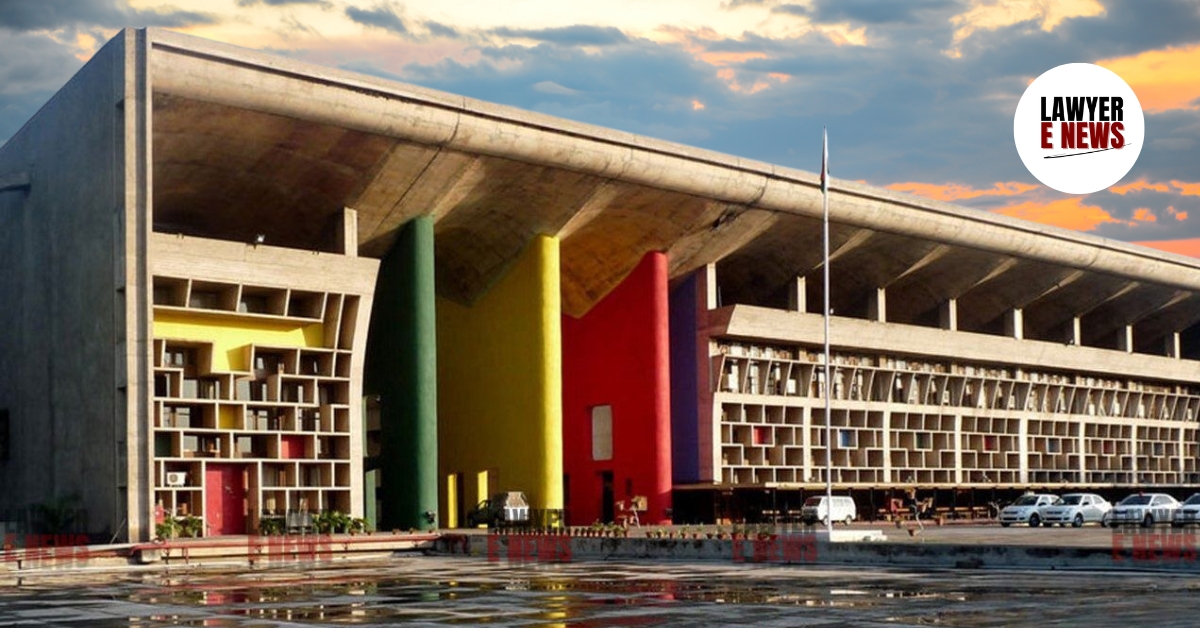
In a latest order, Punjab and Haryana High Court setting aside an ex parte order of the Trial Court that had both struck off the petitioner's defence and granted a stay on possession proceedings under the SARFAESI Act. Justice Vikram Aggarwal held that the Civil Court had erred in granting such relief without considering the express jurisdictional bar under Section 34 of the SARFAESI Act and without examining whether fraud had been pleaded with sufficient particularity to bypass the bar.
“Trial Court Should Have First Examined The Bar Under Section 34 SARFAESI Before Granting Injunction”
The High Court emphasized that "the trial Court did not consider the matter from the correct perspective" and failed to even refer to Section 34 or the prevailing case law before granting an injunction against SARFAESI proceedings. The Court reminded that Section 34 clearly ousts the jurisdiction of Civil Courts in matters that fall within the domain of the Debt Recovery Tribunal (DRT).
Justice Aggarwal further clarified, “It is well settled that normally the jurisdiction of the Civil Court in such matters is barred and the correct remedy for a party is to knock the doors of the DRT under Section 17 of the SARFAESI Act”, citing judgments including Mardia Chemicals Ltd. v. Union of India and Jagdish Singh v. Heeralal.
On 06.11.2025, in a judgment impacting the interface between SARFAESI enforcement and civil remedies, the Punjab and Haryana High Court in M/s Cholamandalam Investment and Finance Co. Ltd. v. Rajender Kaur, set aside an ex parte civil court injunction against possession proceedings initiated under SARFAESI. The petitioner-financial institution had invoked Article 227 of the Constitution to challenge a March 3, 2025 order by the Trial Court which, despite service of summons, struck off the defence and stayed the SARFAESI proceedings. The High Court found the order legally unsustainable due to the trial court’s failure to assess the bar under Section 34 of the SARFAESI Act and its reliance on a vague allegation of fraud.
Kuljeet Singh and Jasbir Kaur had availed a loan of ₹45.86 lakhs from M/s Cholamandalam Investment and Finance Co. Ltd., mortgaging a property in Raja Garden Colony, Faridabad. Both borrowers passed away by 2020. After default and classification of the account as a Non-Performing Asset (NPA), SARFAESI proceedings were initiated. Symbolic possession was taken in May 2023, and the property was eventually auctioned for ₹50.5 lakhs.
The respondent, Rajender Kaur, one of the legal heirs, had earlier filed CWP, acknowledging the voluntary execution of a relinquishment deed in 2010 in favour of Kuljeet Singh. However, after withdrawing the writ petition with liberty to pursue alternative remedies, she filed a civil suit on 27.02.2025, claiming that the same relinquishment deed was obtained through fraud.
The civil court proceeded ex parte on 03.03.2025 and granted a stay on the possession proceedings, prompting the financial institution to approach the High Court under Article 227.
Jurisdiction of Civil Court under SARFAESI: Section 34
The central legal issue was whether the civil court had jurisdiction to entertain a suit challenging SARFAESI action merely because fraud was alleged.
The High Court stressed that Section 34 bars civil court jurisdiction in matters falling within the domain of the DRT unless fraud is specifically and sufficiently pleaded. The Court cited:
"Merely because fraud is pleaded would not mean that the Civil Court had got the jurisdiction to deal with the matter and in the absence of the details of any fraud, the jurisdiction of the Civil Court would continue to be barred.”
Justice Aggarwal pointed out the trial court’s failure to even refer to Section 34 or the leading judgments on the subject, terming this a serious procedural lapse.
Contradictory Pleadings: Civil Suit vs Earlier Writ
The respondent’s claim of fraudulent relinquishment in the civil suit was found to be in direct contradiction to her earlier stand in the writ petition where she had admitted that the deed was executed voluntarily.
“The respondent-plaintiff has been taking contradictory stands in the civil suit and in the previous writ petition... The said fact shall have to be considered by the trial Court before arriving at any prima-facie conclusion.” [Para 27]
Ex Parte Proceedings and Procedural Validity
Though the petitioner argued that the ex parte proceedings were unjustified due to lack of a copy of the plaint, the High Court upheld the validity of the ex parte order under Order IX Rule 6 CPC, noting:
“Once the petitioner-defendant had been served and it chose not to appear, the trial Court rightly proceeded ex-parte against it.” [Para 21]
However, this did not cure the legal infirmity regarding jurisdictional oversight.
Article 227 Jurisdiction and Relegation to Trial Court
While acknowledging that High Courts can reject a plaint under Article 227 where the civil court lacks jurisdiction, Justice Aggarwal opted not to exercise that power in this case, distinguishing it from Shyam Goel v. PNB (Delhi HC) and similar precedents.
“Though this Court does have the power to delve into the said issue yet in the considered opinion of this Court, the parties should be relegated to the trial Court…” [Para 25]
The impugned order dated 03.03.2025 was set aside.
Both parties were directed to appear before the Trial Court on 07.12.2025.
If the petitioner moves an application seeking recall or variation of the ex parte stay, the Trial Court must decide it by 24.12.2025.
The trial court must consider:
Jurisdictional bar under Section 34
Contradictory pleadings
Pleading standards for fraud
Precedents on maintainability and injunctions in SARFAESI-related suits
The Court expressly left open the question of maintainability and granted liberty to the parties to fully argue their positions before the Civil Court.
The Punjab and Haryana High Court reaffirmed that pleading fraud, without particulars, cannot bypass the statutory bar under Section 34 of the SARFAESI Act. It emphasized the need for Civil Courts to thoroughly assess jurisdiction and maintainability before granting injunctions, especially in financial recovery cases involving special statutes like SARFAESI. While upholding procedural fairness in ex parte proceedings, the Court called out the trial court’s legal omissions, reinforcing judicial discipline in such sensitive matters.
Date of Decision: 06.11.2025