-
by sayum
28 August 2026 8:44 AM







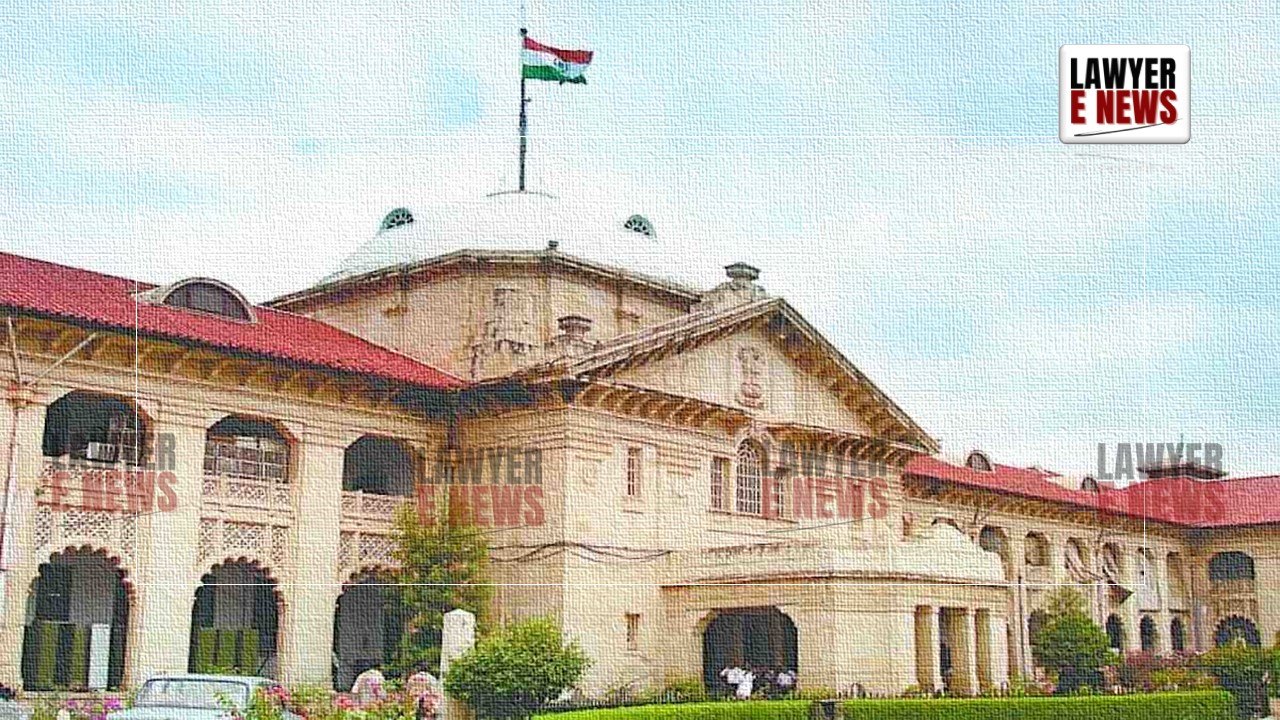
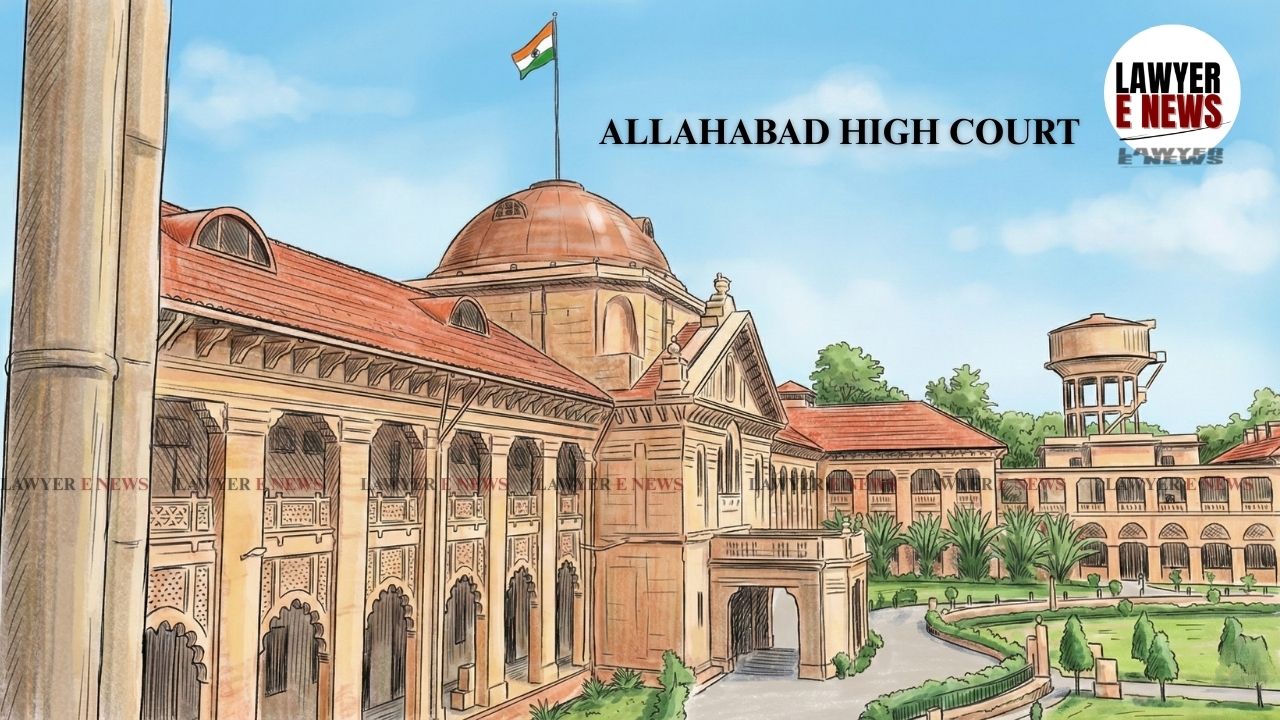
“Place of Ceremony Is Irrelevant — It’s the Rites and Customs That Make the Marriage Valid”, - In a crucial ruling that clarifies the legal standing of marriages performed in Arya Samaj Mandirs, the Allahabad High Court dismissed a petition seeking quashing of a criminal case under Sections 498A and 506 IPC, asserting that a Hindu marriage conducted in Arya Samaj Mandir is valid if solemnized as per Vedic rituals, regardless of the registration status or place of performance.
Justice Arun Kumar Singh Deshwal, deciding the Application under Section 482 CrPC No. 38746 of 2024, held: “Any marriage solemnized in Arya Samaj Mandir as per the Vedic procedure is a valid marriage as it fulfills the requirements of Section 7 of the Hindu Marriage Act.”
“Arya Samaj Certificate Is Not Statutory Proof, But Marriage Can Still Be Valid If Rituals Performed”
The applicant, Maharaj Singh, had approached the Court to quash criminal proceedings initiated by his wife, who had filed an FIR alleging cruelty and harassment for dowry. Singh’s primary argument was that their alleged marriage was invalid, having been performed in Arya Samaj, which he claimed had no legal sanctity, and that the marriage certificate was forged.
His counsel relied on the judgment in Ashish Morya v. Anamika Dhiman, where it was held that Arya Samaj marriage certificates do not have statutory force.
However, the High Court drew a crucial distinction:
“The Court did not observe that if the marriage was performed as per Hindu Customs and Rites on the premises of Arya Samaj even that marriage will be invalid.”
Citing both Dolly Rani v. Manish Kumar Chanchal (2025) 2 SCC 587 and Seema v. Ashwini Kumar (2006) 2 SCC 578, the Court held:
“Even if the registration certificate has been issued under the U.P. Hindu Marriage Registration Rules, 1973 or 2017, that itself is not conclusive proof of marriage unless the marriage was performed as per Section 7 of the Hindu Marriage Act.”
“Kanyadan, Saptapadi, Panigrahan — If These Are Performed, the Marriage Is Binding”
The Court emphasized that under Section 7 of the Hindu Marriage Act, 1955, what matters is performance of customary rites and ceremonies, especially Saptapadi (seven steps before the sacred fire), if applicable.
“The place is not relevant — whether it is a home, temple, or Arya Samaj Mandir. What matters is performance of rituals like Kanyadan, Panigrahan and Saptapadi.”
Supporting evidence from the complainant and the Purohit who solemnized the marriage confirmed that the marriage was conducted in Radha Rani Mandir of Arya Samaj as per Hindu customs.
“Cruelty Under Section 498A Doesn’t Require Proof of Dowry Demand”: Allegations Made by Wife Enough to Proceed
The petitioner also argued that there was no demand for dowry, and therefore Section 498A IPC was wrongly invoked. The Court rejected this by relying on the Supreme Court’s recent decision in Aluri Venkata Ramana v. Aluri Thirupathi Rao (SLP Crl. No. 9243/2024):
“The core of the offence under Section 498A lies in the act of cruelty and does not purely revolve around the demand for dowry.”
“Merely subjecting the wife to cruelty is sufficient to attract Section 498A IPC.”
The Court noted that the wife’s statement under Section 161 CrPC contained specific allegations of physical and mental harassment, which could not be brushed aside at this preliminary stage.
“Disputed Questions of Fact Can’t Be Tried in a Quashing Petition”: Court Refuses Relief Under Section 482 CrPC
Justice Deshwal concluded that the dispute over the validity of the Arya Samaj marriage and the authenticity of the certificate involved questions of fact which could only be determined during trial.
“The contention that the alleged marriage is invalid is misconceived and also being a disputed question of fact cannot be considered at this stage.”
Hence, the application was dismissed and the criminal proceedings allowed to continue.
“If a Hindu marriage is performed with proper customs and rituals, even in Arya Samaj Mandir, it is valid. The certificate is only secondary — what matters is the ceremony itself.”
Date of Decision: 8 April 2025