-
by sayum
28 July 2026 1:44 PM







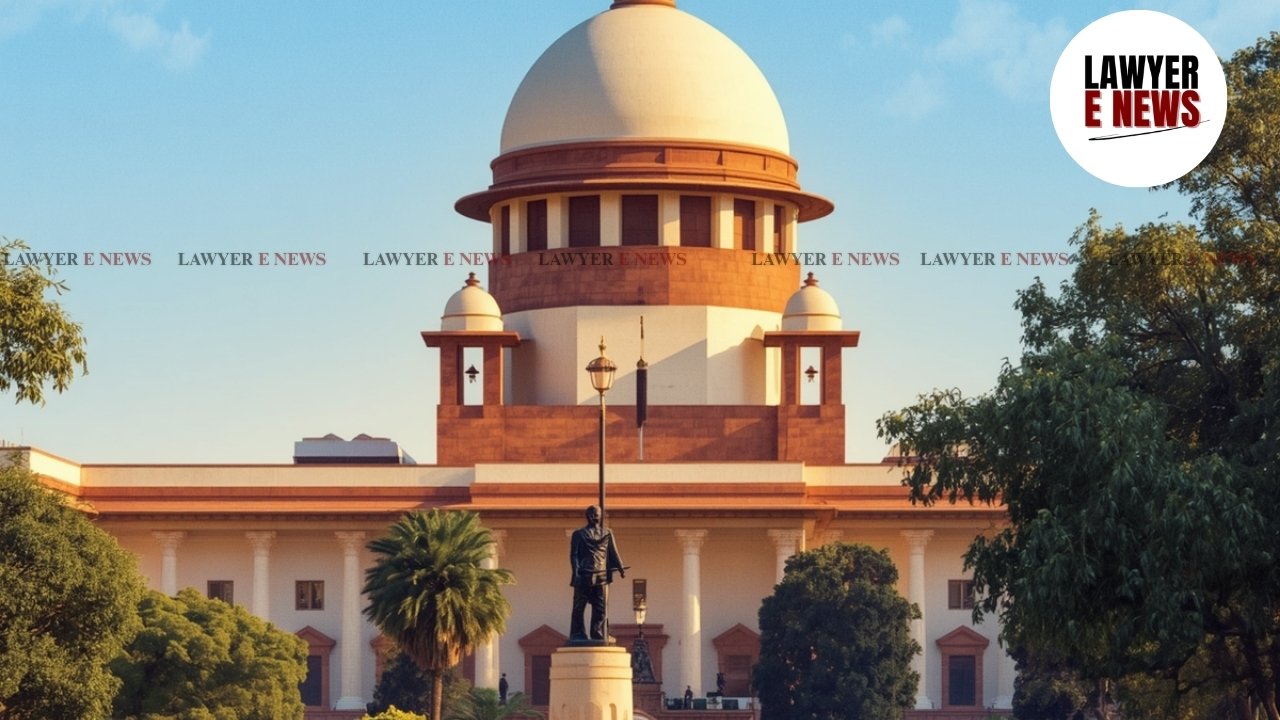
Supreme Court of India, in a significant ruling, held that a marriage which has effectively withered away and is "dead for all practical purposes" must be nullified to allow parties to move forward with their lives. A bench of Justice Ahsanuddin Amanullah and Justice R. Mahadevan observed that forcing a relationship, particularly that of a husband and wife, cannot be achieved through judicial proceedings when the bond has irretrievably broken down.
The appellant-husband approached the Apex Court challenging a High Court order that upheld the dismissal of his divorce petition by the Family Court. The parties had been living separately since 2003, following a period of stay abroad where the husband alleged he faced constant harassment and scandalous allegations that led to the loss of his employment. Despite the long separation, the respondent-wife continued to oppose the divorce, citing societal pressure as the primary reason for her stance.
The primary question before the Court was whether it should exercise its extraordinary jurisdiction under Article 142 of the Constitution of India to dissolve a marriage that had irretrievably broken down despite opposition from one spouse. The Court also considered the quantum of permanent settlement and the protection of the financial and ancestral rights of the parties' daughter.
Court Recognizes Futility Of Forcing Dead Relationships
The Court noted that the parties had been living separately for over two decades and that all efforts for a reunion had proved unsuccessful. The bench observed that the appellant had reached a stage of "self-realization" and sought peace at this juncture of his life, having already relocated to India and dealt with significant personal and financial losses, including the death of his father and the sale of his parental home.
"Forcing a relationship, that too of husband and wife, cannot be done by judicial proceedings."
Objective Assessment Of Irretrievable Breakdown
While the respondent-wife vehemently opposed the prayer for divorce, the Court found her explanation for maintaining the legal bond unsatisfactory. The bench noted that when relationships cannot be restored through judicial orders, the Court must look at the matter objectively. It emphasized that both parties have lives ahead of them and should be free to choose how they wish to spend them.
"The Court has to take a hard decision which may not be acceptable to both the parties."
Invocation Of Article 142 Of The Constitution
Taking a "realistic view" of the situation, the bench concluded that the marriage was functionally dead. Consequently, the Court invoked its power under Article 142 of the Constitution of India to grant a decree of divorce on the ground of irretrievable breakdown of marriage. The bench clarified that such a step was necessary to do complete justice where the stances of the parties had become "absolutely hard and totally inflexible."
Court Directs Substantial Financial Settlement
The grant of divorce was made subject to a comprehensive financial settlement. The Court directed the appellant to pay an additional sum of Rs. 60,00,000 (Rupees Sixty Lakhs) to the respondent-wife within two months. This amount is in addition to the Rs. 68,00,000 (Rupees Sixty Eight Lakhs) already deposited in the Court Registry, which, along with accrued interest, was ordered to be released to the respondent immediately.
Protection Of Daughter's Ancestral And Marriage Rights
Critically, the Court ensured that the divorce of the parents would not adversely affect the rights of their daughter. The bench recorded the appellant's submission that the daughter’s rights regarding his estate and ancestral properties would remain undiminished. Furthermore, the appellant committed to contributing his share toward the expenses of the daughter’s marriage whenever it takes place in the future.
"The daughter... shall not be denuded of her rights which are crystallized due to her being the biological daughter of the appellant."
Quashing Of Pending Litigation
To ensure a clean break and prevent further protracted legal battles, the Court exercised its powers to quash a pending case filed by the appellant at Hyderabad (FCA No. 93 of 2019). By doing so, the bench aimed to bring a finality to the legal disputes between the parties that had spanned several years.
CONCLUSION
The Supreme Court allowed the appeals, dissolving the marriage and setting clear timelines for the transfer of the settlement amounts. The judgment reinforces the principle that where a marriage has reached a point of no return, the Court will prioritize the practical reality of the parties' lives over the mere legal existence of a failed union.
Date of Decision: 27 May 2026