-
by sayum
26 August 2026 10:38 AM







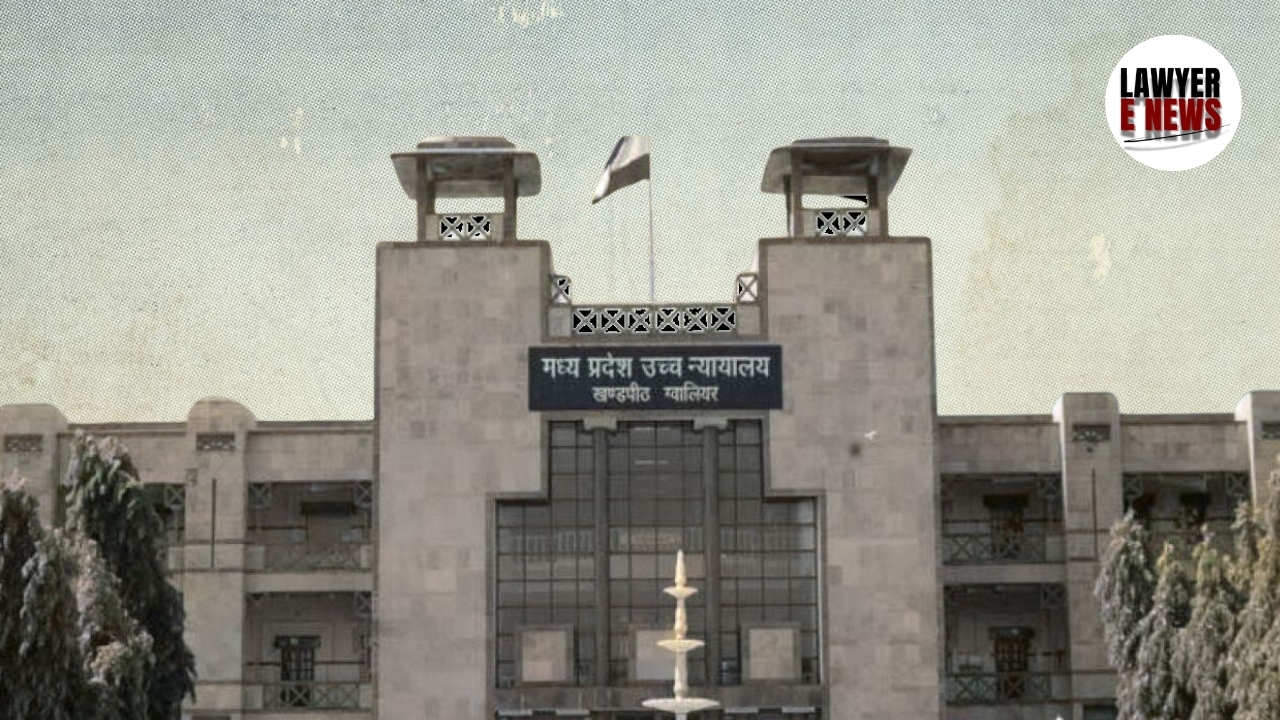
Wife’s False Allegations of Dowry Harassment and Husband’s Second Marriage Constitute Mental Cruelty; 13-Year Separation Without Reasonable Cause Held to Be Desertion. Madhya Pradesh High Court allowed a husband's appeal seeking divorce under Sections 13(1)(ia) and 13(1)(ib) of the Hindu Marriage Act, 1955, on the dual grounds of cruelty and desertion, overturning the trial court’s decision which had dismissed the divorce petition.
The Division Bench of Justice Vishal Dhagat and Justice Anuradha Shukla found that the wife's conduct — marked by false and unsubstantiated allegations of dowry harassment and bigamy — amounted to cruelty, and that her unilateral withdrawal from the matrimonial home for over 13 years without just cause constituted desertion under law.
"False Allegations Cause Mental Agony and Constitute Cruelty" – Court Cites Apex Court Precedents
The High Court strongly condemned the making of unverified and defamatory accusations in matrimonial disputes, stating:
“Making allegations is the easiest adventure, but proving them is a burdensome task. We are alive to the fact that on making false allegations, the other spouse may be exposed to shame, ridicule, persecution and also penal liability.”
In reaching its conclusion, the Court relied significantly on Supreme Court judgments in Rani Narsimha Sastry v. Rani Suneela Rani (2020) 18 SCC 247 and V. Bhagat v. D. Bhagat (1994) 1 SCC 337, emphasizing that false accusations of serious matrimonial misconduct such as dowry harassment or adultery fall squarely within the ambit of “mental cruelty” under Section 13(1)(ia) of the Hindu Marriage Act.
The appellant-husband and the respondent-wife were married on 29.11.2008. The wife left the matrimonial home on 15.01.2009, returned briefly from 29.06.2011 to 29.02.2012, and has been living separately ever since.
She gave birth to a daughter on 05.05.2012 in Rewa, but the husband was allegedly not informed. The wife later moved to Gujarat for employment and filed maintenance proceedings under Section 125 CrPC, which were allowed. The husband’s earlier petition under Section 9 of the Hindu Marriage Act for restitution of conjugal rights was withdrawn by him after apparent futility.
The trial court had dismissed the divorce petition, attributing fault to the husband for not making sufficient efforts to restore the relationship. However, the High Court found that the trial court had misdirected its emphasis by focusing on the emotional aspects rather than the legal burden of proof.
Desertion – Wife Failed to Show Reasonable Justification for Withdrawal
The High Court observed that the burden under Section 9 of the Hindu Marriage Act lies on the deserting spouse to prove that there was just cause for leaving the matrimonial home. The wife alleged dowry demands and forced eviction while she was seven months pregnant but failed to produce any complaint, FIR, or credible contemporaneous evidence.
The Court held:
"If she was not keen to report the matter of dowry harassment, she was equally not keen to file a petition under Section 9 of Hindu Marriage Act for obtaining a decree of restitution of conjugal rights. Instead, she filed a petition for maintenance and also under the Protection of Women from Domestic Violence Act."
The Court concluded that the wife’s conduct reflected an “egoistic approach” and a deliberate distancing from reconciliation. Her lack of interest in resuming cohabitation, along with her 13-year absence, fulfilled the legal threshold for desertion under Section 13(1)(ib).
Cruelty – False Allegations and Lack of Evidence Amount to Mental Cruelty
The husband also contended that the wife made false allegations of a second marriage during his stay in Australia and misrepresented him to his employers, allegedly leading to his termination. She also claimed harassment for dowry but could not substantiate any of these serious charges.
The Court noted that the allegations were not only unproven but made recklessly, adding:
"In marital relationship, mutual trust is the golden thread that weaves affection and admiration… unfounded and defamatory allegations impair this bond."
Citing Rani Narsimha Sastry and V. Bhagat, the Court reiterated that:
"When a spouse faces false allegations of dowry harassment, it cannot be accepted that he was not subjected to any cruelty."
The Court held that such allegations, when made without due diligence and proof, inflicted serious mental agony and violated the sanctity of mutual trust, thereby constituting cruelty under Section 13(1)(ia).
After analyzing both grounds in detail, the High Court reversed the findings of the trial court. It ruled that:
Desertion was clearly established, as the wife left on 29.02.2012 and lived separately ever since, with no reasonable cause or effort to resume marital ties.
Cruelty was proven, as false allegations of dowry and bigamy, if left unproven, seriously impair the mental well-being and dignity of the accused spouse.
Referring to the earlier decision, the Court criticized the trial court for giving undue weight to emotional arguments rather than legal standards:
"The trial Court wrongly placed emphasis on deciding which of the two parties was non-responsive in restoration of ties while emphasis should have been on the fact which of the two parties deserted the other without any reasonable cause."
The Madhya Pradesh High Court conclusively dissolved the marriage between the parties, holding that the wife’s conduct amounted to both cruelty and desertion, and that the marriage had irretrievably broken down with no prospect of reconciliation.
"The appeal is allowed on both of the grounds i.e., desertion and cruelty. Consequently, setting aside the impugned judgment and decree, the divorce petition is allowed and the marriage solemnized between the parties on 29.11.2008 is dissolved."
Date of Decision: 15 October 2025