-
by sayum
28 August 2026 8:44 AM







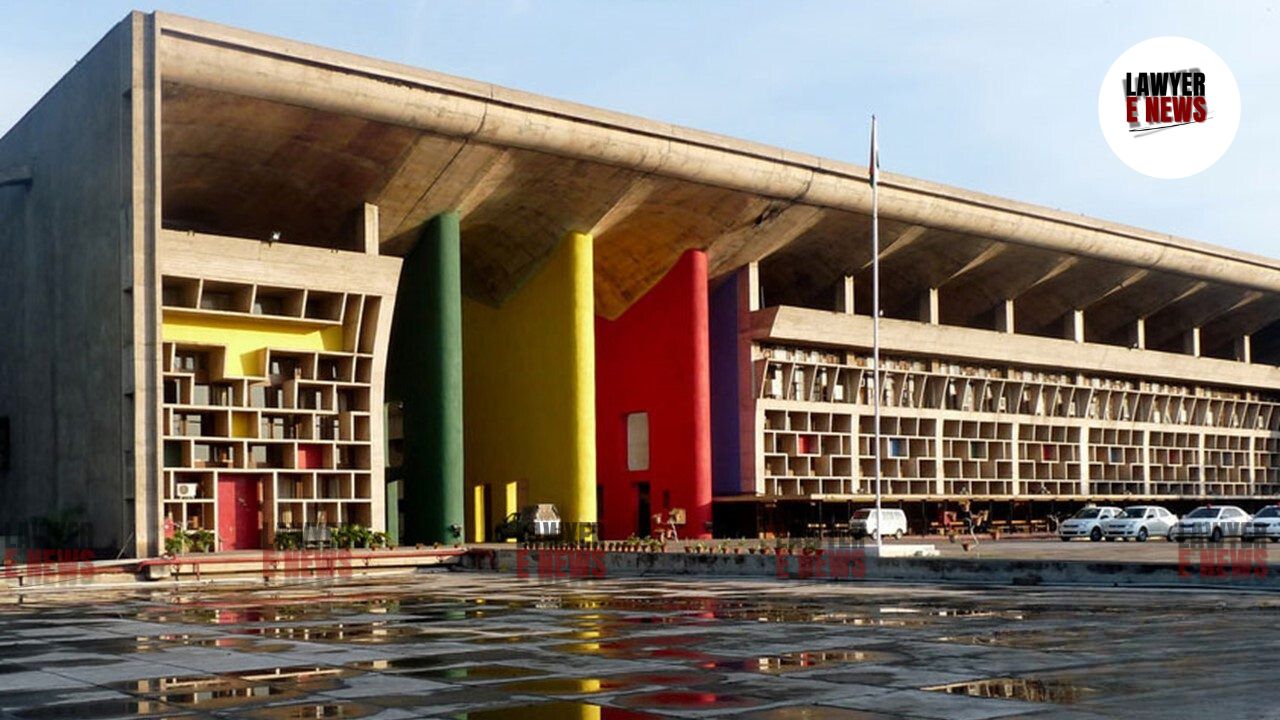
"A legal representative is entitled to compensation, even if he was not dependent on deceased and there was no loss of dependency," Punjab and Haryana High Court, in a significant ruling dated May 21, 2026, held that major married children with independent sources of income are fully entitled to claim compensation as "legal representatives" under the Motor Vehicles Act, 1988.
A bench of Justice Harkesh Manuja observed that the right to claim compensation is not restricted to those who were financially dependent on the deceased, setting aside a Tribunal's order that had limited the award to a nominal amount.
The appellants, who are the major sons of the deceased Sh. Bhim Sain Juneja, challenged an award dated September 13, 2010, passed by the Motor Accident Claims Tribunal (MACT), Panchkula. The Tribunal had awarded only Rs. 55,000 along with 7.5% interest for the death of their father in a 2008 accident, primarily because the sons were earning independently. The appellants contended that the Tribunal committed a patent illegality by restricting the compensation solely on the grounds of their financial independence.
The primary question before the court was whether major earning sons qualify as "legal representatives" under Section 166 of the Motor Vehicles Act and are entitled to just compensation. The court was also called upon to determine whether the absence of financial dependency precludes a claim for loss of dependency and other conventional heads of compensation.
"Legal Representative" Is Broader Than "Dependent" Under MV Act
The Court rejected the contention raised by the Union of India that the right to claim compensation does not survive if the legal heirs are independently earning. Justice Manuja clarified that the expression employed under Section 166 of the Motor Vehicles Act is "legal representative" and not "dependent." This distinction is crucial as it broadens the scope of who can maintain a claim for compensation following a fatal motor accident.
The bench relied on the Supreme Court’s ruling in Manjuri Bera v. The Oriental Insurance Company Ltd., noting that a legal representative is entitled to compensation even if there was no loss of dependency. The Court emphasized that even a married daughter or a major earning son retains the status of a legal representative, and thus, the plea that they are ineligible for compensation is "wholly misconceived and untenable."
"Even major married and earning sons of deceased being legal representatives have the right to apply for compensation in case of accidental death."
Unrebutted Evidence Of Income Must Be Accepted
Regarding the quantum of income, the Court noted that the deceased was serving as an Assistant Garrison Engineer in the Military Engineering Service (MES), drawing a monthly salary of Rs. 44,723. The Court observed that despite the production of cogent documentary evidence and oral testimony, the respondents failed to lead any evidence in rebuttal or discredit the salary particulars during cross-examination.
The Court held that where documentary evidence regarding income is produced and remains unchallenged, the judiciary is justified in accepting such figures for computation. Consequently, the High Court assessed the monthly income at Rs. 44,723, finding no reason for the Tribunal to have ignored the actual earnings of the deceased while assessing the final compensation amount.
"Where cogent documentary evidence regarding income is produced and the same remains unchallenged, the Court is justified in accepting such income for the purpose of computation."
Application Of Future Prospects And Multiplier
Following the settled principles in Smt. Sarla Verma v. DTC and National Insurance Co. Ltd. v. Pranay Sethi, the Court determined the age of the deceased to be 55 years based on testimony. Accordingly, it granted 15% of the income towards future prospects and applied a multiplier of 11. Since the claimants were two children, a deduction of one-third was made towards the personal and living expenses of the deceased.
Enhanced Compensation Under Conventional Heads
The Court also revised the awards under conventional heads to align with contemporary judicial standards. It awarded Rs. 18,000 for funeral expenses and Rs. 18,000 for loss of estate. Most notably, the Court awarded Rs. 96,000 (Rs. 48,000 each) towards parental consortium to the two sons, following the precedent set in United India Insurance Co. Ltd. vs. Satinder Kaur.
Interest Rate Hiked To Nine Percent
The Bench further found that the 7.5% interest rate awarded by the Tribunal was neither equitable nor just. Relying on Smt. Supe Dei v. National Insurance Company Limited, the High Court enhanced the interest rate to 9% per annum from the date of the claim petition. It further directed that if the amount is not paid within three months, the interest rate would jump to 12% per annum.
The High Court allowed the appeal and significantly enhanced the compensation from the original Rs. 55,000 to a total of Rs. 46,02,970. The ruling reinforces the principle that the status of a "legal representative" is not synonymous with financial dependency, ensuring that all legal heirs can seek just compensation for the loss of a parent.
Date of Decision: May 21, 2026