-
by sayum
26 August 2026 10:38 AM








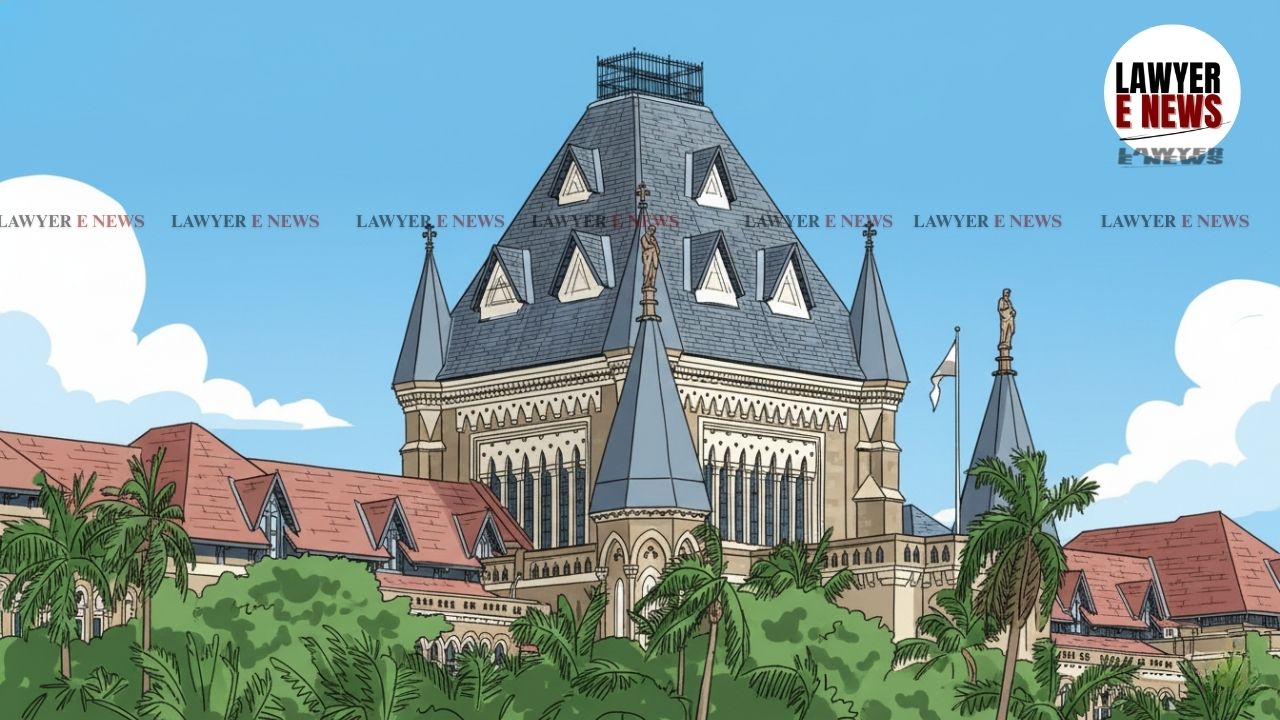
“Ad-hocism Cannot Become a Shield for Exploitation Where Work Is Perennial” – Bombay High Court Orders Regularisation, Full Benefits, and Back Wages for Terminated Clerk. Bombay High Court dismissed a challenge by the Maharashtra Police Academy to the Industrial Court’s award of reinstatement, permanency, and back wages to a daily-wage clerk who was terminated without notice or compensation.
Justice Milind N. Jadhav, delivering a detailed reportable judgment, held that the Maharashtra Police Academy qualifies as an “industry” under Section 2(j) of the Industrial Disputes Act, 1947, and the respondent, a daily-wage clerk who had worked for nearly eight continuous years, was a “workman” under Section 2(s) of the Act.
The Court found the termination illegal, in breach of Section 25F, and a clear case of unfair labour practice, warranting judicial intervention under labour law, not administrative tribunals.
“The Academy cannot claim sovereign immunity when it trains private agencies, collects fees for facilities like hostels, swimming pools, and canteens, and passes internal resolutions to regularise workers,” the Court observed.
“State Cannot Balance Budgets on the Backs of Precariously Engaged Workers” – Court Applies Constitutional Lens to Public Employment
Rejecting the Academy’s plea that it was part of the Police Department engaged in sovereign functions, the Court applied the “dominant nature test” laid down in Bangalore Water Supply and Sewerage Board v. A. Rajappa, (1978) 2 SCC 213, and held:
“The training of private agencies, maintenance of revenue-generating facilities and systemic employer-employee cooperation show that the Academy performs functions analogous to trade or business… thus satisfying the definition of ‘industry’ under Section 2(j).”
Referring to the Supreme Court’s 2025 ruling in Dharam Singh v. State of UP, the Court held:
“Where work recurs day after day and year after year, the establishment must reflect that reality in its sanctioned strength and engagement practices… Ad-hocism cannot override fairness and reason.”
“She Is Not in Police Service, Nor a Supervisor or Manager – She Is a Workman” – Court Upholds Protection Under Section 2(s) of ID Act
The petitioner, Bharati Salve, had been employed by the Academy as a Clerk/Computer Operator from 2010 to 2018, continuously for over 240 days each year, receiving a meagre wage of ₹100/day. The Court held that she was squarely covered under the definition of "workman", and emphatically rejected the Academy’s argument that her role fell outside the ID Act:
“She was not in the police force, not managerial or supervisory, and her duties were clerical. The employer-employee relationship existed. Hence, she is a ‘workman’ as per law.”
The Court further noted that her termination was done without any notice, inquiry, or compensation, even though the Academy had passed a resolution in 2016 to fill vacant posts with daily-wage staff working in those positions.
“Employer’s Own Resolutions Promised Regularisation, Yet Termination Was Arbitrary” – Court Finds Breach of Academy’s Internal Policy
The Court gave significant weight to the internal records of the Academy, including resolutions and minutes that acknowledged a staff shortage and directed that daily-wage workers be regularised and paid according to pay scale.
“The Executive Committee itself resolved to appoint daily-wage office bearers against vacant posts and save costs. Ignoring its own resolution, while hiring junior staff and terminating the respondent, is not only arbitrary but reeks of discrimination,” the Court said.
“Termination Without Following Section 25F Is Illegal, No Matter the Nature of Initial Appointment” – Court Applies Ramesh Kumar & Dharam Singh Principles
Citing the Supreme Court’s decisions in Ramesh Kumar v. State of Haryana (2010) and Dharam Singh v. State of UP (2025 SCC OnLine 1735), the Court reaffirmed that even casual or ad-hoc workers cannot be terminated without compliance with Section 25F of the ID Act:
“When a worker has completed 240 days in a year, termination without notice or retrenchment compensation is illegal, regardless of the legality of the original appointment.”
The Court further rejected the Academy’s argument that the respondent should have approached the Maharashtra Administrative Tribunal, holding that since the Academy qualifies as an “industry” and the respondent as a “workman”, labour courts had proper jurisdiction.
“Petitioner Failed to Disprove Respondent’s Evidence or Rebut Cross-Examination” – Court Upholds Industrial Court’s Factual Findings
The Court noted that the Academy failed to lead any evidence in the lower forums to rebut the respondent’s claims or to cross-examine her effectively on key points such as:
Her continuous service of 8 years
The nature of clerical duties performed
The revenue-generating activities of the Academy
The availability of facilities to private persons for a fee
“Findings of the Industrial Court are based on clear evidence and sound reasoning. They do not call for any interference in writ jurisdiction,” the Court held.
Reinstatement with Continuity, Back Wages and Permanency Ordered Within Two Weeks
The High Court upheld the Industrial Court’s 09.05.2025 order, directing the Academy to reinstate the respondent as High Grade Stenographer, with:
Continuity of service
Status of permanency
Full back wages and differential wages
All benefits under law
“Exploitation of long-serving daily-wage workers under a temporary label cannot be countenanced. The dignity of labour and the constitutional mandate of fair employment demand regularisation,” Justice Jadhav stated.
Stay Granted for Six Weeks to Enable Appeal in Supreme Court
Though the petition was dismissed, the Court granted a six-week stay on the operation of the judgment to enable the Academy to approach the Supreme Court.
“Considering the nature of the issue, stay is granted for six weeks. Respondent is granted liberty to apply for withdrawal of back wages already deposited, to be decided upon hearing both sides,” the Court ordered.
Rule of Law Prevails Over Institutional Prestige in Employment Disputes
The Bombay High Court has, through this decision, reinforced the protective architecture of labour laws, ruling that autonomous public institutions cannot escape liability under the Industrial Disputes Act merely by invoking sovereign functions, especially when private services are rendered for fees and revenue is generated. The case is a strong reminder that continuing ad-hocism and procedural evasion by public institutions will be met with firm judicial resistance, in line with constitutional values.
Date of Decision: 15 October 2025