-
by sayum
28 August 2026 12:24 PM







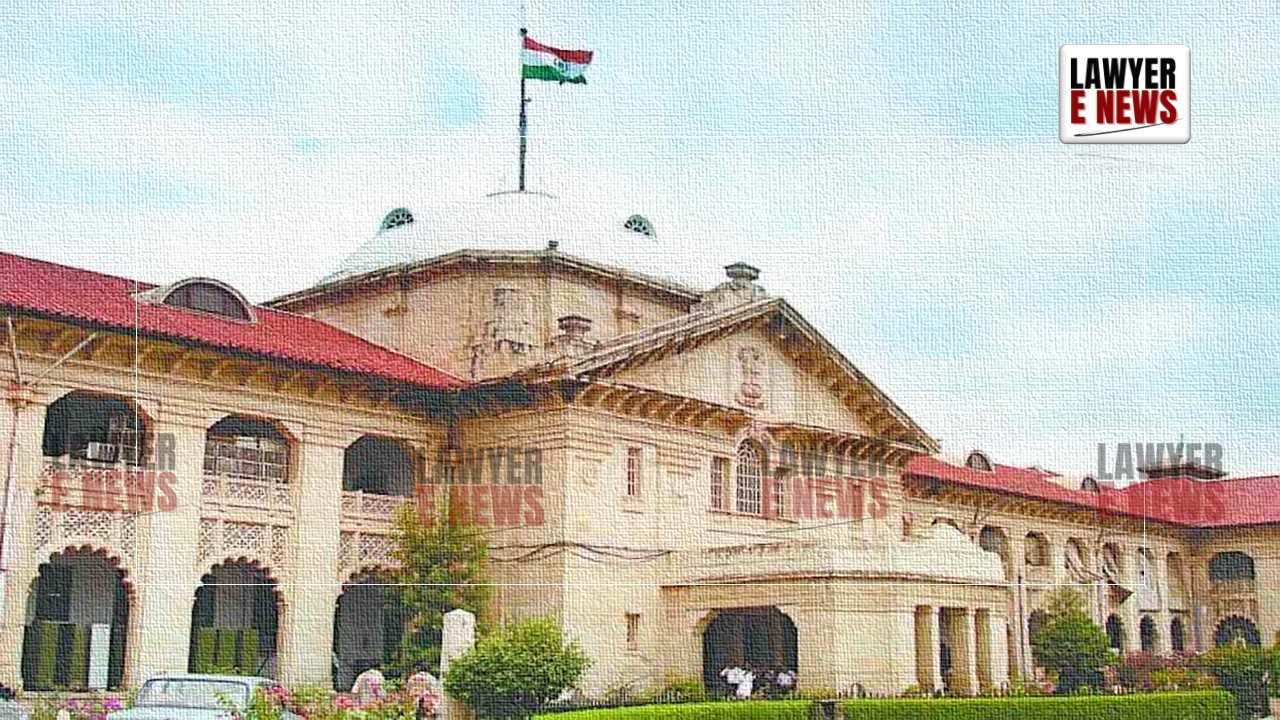
“A Magistrate is not a post office of the police; he is duty-bound to independently apply his mind to the material submitted and is empowered to take cognizance even of offences not mentioned in the charge sheet.” — Justice Arun Kumar Singh Deshwal
Allahabad High Court Upholds Magistrate’s Discretion in Cognizance Powers, Dismisses Plea to Include Rape Attempt and Criminal Breach of Trust in Dowry Case
Allahabad High Court rejected a plea seeking inclusion of Sections 376/511 and 406 IPC in a domestic violence and dowry case, holding that the Magistrate acted correctly in taking partial cognizance based on available material. Justice Arun Kumar Singh Deshwal, while dismissing the application filed by Nisha Kushwaha, clarified that a Magistrate has full authority under Section 190(1)(b) CrPC (now Section 210 BNSS) to take cognizance of offences irrespective of what is mentioned in the charge sheet, but only if sufficient prima facie material exists.
“Magistrate not bound by investigating officer’s conclusions — must assess the material independently”
The applicant had filed an FIR under Sections 498-A, 354, 323, 504, 506 IPC and 3/4 Dowry Prohibition Act, accusing her husband, in-laws, and relatives of cruelty and harassment. While the police filed a charge sheet against some accused under these sections, it excluded more serious offences like attempt to rape (376/511 IPC) and criminal breach of trust (406 IPC).
The applicant filed a protest petition, asserting that her statement under Sections 161 and 164 CrPC made out a clear case of attempt to rape by her father-in-law, and non-return of her streedhan, which warranted the addition of these offences. The Magistrate declined to take cognizance of these additional offences.
She challenged this decision, arguing that: “The Magistrate, under Section 190(1)(b) CrPC, is not bound by the charge sheet’s conclusions and can take cognizance of other offences disclosed by the material.”
She relied on decisions of the Supreme Court in Dharam Pal v. State of Haryana (2014), Nahar Singh v. State of UP (2022), Balveer Singh v. State of Rajasthan (2016), and Pramatha Nath Mukherjee v. State of West Bengal (1960).
State Opposes: “Magistrate can’t go beyond charge-sheet unless done at framing stage under Section 216 or 228 CrPC”
Opposing the plea, the State cited State of Gujarat v. Girish Radhakrishnan Varde (2014) and Dablu Kujur v. State of Jharkhand (2024), contending:
“Once the police files a charge-sheet, the Magistrate must either accept or reject it — not substitute or expand its legal conclusions.”
It was argued that only at the stage of framing charges under Sections 216/228 CrPC can additional charges be added or deleted.
Court Resolves Precedential Conflict: Larger Bench Rulings Prevail Over Later Smaller Benches
Justice Deshwal reconciled the conflict by holding: “The decision in Girish Radhakrishnan Varde did not consider the Constitution Bench ruling in Dharam Pal, nor the long-standing precedent in Pramatha Nath Mukherjee. In such cases, the earlier and larger bench decisions must prevail.”
He emphasized that Dharam Pal (2014), a Constitution Bench ruling, clearly held: “A Magistrate may take cognizance of offences not mentioned in the charge-sheet, including against persons not named as accused, based on the material submitted.”
This view was further affirmed in Nahar Singh (2022) and Balveer Singh (2016), where the Supreme Court ruled: “Magistrate has jurisdiction to proceed even against unnamed persons or unmentioned sections if the material supports such action.”
Analysis of Evidence: “Statement does not support rape attempt or breach of trust”
Despite this wide legal discretion, the High Court examined the facts and found that the Magistrate had correctly declined to take cognizance under Sections 376/511 and 406 IPC.
Justice Deshwal observed: “In her 164 CrPC statement, the complainant alleged attempt to rape, but there was no CCTV footage to corroborate it, nor any recovery by police. Similarly, the statements do not disclose ingredients of Section 406 IPC regarding entrustment and misappropriation.”
Hence, the High Court upheld the Magistrate’s view: “Magistrate rightly took cognizance only under Section 354 IPC and others, based on uncontroverted prima facie material. Refusal to add Sections 376/511 and 406 IPC does not suffer from legal infirmity.”
Magistrate’s Order Upheld, Application Dismissed
Concluding that there was no illegality in the Magistrate's approach, the High Court dismissed the application, affirming the Magistrate’s partial cognizance order.
“A Magistrate can add or exclude offences at cognizance stage based on material, but must do so judiciously — which was done here.”
Date of Decision:21 April 2025