-
by sayum
25 August 2026 12:32 PM







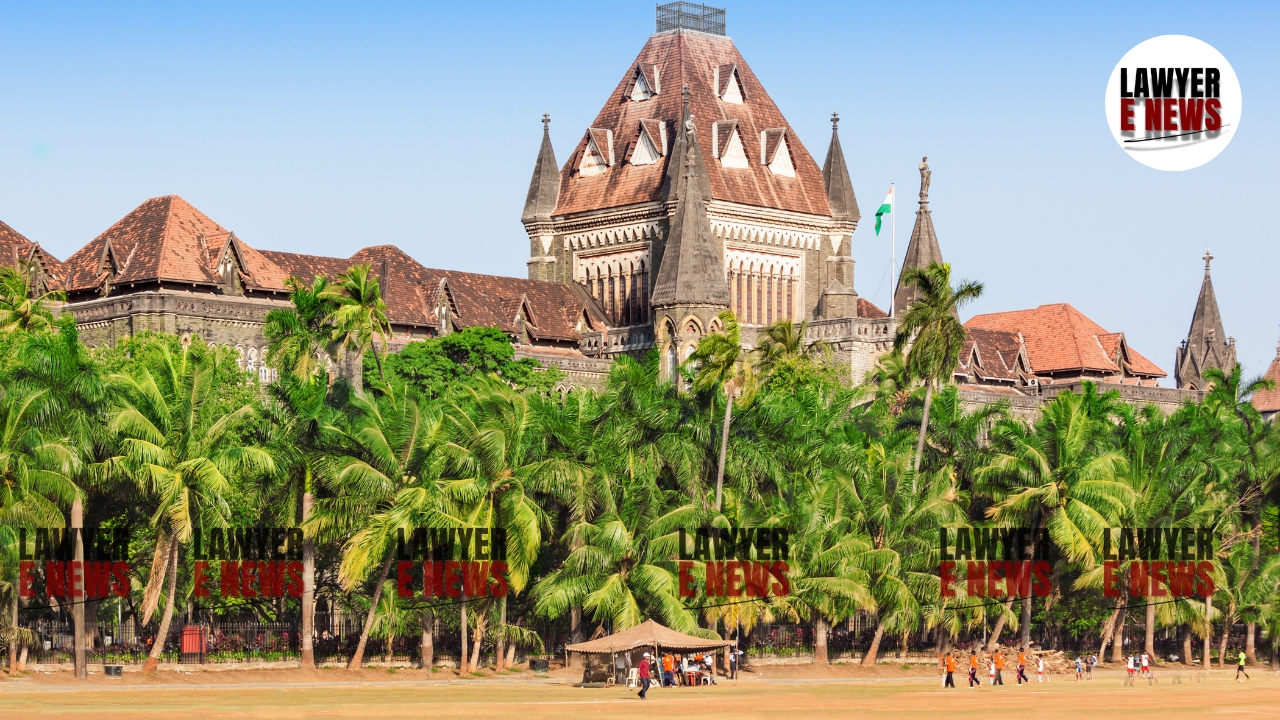
“Mediclaim, Pension or VRS Benefits Cannot Shrink Statutory Compensation” – Bombay High Court, per Justice S.M. Modak, dismissing the insurer's challenge to an award of ₹58,54,183/- granted to an injured claimant.
The Court held that no breach of policy was proved, that LMV licence holders are legally permitted to drive transport vehicles up to 7500 kg, and that benefits received from mediclaim policies, pension, or VRS cannot be deducted while computing compensation under Section 168 of the Motor Vehicles Act.
Justice Modak observed that the Tribunal’s findings on negligence, income assessment, future prospects, and disability were “fully justified and free from perversity”.
The claimant, employed with Naval Materials Research Laboratory and drawing a salary of ₹93,990 per month, suffered multiple fractures on 8 January 2015 when a tempo reversed “in high and excessive speed and without blowing horn”, hitting her while she stood near the office gate.
She underwent prolonged treatment and incurred substantial medical expenditure. The MACT awarded compensation, which the insurer challenged on four grounds: licence breach, deduction of mediclaim reimbursement, reduction of VRS/pension benefits, and alleged absence of real loss of earning.
Negligence of the Driver: “Reverse Driving Without Horn and Without Cleaner – A Clear Act of Rashness”
The Court found no error in the MACT’s conclusion on negligence. Justice Modak observed that the tempo was reversed “without blowing any horn and without the assistance of a cleaner”, and that such conduct squarely established rashness.
The complaint, spot panchnama, and claimant’s testimony were held sufficient to affirm the driver’s fault.
Permanent Disability: “43% Permanent, Non-Progressive Disability Fully Established”
The claimant was examined by a Medical Board which certified 43% permanent disability, described as “non-progressive and not likely to improve”. The Tribunal’s assessment of 40% functional disability was treated as fully justified.
“Mediclaim Benefits Emanate from a Contract; Compensation Flows from Statute” – Full Bench Ruling Applied
The insurer argued that the claimant had already received ₹1,75,000 from her Star Health mediclaim policy and that this should be deducted from compensation.
Justice Modak rejected the argument, citing the Full Bench decision in New India Assurance Co. Ltd. v. Dolly Satish Gandhi, reiterating:
“Benefits received as per contractual obligation stand on a different footing from compensation to be awarded under Section 168.”
The Court emphasised that mediclaim proceeds were paid because the claimant had purchased a separate insurance contract, whereas compensation under the Motor Vehicles Act arises from a statutory mandate.
Thus, the full medical expenditure of ₹6,42,903 was rightly allowed.
“VRS and Pension Are Employer’s Contractual Liabilities – They Cannot Reduce Loss of Future Income”
The insurer contended that the claimant’s VRS benefits and her pension should be deducted while computing loss of future earnings.
Justice Modak relied heavily on the Supreme Court’s decision in Hanumantraju B. v. Akram Pasha, noting:
“It would not be permissible to deduct the pensionary amount from the salary… monthly salary has to be accepted for computing loss of earning.”
The Court reaffirmed that VRS payouts arise from the employer’s contractual obligations and have no nexus with the injured employee’s earning capacity.
Justice Modak added an important clarification:
“If a fixed deposit matures and the claimant receives money, it cannot be treated as income for deduction. This is true for VRS benefits as well.”
“Monthly Salary of ₹77,000 and 15% Future Prospects Rightly Accepted”
The Tribunal assessed the claimant’s monthly net income at ₹77,000. The Court agreed, noting that although the claimant took VRS in May 2016 and thereafter received pension, she remained “capable to earn the same amount but for the disability caused by accident”.
Her age—51 years—justified the addition of 15% future prospects, and the multiplier of 11 was held appropriate.
Witness Naresh Dhongade from NMRL testified that “the accident was the reason for VRS”, further justifying the Tribunal’s reasoning.
“LMV Licence Holder Can Drive Transport Vehicle Up To 7500 kg – No Breach of Policy”
The crux of the insurer’s appeal was the alleged licence breach. The insurer argued that the driver had only an LMV (NT) licence, whereas the tempo was a transport vehicle with a gross vehicle weight of 7500 kg.
Justice Modak rejected the argument by relying on Bajaj Allianz v. Rambha Devi, where the Supreme Court held:
“A driver holding a licence for light motor vehicle under Section 10(2)(d) is permitted to operate a transport vehicle with GVW not exceeding 7500 kg without requiring additional authorisation under Section 10(2)(e).”
The Court further quoted from the Supreme Court:
“The licensing regime does not provide for a separate endorsement for operating a transport vehicle if the driver already holds a light motor vehicle licence.”
Thus, no breach of policy was established.
Justice Modak concluded that the Tribunal “committed no error in negating the contentions of the Insurance Company about breach of policy, about VRS, and about mediclaim”.
The appeal was dismissed, with directions to deposit the remaining award amount within three weeks and for the Tribunal to disburse the amount to the claimant.
Date of Decision: 11 November 2025