-
by sayum
26 August 2026 10:38 AM







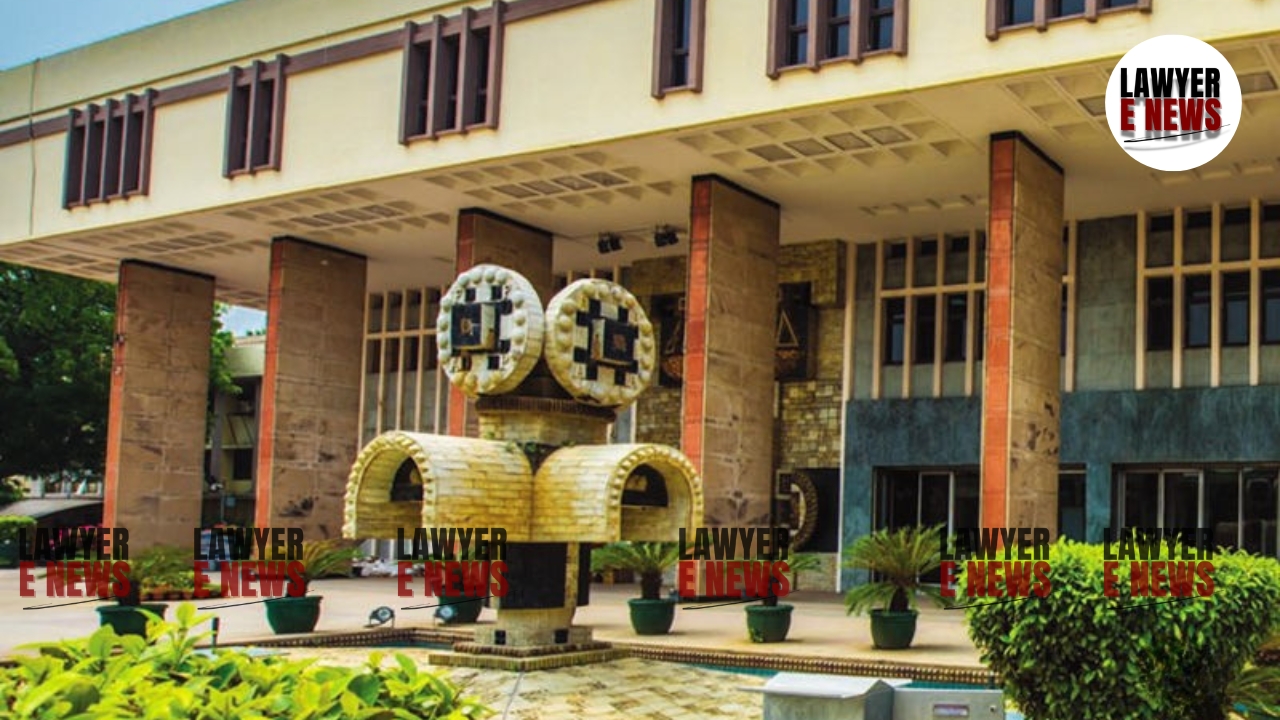
“Barring a student from examination due to lack of attendance, without exploring any ameliorative steps, is an extreme and unacceptable measure”, declared the Delhi High Court Today, on November 3, 2025, while delivering its long-awaited verdict in the matter Courts on Its Own Motion In Re: Suicide Committed By Sushant Rohilla, W.P.(CRL) 793/2017. The judgment, which stems from the tragic suicide of a promising young law student in 2016, marks a watershed moment in the intersection of mental health, legal education policy, and constitutional rights.
Taking suo motu cognizance of the larger issues raised by Rohilla’s death, the Court directed sweeping reforms to how attendance norms are structured in law schools across India, calling upon the Bar Council of India (BCI) to revisit and reformulate its Legal Education Rules in line with constitutional mandates, the National Education Policy 2020 (NEP), and evolving educational realities.
“Rigid Attendance Norms Cannot Override Right to Life Under Article 21”: Court Declares Mental Health Central To Educational Policy
At the heart of the judgment is the recognition that attendance rules, as currently framed under Rule 12 of the BCI Legal Education Rules, 2008, are not only “harsh and inflexible” but constitutionally suspect.
The Court stated that “mandatory physical attendance, when imposed without flexibility or compassion, risks violating the right to life under Article 21 of the Constitution, which includes the right to mental well-being and dignity.”
The Bench comprising Justice Prathiba M. Singh and Justice Amit Sharma examined the suicide of Sushant Rohilla, a 5-year law student at Amity Law School, who was debarred from exams due to failure to meet the 75% attendance rule and allegedly subjected to mental harassment, eventually leading to his death on August 10, 2016. While the criminal proceedings concluded with a closure report absolving college authorities, the High Court refused to allow the broader issues of student welfare, mental health, and educational rigidity to be buried.
“This Court cannot permit the entire exercise, which commenced with a young boy’s death, to end without reflection, reform, and accountability. If institutional pressure and inflexible academic rules contributed even remotely to such a tragic outcome, change is imperative,” the Court said.
“Legal Education Is Not Just Books and Classrooms — It Demands Courtrooms, Clinics and Real-World Learning”: Three-Dimensional Model for Law Training Recognised
The Court offered a powerful new pedagogical model for legal education, stating that law must be taught and experienced across three distinct but complementary dimensions:
First, academic knowledge of legal principles, jurisprudence, and statutes;
Second, practical application through moot courts, internships, debates, and peer discussions;
Third, exposure to real-world legal processes including courts, prisons, and legal aid clinics.
“If any of these dimensions is ignored, the outcome is a half-baked lawyer, unprepared for either advocacy or justice delivery,” the Court noted.
This threefold approach to learning law, the Court emphasized, cannot be achieved merely through classroom attendance. “Law is not rote — it is reason. It is not confinement — it is confrontation with reality,” remarked the Bench.
“Reform, Not Surveillance, Is The Solution”: Court Rejects BCI Circular Mandating Biometric Attendance and CCTV
In strong terms, the Court struck down the Bar Council of India’s Circular dated 24 September 2024, which made biometric attendance and CCTV surveillance mandatory for law colleges.
“Mandating biometric scanning and cameras in classrooms intrudes on the dignity and privacy of students and treats them as suspects rather than learners,” the judgment held.
The BCI had argued that such surveillance was necessary to prevent manipulation of attendance. The Court disagreed, stating that “such blanket surveillance is not only disproportionate but entirely misaligned with the objectives of higher education.”
“From Attendance to Detention — A Chain That Must Be Broken”: Court Rules Exam Bans for Low Attendance Disproportionate
The most significant legal conclusion of the judgment is its declaration that barring students from taking exams solely due to attendance shortfall is “arbitrary, excessive, and unjustifiable.”
“Such an approach reflects a non-pragmatic and regressive academic policy which fails to distinguish between discipline and destruction,” the Court said.
Referring to Rule 12 of the BCI Legal Education Rules, which imposes a 70% attendance threshold (with a 5% relaxation), the Court noted:
“The rule provides for no compensatory or remedial steps — no extra classes, no alternative assignments, no genuine path for compliance. Its only solution is exclusion, and that is unacceptable in any progressive legal system.”
“Holistic Reform, Not Academic Policing”: Court Proposes Nationwide Re-Evaluation of Attendance Policy in Legal Education
Recognizing the need for reform that is both immediate and long-term, the Court issued detailed directions and constitutional mandates:
Firstly, it directed that “no student in any law school in India shall be barred from examination or promotion solely for failing to meet the 70% attendance norm, until the BCI re-evaluates its rules.”
Secondly, it permitted attendance-based academic penalties — such as 5% reduction in marks or CGPA — in place of complete detention, calling it “a more balanced approach which preserves academic discipline without extinguishing future prospects.”
Thirdly, it ordered that “colleges must publish weekly attendance, send monthly alerts to families, and provide compensatory options such as home assignments, practical training, or legal aid work.”
The Court categorically stated that “attendance should measure engagement, not servitude. Law schools must foster responsibility, not punish necessity.”
“Student Suicide Cannot Be A Statistic”: Court Declares Grievance Redressal Committees Mandatory In All Colleges, Demands Mental Health Safeguards
The judgment doesn’t stop at legal education. It dives deep into institutional culture. In light of repeated student suicides across NITs, IITs, and even NLU Delhi, the Court highlighted an urgent need for effective grievance redressal mechanisms in all higher education institutions.
Citing the Supreme Court’s decisions in Amit Kumar v. Union of India and Sukdeb Saha v. State of Andhra Pradesh, the Court said:
“The student leaves his home and enters a university — from that moment, the institution stands in the place of the parent: loco parentis. With that role comes responsibility.”
It directed the University Grants Commission to amend the 2023 Student Grievance Regulations to ensure:
“Representation is not tokenism — a student’s voice must not only be heard, it must be present in the room where decisions are made,” the Court declared.
“National Education Policy Emphasises Flexibility, Not Compulsion”: Court Aligns BCI Rules With NEP 2020 Vision
In a thorough analysis of the National Education Policy, 2020, the Court noted:
“The NEP, 2020 introduces a paradigm of flexible, skill-driven, and holistic learning. There is no mention of student attendance mandates. In fact, it emphasizes teacher accountability, blended learning, and outcome-based education.”
The Court held that BCI’s Rule 12, which makes physical presence in classes mandatory without exceptions, is “entirely out of sync with the NEP’s vision.”
It added that “the rigidity of BCI rules is rendered further untenable when institutions fail to hold the minimum required number of classes themselves. The responsibility of compliance cannot rest solely on students.”
“Sushant’s Death Was a Wake-Up Call — This Judgment Must Be the Response”: Court Ends with Tribute and a Call for Change
The Court acknowledged that the criminal case into Sushant Rohilla’s suicide had concluded with no direct evidence against the college, and that the family had reached an out-of-court settlement.
But it refused to let the case end with that technical closure.
“Even if Sushant’s death was not caused solely by attendance policies, it surely exposed the devastating human cost of systemic indifference,” the Court wrote.
It paid tribute to the family for their perseverance and concluded:
“This case began with a tragedy. It must end with transformation. If even one future student is saved from such despair by today’s directions, then Sushant Rohilla’s voice has not been silenced. It has been heard.”
Date of Judgment: November 3, 2025
Case Title: Courts on Its Own Motion in Re: Suicide Committed by Sushant Rohilla, Law Student of I.P. University